
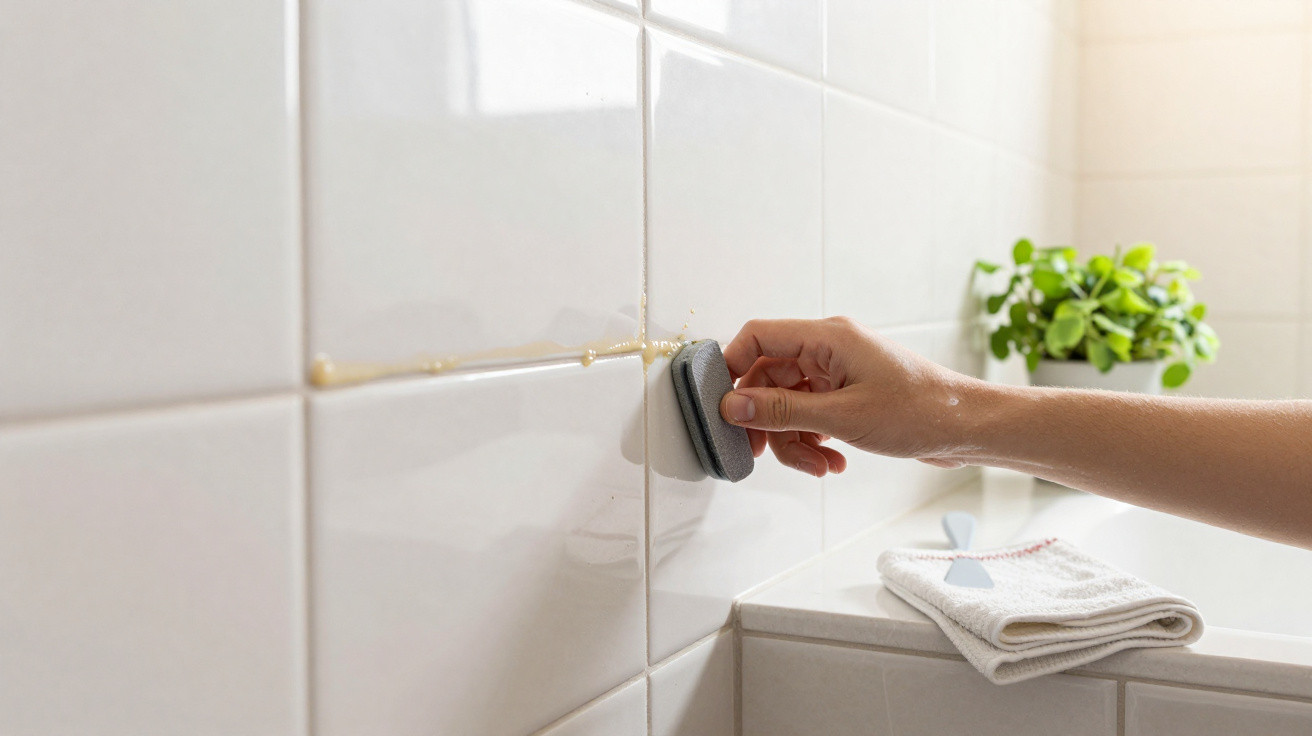
Epoxy grout in pale, neutral shades is increasingly replacing conventional dark grout in contemporary bathrooms and kitchens. The trend for 2026 favours more understated grout lines that are easy to clean and moisture-resistant, delivering a seamless look without making the gaps between tiles obvious areas of visible dirt.
Which material is replacing dark grout?
The material becoming most popular is epoxy grout, a tougher and less porous alternative to standard cement-based grout. It creates a more sealed finish, absorbing less water, grease and soap residue.
Colour preferences have changed as well. Rather than using very dark grout to conceal dirt, current schemes favour shades that sit close to the tile colour, including warm white, sand, light grey, beige and off-white. This gives the room a more cohesive appearance.
Why is epoxy grout more hygienic?
Its key benefit is its low porosity. Since it takes in less moisture, epoxy grout makes it harder for residue to build up in the joints and simplifies everyday cleaning, particularly in shower enclosures, on worktops, in wet areas and in grease-prone kitchens.
- Lower absorption: helps reduce stains caused by water, soap and grease.
- Smoother surface: makes dirt easier to remove with a cloth or soft sponge.
- Greater resistance: performs better in damp, frequently used spaces.
- Uniform appearance: leaves the tiled surface with fewer visible breaks.
- Less darkening: prevents the grimy look often seen with older grout.
How should epoxy grout be applied without affecting the finish?
Application requires more care than ordinary grout because epoxy sets quickly and can leave difficult-to-remove residue if it is not cleaned within the right timeframe. It is therefore best to follow the manufacturer's instructions or hire a professional who is experienced with this material.
- Joints must be clean, dry and free from loose remnants of old grout.
- The components must be mixed in the correct ratio stated on the packaging.
- Excess material needs to be removed before it has fully cured.
- Abrasive sponges should not be used on delicate tiles.
- For small refurbishment projects, it is worth testing it first in a less visible area.
How much does epoxy grout cost compared with standard grout?
Epoxy grout is generally more expensive than traditional cement-based grout, both because of the product price and the more careful installation it requires. Even so, in compact areas such as shower enclosures, cloakrooms and worktop splashback strips, the additional cost can be worthwhile because of its durability and easy cleaning.
Those on a tighter budget can reserve epoxy grout for the most demanding areas and use standard grout on dry walls. Choosing larger porcelain tiles is another option, as they reduce the number of joints and lower the room's maintenance needs.
How does the epoxy grout trend change the look of a room?
When grout matches the colour of the tiles, a bathroom or kitchen can appear larger, brighter and more orderly. The joints become less noticeable, allowing the eye to see a more continuous surface, similar to the aesthetic of professionally planned interiors.
Dark grout can still suit particular design schemes, but it has become less popular as a way to hide dirt. In 2026, the focus is on more hygienic, hard-wearing and easy-to-maintain materials that combine practical cleanliness with a modern finish in one project.




Comments
No comments yet. Be the first to comment!
Leave a Comment