
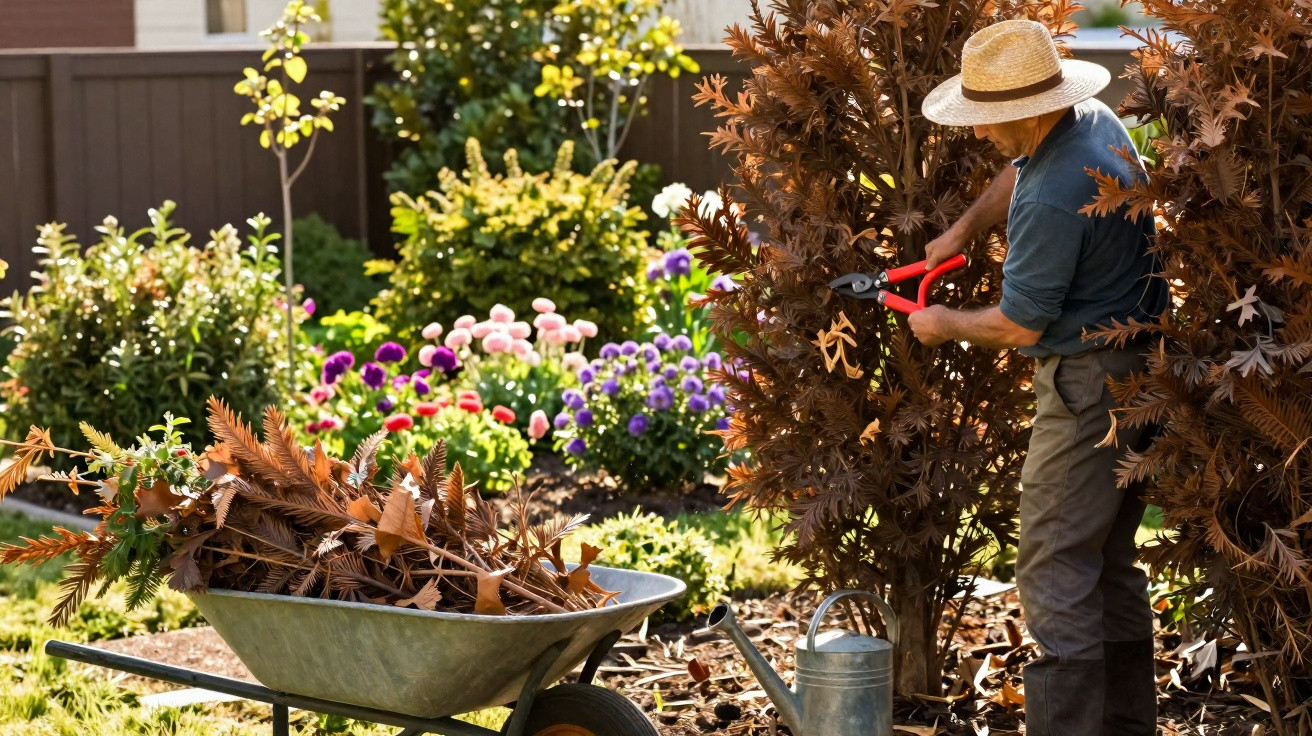
For decades, Thuja was regarded as the ideal answer to privacy screening, but it is increasingly proving problematic. Horticultural specialists and conservationists are raising the alarm: Thuja hedges use large amounts of water, provide scarcely any habitat for wildlife and can virtually collapse under heat, drought stress and pests. In some areas, grants are even available for removing them and replanting with mixed hedges.
From garden favourite to problem planting
During the 1980s and 1990s, the choice seemed obvious: anyone seeking undisturbed privacy planted a green Thuja screen. These conifers grow quickly, remain dense through winter and are easy to trim into shape. Entire new housing estates were bordered in this way.
However, increasingly dry, hot summers are now exposing the weakness of this planting. Thuja has an extremely shallow root system, with roots barely reaching deeper soil layers where moisture may still be retained.
Experts estimate that Thuja hedges can require up to 60 per cent more water than many native shrubs – a real disadvantage during dry spells.
Many homeowners now know the consequences from first-hand experience: sections of the hedge turn straw-like, while whole stretches suddenly become rusty brown despite generous watering. The soil becomes depleted, water use is high, and the hedge resembles a green yet largely biologically lifeless fence.
Little wildlife, great thirst – why specialists advise against Thuja hedges
Compared with native woody plants, Thuja offers shelter or food to very few animal species. Its dense evergreen branches may look “alive”, but ecologically such a hedge is almost a dead end.
- Few insects, as the plant produces hardly any nectar or pollen
- Hardly any berries or fruit for birds
- Compacted, dry soil beneath the hedge
- A root-filled strip where almost nothing else can grow
Many towns and local authorities are already responding. Restrictions are appearing in development plans and local regulations: newly planted property boundaries should be greened with native shrubs, while rows consisting solely of Thuja are unwelcome. In some places, subsidies are offered for removing old conifer hedges and replacing them with species-rich planting.
Heat, drought and a new pest
Climate-related effects are accompanied by another source of stress: a specialised beetle that can finish off plants already weakened by adverse conditions. The so-called Thuja longhorn beetle or jewel beetle lays its eggs in the bark. Its larvae tunnel beneath the bark and sever the vessels that transport water and nutrients.
At first, only isolated yellowish patches are visible from the outside. Brown areas then spread, branches become brittle and the hedge loses density. In practice, a genuine cure is rarely possible because the larvae sit deep within the wood, where common treatments cannot reach them.
Once a Thuja hedge is heavily infested, specialists generally consider it “lost” – it slowly dies from the inside out over a period of years.
If infested plants remain in the garden, they become breeding grounds. From there, the pest can spread to neighbouring hedges and other conifers. Anyone who takes no action risks losing the entire row over time, and possibly cypresses or other nearby conifers as well.
When the hedge has to go: clear warning signs
Many amateur gardeners continue hoping that the hedge might “recover”. Specialists, however, identify several signs that mean removal should be planned:
- Large, continuous brown areas in the middle of the hedge
- Dry, brittle branches despite regular watering
- No fresh growth from older wood, only on the very outer tips
- Visible tunnels or feeding marks beneath the bark
- Complete loss of individual plants in parts of the row
Unlike many deciduous shrubs, Thuja will hardly regrow from old wood. Once a “gap” has developed, it usually remains permanently. Even drastic pruning does not restore the familiar dense wall; instead, it only makes the visual damage more obvious.
The right time for the radical step
Anyone intending to remove their hedge should choose the timing with wildlife protection in mind. Many bird species nest in hedges and shrubs between mid-March and the end of July. During this period, environmental authorities recommend avoiding major felling and clearance work, or at least checking very carefully for nests beforehand.
Late summer, autumn or late winter are ideal. There is then less wildlife within the dense greenery, and the soil is easier to work. Crucially, do not simply cut the hedge down above ground: remove the root stumps as well, otherwise decaying remnants will remain in the soil and prevent new plants from establishing.
Let the soil recover before replanting
The ground beneath old Thuja hedges is often heavily compacted and threaded through with dense root systems. It is worth putting some effort into preparation before planting anew:
- Loosen the soil to at least the depth of a spade
- Remove coarse root pieces and old pruning material
- Work in generous amounts of mature compost or well-rotted farmyard manure
- In very sandy soil, also mix in humus-rich soil or some clay
After this treatment, the soil can recover. If there is a year to spare, sow a green manure crop such as phacelia or clover on the cleared strip first. This further loosens the ground and returns nutrients to the soil.
What can replace Thuja? These hedges make gardens more resilient
Instead of a uniform conifer wall, many landscape gardeners now favour mixed hedges. They combine different shrubs that flower in sequence, bear berries or provide autumn colour. This looks more vibrant while creating valuable habitat.
Popular shrubs for a mixed hedge
| Woody plant | Special feature |
|---|---|
| Privet | Low-maintenance, semi-evergreen and popular with birds |
| Hornbeam | Robust, tolerates hard pruning and provides good foliage for privacy screening |
| Viburnum and dogwood | Flowers for insects, with some varieties offering colourful winter stems |
| Juneberry and wild roses | Flowers, fruit and dense branching that shelters birds |
| Hazel and hawthorn | Nuts or berries, valuable to many animal species |
Many of these shrubs cope far better with dry periods than Thuja. A varied hedge cools the garden, retains more moisture in the soil and provides shelter from wind. Specialists assume that such planting can hold considerably more water in the ground than a conifer monoculture.
For the impatient: fast privacy screening without a conifer wall
Anyone who does not want to wait years for privacy screening after removal can combine different approaches:
- Plant fast-growing shrubs in the front row
- Set slower-growing but more resilient species behind them
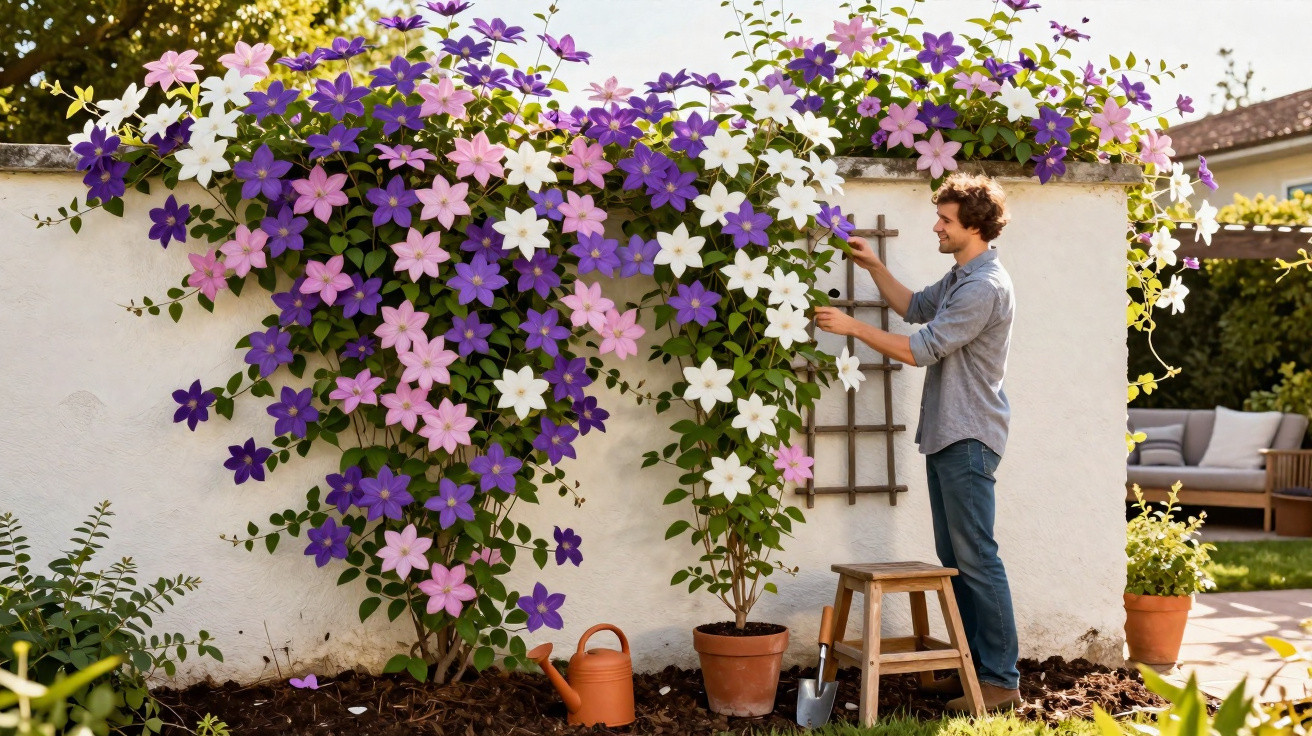
- Train climbing plants up a simple fence during the first few years
- Fill gaps with tall grasses such as Miscanthus or Chinese silver grass
Tall ornamental grasses often grow into dense screens within two to three years, require little maintenance and can later be divided or moved without difficulty.
More nature in the garden, less stress in summer
Those replacing Thuja with a mixed hedge containing as many native species as possible usually notice several effects at once: there is far more buzzing and birdsong, the garden heats up less in high summer, and watering needs are reduced. Many shrubs root more deeply and can also cope with longer dry spells.
For children, the garden becomes more interesting: berries, colourful leaves, beetles and birds invite observation. Visually, too, a living hedge appears more varied than a rigid conifer wall. Small gaps or irregular growth are less distracting because the diversity carries the overall effect.
Anyone who still does not want to dispense entirely with evergreen elements can incorporate individual winter-green woody plants into the mix, such as narrow-growing cherry laurel varieties or hollies. The important thing is the mixture, so that another monoculture is not created and then wilts row by row during the next period of climate stress.
Ultimately, this is not only about privacy screening, but about a different understanding of the garden: moving away from a green fence shaped like plants and towards a piece of living landscape that benefits people and wildlife – and copes better with the summers ahead.
Comments
No comments yet. Be the first to comment!
Leave a Comment