
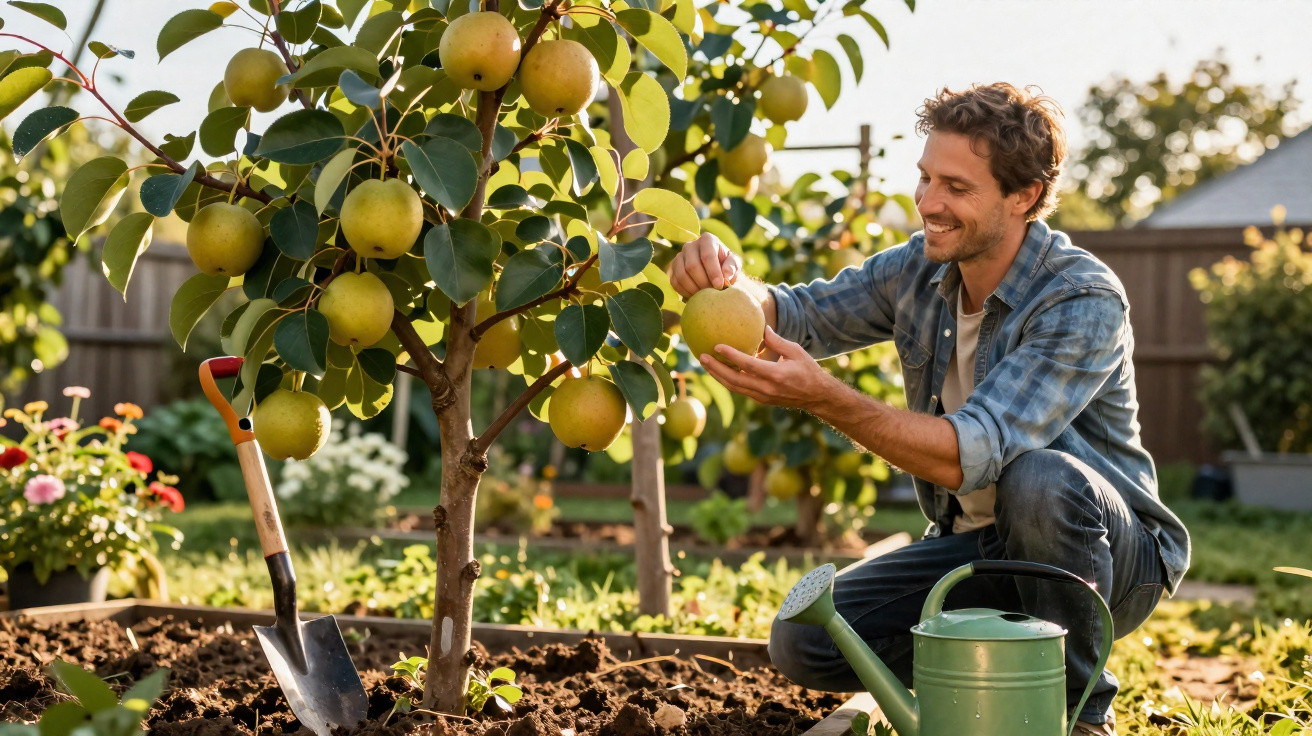
Spring, new beds and empty fruit-tree corners: plant now and before long you could be enjoying a completely different kind of ‘pear’.
In spring, many amateur gardeners instinctively choose apple and pear saplings, as these are the familiar options in garden centres. Yet there is an Asian fruit tree that is almost as straightforward to plant as an apple tree, while producing fruit reminiscent of a cross between an apple and a pear – exceptionally juicy, but also wonderfully crisp.
An unusual fruit tree with a surprising twist
What makes Nashi so distinctive
The star of this story is the Nashi, often known in the UK as the ‘apple pear’. At first glance, it resembles a round, golden-yellow apple variety. Take the first bite, however, and its difference becomes clear: it has the delicate flavour of an aromatic pear, but is noticeably firmer and crunchier.
“The Nashi combines the sweetness of a pear with the bite of an apple – and is far hardier in the garden than many people think.”
Bringing a Nashi into the garden does more than provide a talking point at the next barbecue. It broadens the range of fruit in your own orchard, gives bees another source of nectar and puts a fruit on the table that many people have previously encountered only in Asian food shops.
Location: plenty of sun and well-drained roots
Nashi trees thrive on warmth and light. A position in full sun is virtually essential if the fruit is to develop its full flavour and sufficient sweetness. The tree will still grow in partial shade, but the crop will generally be much lighter and less flavoursome.
The soil matters just as much. Its roots are sensitive to waterlogging. A loose, humus-rich and free-draining soil is ideal. When dealing with heavy clay soil, it is best to incorporate:
- Coarse sand to open up the soil
- Well-rotted compost for nutrients
- If necessary, some fine gravel at the bottom of the planting hole
Preparing the ground in this way prevents waterlogging, lowers the risk of root rot and gives the young tree the best possible start.
Planting successfully, step by step
The best time to plant in spring
The ideal planting period is towards the end of March, once the ground is no longer frozen and has begun to warm up. By then, severe frosts are no longer likely in many areas, while evaporation remains low. The tree can establish roots undisturbed before summer places greater demands on it.
Make the planting hole roughly twice as wide and deep as the root ball. This provides enough room to work in soil, compost and sand properly. Before planting, carry out a quick check: if water remains in the hole, the subsoil is too compacted, so add a further layer of gravel or grit.
Why a sturdy stake is essential
Once the tree is in position, comes a frequently overlooked task: fitting a support stake. Young Nashi trees have a delicate root zone and may move about in loose soil during strong winds. This movement can tear fine roots and slow establishment.
Drive in the stake before filling the planting hole completely, so that no roots are damaged. Then use a wide, soft tie to secure trunk and stake in a loose figure of eight. This arrangement prevents rubbing while still providing reliable support.
“A single stake, positioned correctly, often determines whether a young tree grows arrow-straight or crooked during its first few years.”
Why a lone Nashi tree produces hardly any fruit
The tree needs a ‘partner’
One important point surprises many garden owners: most Nashi varieties are self-sterile. They produce abundant white blossom in spring, but when planted alone they set very little fruit. Reliable fruiting only follows when pollen comes from a suitable companion plant.
The solution is straightforward: a compatible pear tree must grow nearby. Their flowering periods need to overlap so bees can carry pollen from one tree to the other. A traditional pear tree such as the Williams variety, or another common dessert pear from a garden centre, is well suited.
How far away the pollinator can be
Keep the distance between the Nashi and pear tree as short as possible. In practice, a radius of 10 to 20 metres has proved effective. In a typical terraced-house garden, it is often enough for a neighbour to have a pear tree, provided the two trees can effectively ‘see’ one another.
- Nashi without a partner: plenty of blossom, hardly any yield
- Nashi with a pear tree within 20 m: substantially more fruit
- Two different Nashi varieties side by side: pollination is often even better
If you are only just creating a garden, it is therefore best to plan a small ‘duo’ of Nashi and a traditional pear tree from the outset.
Water: the crucial factor immediately after planting
Soak it thoroughly once – do not skimp
The final stage of planting is a generous soaking. Even if the soil appears slightly damp or rain is forecast, a newly planted tree needs plenty of water: 15 to 20 litres applied directly around the root ball is a useful guideline.
“The first substantial watering presses the soil against the roots, closes air pockets and ensures contact between the tree and the ground.”
Air gaps in the soil can cause fine roots to dry out. Thorough watering eliminates precisely this risk. Creating a watering rim from soil keeps the water where it is needed, rather than allowing it to wash away across the lawn.
The first few months: retain moisture without drowning it
During the rest of spring and through summer, the young tree needs regular checks. The rule of thumb is that the top five centimetres of soil may dry slightly, while the layer beneath should remain moist. If the root ball dries out completely, Nashi trees react sensitively.
A thick mulch of dried grass clippings, leaves or woodchips around the trunk is extremely helpful. The layer should be five to ten centimetres deep, but leave a small clear gap around the trunk so the bark does not rot.
- Watering frequency in spring: every few days, depending on the weather
- In high summer: check several times a week during hot spells
- Renew the mulch layer regularly as it breaks down
When the first harvest is realistic
Patience pays off quickly
Anyone planting a grafted standard or half-standard Nashi tree today can, in many cases, expect the first worthwhile crops after three to four years. Young trees occasionally produce a few fruits sooner, but the harvest becomes truly rewarding once the tree has formed a stable crown.
Ripe Nashi fruits develop an even colour, yield very slightly to gentle pressure and have a subtle scent. By late summer or early autumn, the time has come: the fruits can be picked easily without needing to pull hard.
| Feature | Nashi | Traditional pear |
|---|---|---|
| Fruit shape | Round, apple-like | Typical pear shape |
| Texture | Very crisp, juicy | Softer, melting |
| Storage life | Several weeks in the fridge | Often shorter, depending on variety |
| Uses | Fresh, salads, desserts | Fresh, compote, cakes |
Ways to use Nashi in everyday cooking
Fresh, in salads or on the barbecue
Nashi fruits work particularly well in fruit salads because they do not turn mushy as quickly. Cut into thin slices, they add a crisp, sweet-fresh note to green salads. In Asian-inspired cooking, Nashi often appears in savoury dishes, for example finely sliced with ginger or chilli.
They are also interesting on the barbecue: briefly grilled slices with a little honey and lemon juice make a quick dessert that, in late summer, can come practically straight from your own garden.
Benefits and potential pitfalls
Nashi trees are regarded as hardy and relatively resistant to many typical pome-fruit diseases. They cope with winter temperatures across much of the UK and produce reliably with good care. Anyone already familiar with apple or pear trees will quickly understand pruning, as the crown structure resembles those familiar species.
Nevertheless, a few points require attention: severe late frosts during flowering can reduce the crop, as is usual with pears. In very damp locations, the risk of fungal diseases increases – an airy site and a restrained, more open crown structure help here. Without a suitable pollinator, the tree’s potential simply goes unused.
By accounting for these factors, you can add a fruit tree to the garden with Nashi that usefully complements traditional varieties, brings greater variety to the harvest and makes clear with every bite why the small amount of extra planning is worthwhile.

Comments
No comments yet. Be the first to comment!
Leave a Comment