
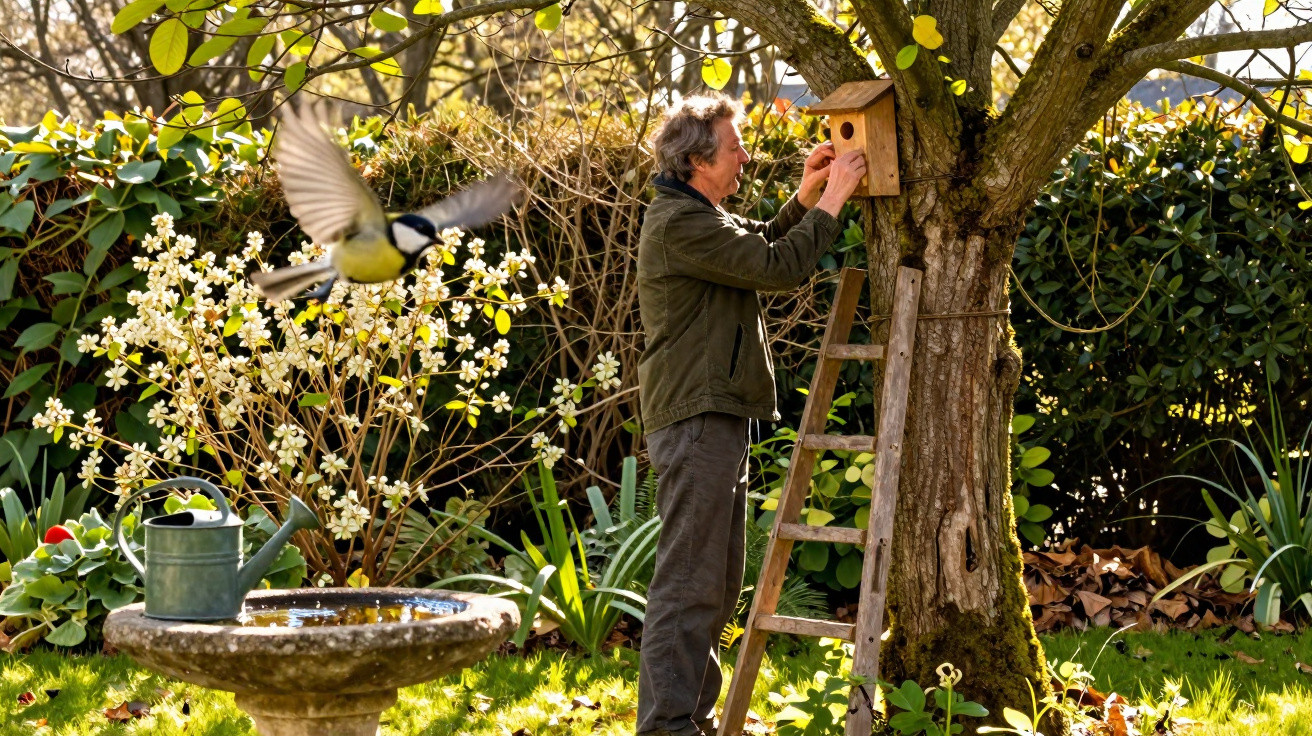
Act wisely now and you can turn your garden into a hotspot for tits.
In March, many people quickly buy a new nest box from the garden centre, hoping that a great tit or blue tit will soon move in. However, experts from the French bird conservation organisation LPO are clear: a pretty box alone is not enough. Anyone who genuinely wants to attract tits in spring needs to consider the whole garden – from food to shelter.
Why tits find your garden appealing in the first place
Tits are among Europe’s most adaptable garden birds. Curious and energetic, they are constantly searching for food. In spring, they have two key priorities: finding a secure breeding site and securing sufficient food for their chicks.
“A garden only becomes attractive to tits when it provides shelter, food, cover and safe routes all in one package.”
In other words, the ideal garden for tits is not a pristine ornamental lawn, but a small landscape rich in structure. Trees, shrubs, dense hedges, leaf-filled corners and a few wild plants can all make a decisive difference.
Nest boxes: useful, but often positioned wrongly
Tits certainly appreciate nest boxes. Even so, many boxes remain unused for years. This is rarely because “there are no birds in the area”; almost always, the reason lies in the details.
How to hang a nest box correctly
- Height: A position 2 to 4 metres above ground is ideal, making access difficult for cats and martens.
- Direction: East or south-east is best; never place it in direct midday sun.
- Stability: The box must not sway in the wind, as this distresses the birds.
- Entrance hole: For tits, the diameter should be around 28–32 mm, depending on the species.
- Peace and quiet: Avoid constant foot traffic immediately in front of it, or a noisy patio just two metres away.
There is another important consideration: many modern homes offer hardly any natural cavities. Specialists advise against excessively sealing gaps and hollows in buildings, old trees or walls where they pose no danger. Natural niches like these are particularly appealing to tits.
“Where cracks, cavities and old walls are still allowed to remain, genuinely desirable homes are created for hole-nesting birds such as great tits, blue tits and sparrows.”
Plant choices: no insects, no young tits
In spring, the diet of tit chicks consists almost entirely of insects, larvae and spiders. A garden planted solely with sterile ornamentals may look neat, but it will support very few insects. According to LPO experts, this is where many amateur gardeners make their biggest mistake.
Plants that really help tits
The key is to choose native plants rather than sterile cultivated varieties. Many heavily bred plants produce attractive flowers but provide neither nectar nor pollen for insects – and therefore fail to support the food chain birds rely on.
Suitable choices include:
- Native wild shrubs such as elder, blackthorn, hawthorn and hazel
- Flowering perennials including oxeye daisies, common mallow and viper’s bugloss
- Herbs such as thyme, oregano and chives, provided they are allowed to flower
- Fruit trees – apple, cherry and plum – which supply insects and, later, fruit
These plants attract countless insects. The more insects there are, the less stressful the breeding season is for parent tits. They can find enough protein-rich food for their chicks close to the nest.
Garden density: why being “too tidy” causes problems
Bird conservationists use the term “garden density” to describe how many hiding places, connections and layers a garden provides. A closely mown lawn with a lone thuja in the middle is entirely unsuitable for tits.
“A dense, living garden with hedges, shrubs and undergrowth feels to tits like a small, safe town with countless lanes and backyards.”
Hedges as a lifeline for garden birds
Hedges serve several purposes at once:
- Visual cover and a refuge from birds of prey
- Concealed places for nests
- An insect hotel with a permanent buffet
A mixture of different shrubs that offer food at varying times of year is especially beneficial. Berry-bearing shrubs do more than satisfy hunger: their high water content also makes them a natural “drinking station”.
Evergreen corners as safe shelter
Experts recommend planting at least a few dense, evergreen shrubs. They protect birds from wind, rain and cold, both in winter and during severe spring storms.
Appropriate options include:
- Yew, but only where young children cannot eat the berries
- Privet, which will retain flowers and berries if left untrimmed
- Cherry laurel, to be used cautiously; native alternatives are preferable
What to stop doing in your garden from now on
A bird-friendly garden does not have to become overgrown. Rather, it means reconsidering certain familiar habits.
| Typical habit | Problem for tits | Better approach |
|---|---|---|
| Clearing away every fallen leaf in autumn | Removes insect hiding places and food sources | Leave a pile of leaves in one corner |
| Spraying poison against “pests” | Fewer insects for chicks and toxins enter the food chain | Use mechanical methods and encourage beneficial insects |
| Mowing the lawn short every week | No flowers, fewer insects and hardly any cover | Allow part of the lawn to grow as a wildflower meadow |
An extra tip: water and quiet – often overlooked
During dry springs, tits need more than food: they also need water. A shallow bowl of water, with a few stones to perch on, can be set up quickly and makes a real difference. Replace the water daily so that germs do not build up.
Quiet is just as important. A loud lawnmower directly beneath the nest box, party music late into the night or continual gardening around the nesting tree can persuade sensitive pairs to look elsewhere.
“Anyone who reduces noisy activities in the ‘tit neighbourhood’ during the breeding season significantly improves the chances of successful young.”
Why a garden for tits pays off twice
Tits are not merely pleasant to watch; they also perform an important role in the garden. They consume huge numbers of caterpillars, aphids and other insects that can damage plants. A single pair of tits feeds several thousand insects to its young while raising them.
Planning specifically for these birds therefore also means investing in a natural “garden protection team” that works without chemicals. After a few years of adding more structure, hedges and wild plants, many gardeners find they need to use sprays far less often.
Anyone unsure which shrubs are native to their area can contact local conservation groups. Their specialists know which species suit the soil, climate and urban or rural setting, and can often advise on suitable places to install nest boxes as well.
The result is a garden that attracts not only tits, but also sparrows, robins, blackbirds and many other species. That diversity is precisely what makes it so appealing: a living, birdsong-filled garden that offers more in spring than simply green space – it gives you the feeling of sitting in your own small natural paradise.




Comments
No comments yet. Be the first to comment!
Leave a Comment