
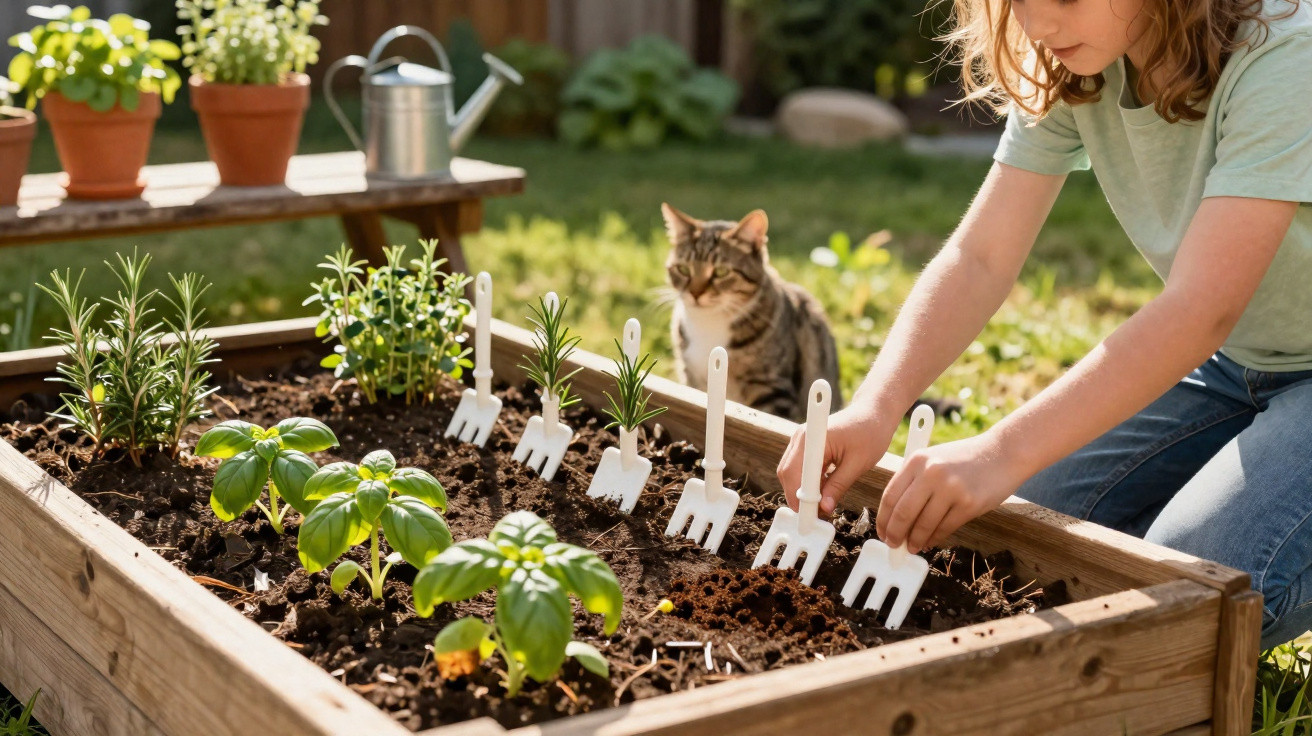
At first glance, anyone seeing a bed like this may assume someone has dumped rubbish there or developed an odd decorating habit. However, appearances are deceptive. Those unremarkable forks conceal a carefully considered trick that an increasing number of amateur gardeners use to protect vegetables from animal pests without chemicals – for next to nothing.
Why plastic forks in vegetable beds solve genuine garden problems
The idea is remarkably straightforward: it takes advantage of animals’ instincts and preference for comfort. Cats, rabbits, squirrels and other garden visitors tend to seek out soft, exposed soil, where they can walk, scratch, dig or settle down with ease.
When forks are pushed into the soil between plants with their prongs facing upwards, that welcoming patch becomes an uncomfortable obstacle course. Every step may feel prickly, and every landing becomes uncertain.
A plastic fork turns an animal’s favourite spot into a minefield – without poison, noise or high-tech solutions.
Cats in particular are among the most disruptive visitors to vegetable beds. Freshly loosened soil is especially appealing to them. They dig into it, relieve themselves and cover it up again, easily ruining an entire row of delicate seedlings in the process.
Once their paws meet firm, pointed fork prongs, they quickly learn: “This is unpleasant; I’d rather find somewhere else.” The method can also deter squirrels searching the soil for buried nuts or seeds, as well as small mammals that wander through beds at night.
There is another benefit too: the visual effect. Animals can become uneasy around unfamiliar patterns and objects in their surroundings. A whole bed filled with upright forks resembles a confusing field of obstacles – too risky to cross comfortably.
Unlike sprays or liquid treatments, this barrier cannot simply be washed away by rain. The forks stay where they are, do not need regular reapplication and will generally last for an entire growing season.
The crucial stage: protecting young plants
Plastic forks offer their greatest advantage during the garden’s most vulnerable period: when young plants are only just emerging. At this point, one brief visit from a cat or rabbit can be enough to destroy a full row of radishes or lettuce.
Experienced gardeners report seeing noticeably less damage when they create a dense “fork belt” around fresh sowings and newly planted seedlings. Beds that once showed new digging holes, snapped stems and displaced soil every morning can suddenly remain undisturbed.
Once installed, a fork barrier often protects plants for weeks – precisely when seedlings are at their most vulnerable.
How to position forks correctly in the vegetable garden
A few forks scattered at random are unlikely to achieve much. What matters is a planned layout with as few gaps as possible.
The four most important strategies at a glance
- Edge protection: Place a close row of forks along the borders of the bed. This blocks the usual entry points.
- A protective zone around individual plants: Arrange four to six forks in a circle around particularly tempting plants, such as young lettuce, herbs or strawberries.
- Between rows: Push forks into paths and gaps between vegetable rows so animals cannot stroll through them comfortably.
- Blocking animal routes: If you regularly notice tracks or well-used routes, create a targeted “fork line” there.
A spacing of around eight centimetres between forks has proved effective, with the prongs always pointing upwards. This creates a dense structure that animals will be reluctant to walk through.
After heavy wind or rain, it is worth carrying out a quick check. Simply straighten any forks that have fallen over. Animals will exploit gaps without hesitation – they are surprisingly persistent and may test a barrier over several days.
Why forks alone are rarely enough
The fork method addresses many issues, but it cannot solve every one. Slugs, insects and certain birds require additional measures. That is why many amateur gardeners combine several natural deterrent methods.
Scented plants as a living protective wall
Strongly scented herbs and flowering plants can discourage numerous pests. Common examples include:
- Marigolds around tomato or bean beds
- Basil close to peppers and tomatoes
- Mint in pots at the edge of beds, as it spreads rapidly when planted in the ground
Their aromas can disrupt the orientation of many insects and small mammals. At the same time, companion planting can often improve the health of the main crops.
Spicy kitchen ingredients for inquisitive noses
Cayenne pepper or chilli powder spread around the edge of sensitive beds may help keep rodents and some mammals away. Anything that sniffs or tastes it is unlikely to enjoy the experience twice. The layer needs renewing after rain because it dissolves quickly.
Essential oils, such as peppermint or eucalyptus oil, are also used in targeted areas. They are more suitable for small spaces or specific locations, for example close to entrances into the garden.
Coffee grounds – deterrent and fertiliser in one
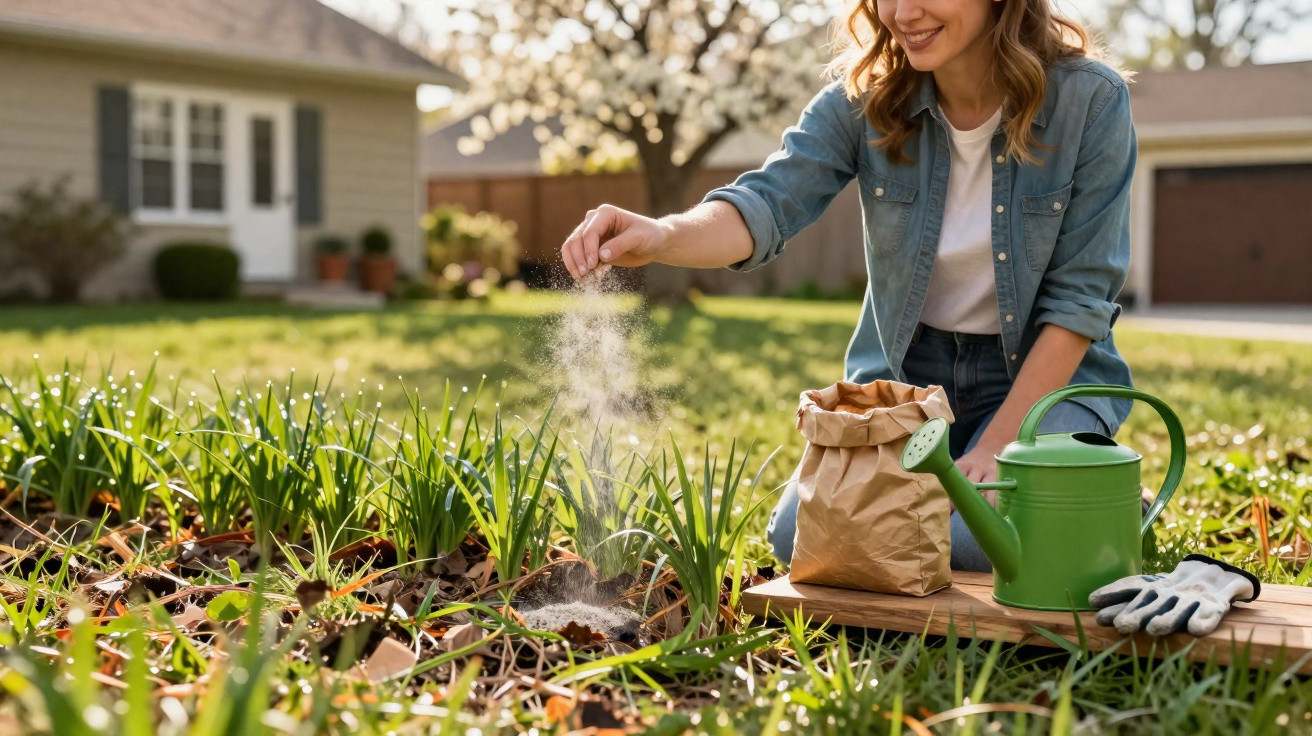
Many amateur gardeners no longer put coffee grounds in the bin, instead spreading them directly over their beds. Their slightly coarse texture and strong smell are particularly unwelcome to slugs and some small mammals. At the same time, the grounds add a little nitrogen to the soil and can improve its structure when used in moderation.
Coffee grounds spread around young plants, with forks between them: for many amateur gardeners, this is the new standard defence.
A sustainable side benefit: giving plastic a useful second life
Using plastic in the garden may initially seem contradictory. After all, many people are trying to avoid plastics. The context is important here, though: forks that would otherwise be thrown away are given a second, long-lasting purpose as plant protection.
Unlike disposable sprays or short-lived plastic traps, they can be used for years. At the end of the season, they can be stored in a garden box and brought out again the following spring. They leave no residue in the soil because they are not buried; they are only pushed into it.
Anyone who would prefer tougher materials can switch to reusable options, such as sturdy plastic or bamboo forks intended for camping. They work on the same principle and often last even longer.
Risks, limitations and useful additions
Despite its benefits, this method has a few considerations. In gardens with lots of young children or particularly energetic dogs, it is sensible to take extra care. The prongs are plastic, but falling carelessly into a bed could still be unpleasant. In these situations, push the forks further into the soil so that only a small section remains exposed.
Birds are not always discouraged by forks either. Blackbirds, for instance, may simply land between the prongs or on taller parts of the plants. Nets, reflective tape or denser planting tend to work better in such cases, as they make the soil less appealing for scratching around in.
Many garden owners have positive results when they combine the fork barrier with clearly defined garden areas: a fenced vegetable garden, a separate spot for the cat containing sand or loose soil as a “toilet”, and, where appropriate, a motion-activated light for nocturnal visitors.
Practical examples and easy ways to start
Anyone wanting to try the method does not need to alter the entire garden at once. A small trial area is enough. For example:
- Choose a bed containing young lettuce or spinach.
- Insert forks into only one half, placing them closely along the edges and between the rows.
- Monitor where more damage occurs over two to three weeks.
The difference is often apparent after only a few days. Many gardeners report that the unprotected half shows considerably more paw prints, disturbed soil and nibbled leaves.
If the results are successful, the approach can be extended to more sensitive crops: strawberries, early carrot sowings, herb beds or newly planted brassicas. The small amount of effort quickly pays off, especially when using more expensive seed or rare varieties.
It becomes particularly effective when several methods are combined: forks in the soil, scented companion planting and coffee grounds around the plants. A simple plastic item then becomes part of a well-designed, natural protection system – without high-tech solutions, major expense and with surprisingly strong results.


Comments
No comments yet. Be the first to comment!
Leave a Comment