
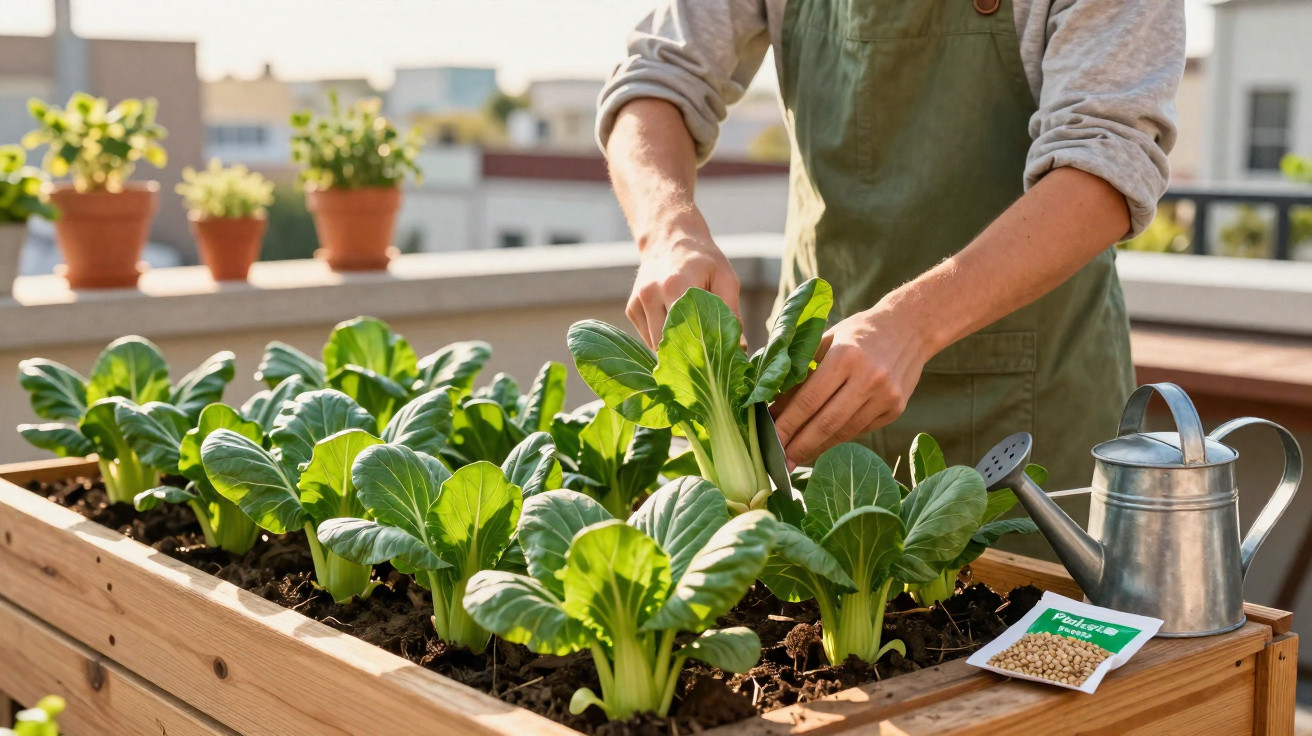
While tomatoes, peppers and cabbages take their time to grow, one vegetable can take over the bed and fill the menu in record time. This modest Asian star thrives equally well in window boxes and conventional beds, producing crisp leaves after only a few weeks. For anyone who becomes impatient in spring, it could be the perfect new favourite.
The Asian speedster: why everyone is choosing Pak Choi now
The vegetable in question is Pak Choi, often called Chinese cabbage in the UK. Botanically, it belongs to the brassica family, alongside savoy cabbage and white cabbage, yet it looks considerably more graceful in the garden: succulent white stems topped with dark green leaves arranged in compact rosettes.
Pak Choi goes from sowing to harvest in just 30 to 50 days – faster than almost any traditional garden vegetable.
For gardeners who do not like waiting, this is a real game-changer. While other crops occupy valuable growing space for months, Pak Choi produces a harvest remarkably quickly. It can fill gaps in beds, make efficient use of a balcony and noticeably reduce supermarket shopping.
Ideal for small spaces and window boxes
Pak Choi does not require a large plot. A deep window box, raised bed or sizeable container is entirely sufficient. Even with only a few square metres available, it is possible to harvest a worthwhile quantity.
- Its root system remains comparatively shallow
- Around 20–25 cm of space per plant is enough
- Young leaves can also be sown more densely as “baby Pak Choi”
Seeds are available in almost every garden centre. They are inexpensive, keep well for a long time and let beginners get started without extensive prior knowledge.
How to prepare the bed for rapid Pak Choi growth
A well-prepared soil and suitable position are the basis of a swift harvest. Pak Choi prefers a bright or partially shaded spot and performs especially well in the milder temperatures of spring.
Position and sowing: directly outdoors or under cover?
Temperatures often vary considerably in early spring. Those wanting to play safe can sow beneath polythene, in a cold frame or under simple horticultural fleece. This shelters young plants while allowing the soil to warm more quickly.
Once severe frosts are no longer expected, seeds can be sown directly outdoors. Many gardeners sow into shallow drills and thin the seedlings later; the weaker plants become an initial mini harvest for the frying pan or salad bowl.
The ideal soil mix for strong plants
Pak Choi needs nourishment, but not a cocktail of chemicals. Loose, humus-rich soil provides the foundation for its rapid growth.
A mixture of straightforward natural ingredients has proved effective:
- 2 spadefuls of well-rotted compost
- a handful of horn shavings or horn meal as a nitrogen source
- a thin top layer of loose all-purpose compost, helping the seeds to germinate easily
This combination creates an airy soil, supplies sufficient nutrients for fast development and retains water well. Chemical fertilisers are therefore unnecessary.
Water, water, water: keeping Pak Choi tender and succulent
Pak Choi is a classic leafy vegetable, and foliage has a high water requirement. Lack of moisture quickly causes problems: plants bolt into flower and become tough or bitter.
Water correctly: steady moisture rather than occasional soaking
Keep the soil consistently moist without making it waterlogged. Watering smaller amounts more frequently is better than trying to compensate with an occasional heavy drenching. Waterlogging prevents root development, while drought stress encourages flowering.
A practical tip is to spread a thin layer of mulch around the plants to retain moisture. Suitable materials include:
- dried grass clippings
- straw or chopped hay
- finely shredded fallen leaves
This prevents the soil from drying out as rapidly and allows slightly longer intervals between watering.
Pest protection without chemicals: simple measures with a big impact
Pak Choi’s tender leaves are highly appealing to pests. In particular, small beetles such as flea beetles and hungry slugs quickly develop a taste for them in spring.
Physical barriers rather than chemical treatments
Placing fine-mesh vegetable netting over the crop immediately after sowing stops beetles reaching the plants in the first place. Simply drape the net over hoops or wooden stakes and weigh down its edges with stones.
Several methods work well together against slugs:
- circles of crushed eggshells around each plant
- narrow strips of wood ash, replenished regularly
- collecting them in the morning while they are still active
Anyone who protects plants early and consistently can achieve a healthy, unblemished harvest without synthetic products.
From seed to plate in record time: recognising the perfect harvest point
Pak Choi’s greatest advantage becomes clear at harvest time. These plants grow at a pace that is almost visible from one day to the next.
Ready to harvest after just 30 days
The first tender leaves can be cut roughly 30 days after sowing. For sturdier, fully developed heads, allow around 40 to 50 days.
| Time after sowing | Stage | Use |
|---|---|---|
| approx. 30 days | young, tender leaves | salads, wok dishes, light pan-fried meals |
| 40–50 days | fully developed rosettes | side dishes, vegetable pans, soups |
This short growing period makes Pak Choi ideal for bridging gaps in spring and late summer, or for tucking between crops that remain in place for longer.
Cut rather than pull: keeping the bed productive
Precision pays off at harvest. Use a sharp knife to cut the plant just above ground level, leaving the root base in the soil. If the central growing point remains undamaged, smaller leaves may regrow.
Harvesting early in the morning means cells are full of water and the leaves are at their freshest. The cabbage will then keep for several days in the fridge, although it loses a little crispness with every passing hour – so the sooner it reaches the kitchen, the better.
From the garden bed straight into the frying pan
In the kitchen, Pak Choi shows why it is so popular in Asian cooking. It cooks exceptionally fast while retaining its crunch.
Simple preparation with impressive results
Many recipes need only a handful of ingredients. A frying pan, a little oil and garlic or ginger are enough to put an aromatic dish on the table. Its flavour is faintly reminiscent of mild mustard or kohlrabi, yet fresher and less heavy than traditional white cabbage.
- toss briefly in a wok with garlic and soy sauce
- slice into strips for Asian-inspired soups
- serve raw or lightly blanched in a salad with sesame and lime
Anyone who usually thinks of brassicas as heavy, hearty vegetables will find the opposite here: light, crisp and low in calories, yet full of vitamins and minerals.
Plan cleverly: keeping fresh Pak Choi available almost continuously
To avoid everything ripening at once, it is worth paying close attention to the sowing calendar. Rather than using an entire packet of seed in one go, sow small batches over several weeks.
Succession sowing for a continuous harvest
An interval of around two weeks works well. New plants then keep maturing as the first ones make their way into the kitchen. The same approach can be repeated in late summer: after the warmer months, Pak Choi fills spaces vacated by tomatoes, beans or courgettes.
A small bed planned intelligently can pair Pak Choi with other fast starters, such as radishes or cut-and-come-again lettuce. The result is a highly productive mini garden that supplies crops almost continuously.
What beginners should know: risks, tips and clever combinations
Pak Choi is generally uncomplicated, although there are still a few pitfalls. It likes heat far less than mild conditions and bolts rapidly during high-summer spells. It is therefore better suited to spring and late summer, or to partially shaded areas during midsummer.
As a brassica, it shares diseases with kohlrabi, broccoli and other related crops. Anyone with clubroot problems in their garden should grow brassicas in the same bed only once every few years. A generous crop rotation helps to keep the soil healthy.
Mixed planting offers interesting opportunities. In rows between slower-growing crops such as climbing beans, celery or leeks, Pak Choi uses the space before the other plants need it. This significantly increases the yield per square metre.
Anyone who has watched a harvest-ready head develop so quickly from a tiny seed will view their garden bed differently. The supposedly “boring” spring before tomato season becomes the most productive period of the year – and the journey from garden to frying pan is rarely as short as it is with Pak Choi.
Comments
No comments yet. Be the first to comment!
Leave a Comment