
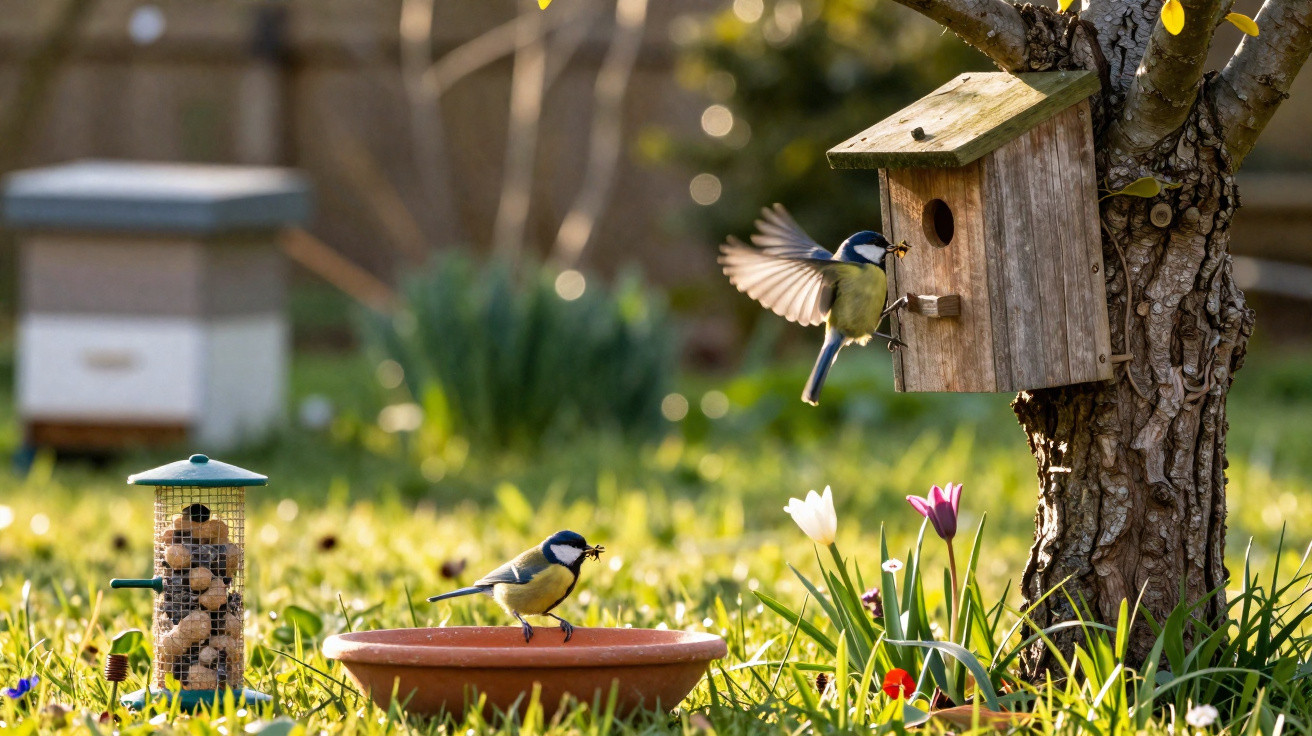
With the first mild days comes a problem that beekeepers and hobby gardeners now recognise across large parts of Europe: the Asian hornet. It circles beehives, raids orchards and reduces pollinator numbers. What many people do not realise is that the familiar tit can help ease the pressure on bees and other insects – provided it is deliberately encouraged into the garden early in the year.
Why March is so crucial for the Asian hornet
The Asian hornet spends the winter as a lone queen. As winter recedes, usually in March, these queens emerge and start looking for a site for a new nest. This is the point at which the foundations for the entire season are laid.
If the queen finds a suitable undisturbed location, her colony expands rapidly. Over the course of a year, a single nest can consume an estimated eleven kilograms of insects. A substantial share consists of honey bees, wild bees and other vital pollinators. Anyone who waits until high summer to act will be faced with a fully established, defensive colony. Intervention then becomes risky and is often costly.
Experts now assume that the Asian hornet can no longer be completely pushed back in the affected regions. It reproduces quickly, spreads along rivers and transport routes, and encounters few specialist predators. Individual bird species, such as bee-eaters or certain birds of prey, do occasionally take them, but these birds are not present everywhere. This is where a widespread garden bird comes in: the tit.
“Anyone who creates inviting conditions for tits in March slows the development of new hornet colonies at the very earliest stage.”
Tits as allies: small birds with a big appetite
Blue tits, great tits and coal tits all have one thing in common: they feed their young mainly on insects. Once the breeding season starts, activity around the nest box becomes intense. The adult birds fly back and forth tirelessly, filling their chicks’ beaks with caterpillars, grubs and other small creatures.
At the busiest stage of breeding, tit pairs are estimated to make between 500 and 900 feeding trips each day. Within a few weeks, they consume several thousand insects and larvae. If an Asian hornet nest is nearby, its larvae can form part of their prey, alongside many other species.
Of particular interest to gardeners is that great tits will readily nest close to hornet nests when the opportunity arises. They use the nearby nest as a food source. Tits benefit especially when a hornet nest has been abandoned in autumn or early winter, feeding on larvae and dead insects left behind. In doing so, they reduce some of the potential for new queens.
However, experts caution against overstating this effect. Tits are not specialist hornet hunters. They forage opportunistically, taking whatever is currently available and easy to catch. No bird, nor any single other animal species, can regulate the Asian hornet on its own. Even so, the constant, if limited, predation by tits places extra pressure on the hornet population – creating a little more balance in the garden.
How to turn the garden into a paradise for tits
For tits to play their part as small helpers, they need suitable nesting sites, shelter and enough food. Acting at the right time of year provides an advantage.
The right nest box in the right place
Competition for suitable cavities begins in March. Natural tree holes have become scarce, making nest boxes particularly important in built-up areas. A simple wooden box is sufficient as long as it meets several basic requirements:
- A sealed wooden box without gaps, so that it stays dry inside.
- An entrance hole around 2.5 to 3 centimetres in diameter for tits.
- A mounting height of between 2 and 5 metres, depending on the size of the garden.
- A sheltered position, away from direct midday sun and draughts.
- A site that is difficult for cats and martens to reach, rather than directly beside climbing aids.
Putting boxes up by mid-March at the latest increases the likelihood that tits will occupy them in the same year. An east- or south-east-facing position is ideal: morning sun provides warmth without causing excessive heat in summer.
Food in late winter, insects in spring
Natural food sources are limited in late winter. Providing supplementary food can help birds through this period and encourage them to remain in the garden. The important thing is to stop in good time, so they switch to insects rather than becoming permanently reliant on fatty food.
The following approach has proved effective:
- Offer sunflower seeds, chopped nuts and vegetable fats from January until the end of March.
- Gradually phase out feeding as warmer days begin.
- At the same time, ensure the garden remains rich in insects, for example with flowering plants and “wild corners”.
Shrubs such as elder, hawthorn and hazel provide both food and cover, as well as material for nest building. Leaving some parts of the garden less than perfectly tidy also earns points with birds: leaf piles, dead wood and old plant stems are real insect hotspots.
A water source and no poisons
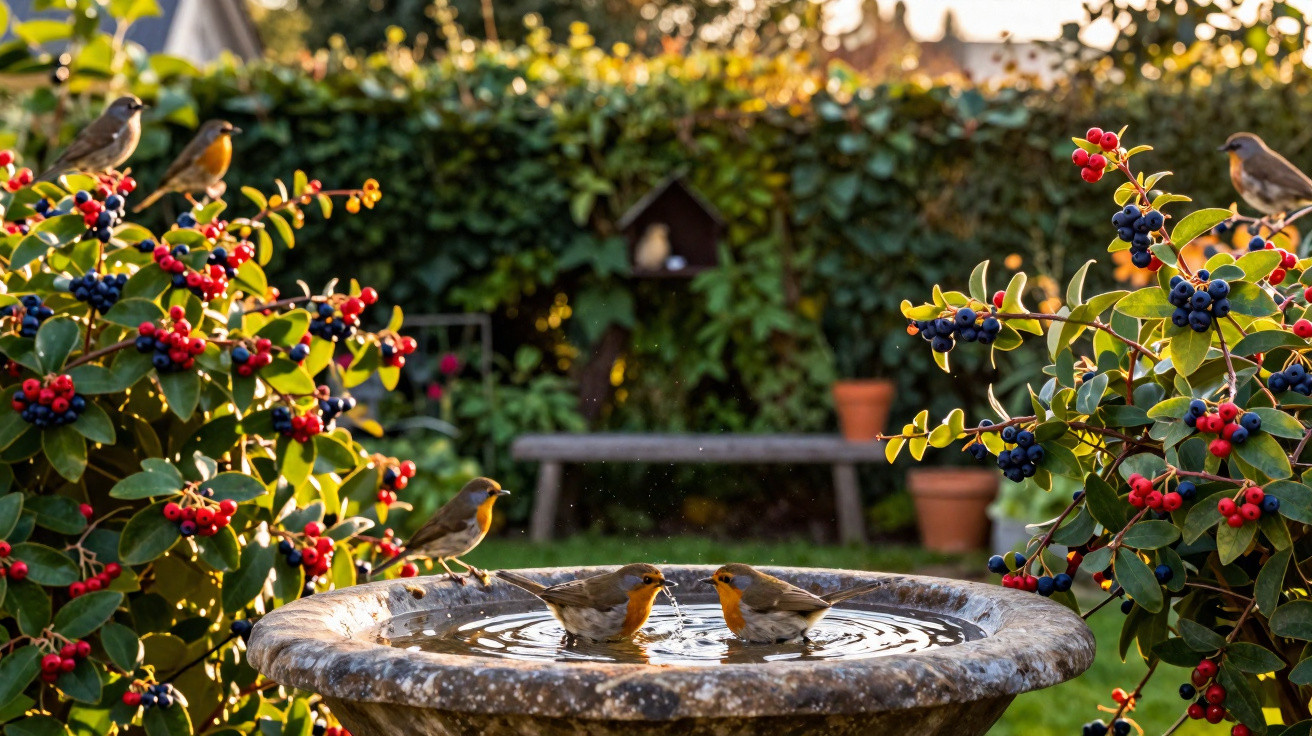
Without water, many garden birds stay away in summer. A shallow dish or small basin is enough, provided it is cleaned and refilled regularly. The water should be kept shallow so that animals cannot drown.
Avoiding pesticides is essential. Insecticides affect not only pests but also the prey of tits – and often the birds themselves. Avoiding chemical products means more food is available and lowers the risk of poisoning.
“A pesticide-free garden with nest boxes, native shrubs and a water source is irresistible to tits – while also supporting bees and other pollinators.”
Never tackle Asian hornet nests alone
Useful as tits may be, they are no substitute for professional control. An active Asian hornet nest may be defended aggressively, particularly when it is close to a beehive or an area used frequently by people. Attempting to deal with it using sprays, fire or water can be life-threatening and often causes only limited damage to the nest.
Anyone who finds a suspected nest in the garden should notify the local authority or a trained pest controller. Many regions now have dedicated reporting services for hornet nests. Tits may reduce the number of larvae and dead insects in and around a nest, but they do not deliberately attack the main structure.
More diversity, less pressure on bees
Perhaps the greatest benefit of tits in the fight against the Asian hornet is that their interest is not limited to this species. In spring, they clear large numbers of aphids, caterpillars and other pest insects. Fruit trees, berry bushes and vegetable crops all benefit as a result.
Beekeepers can gain in two ways: hornets face extra pressure during their larval stage, while the need for insecticides is reduced because tits keep many pests in check. Such a garden feels more alive, filled with buzzing and birdsong, and is far more resilient to disruption.
It helps to broaden the idea of what counts as a beneficial creature. Ladybirds and wild bees are not the only helpful garden residents; entire food chains matter. Tits need insects, insects need plants, and plants need pollinators. Changing one end of this chain affects everything else.
Practical examples from regions where the Asian hornet has been present for longer show a pattern: gardens rich in birds and insects may still experience attacks, but they cope better with the pressure. Individually placed traps or purely chemical measures rarely achieve the same result as a combination of early nest reporting, professional control and consistent support for natural opponents.
So, anyone who puts up nest boxes in March, plants native shrubs, avoids poisons and provides water is doing more than helping tits. They are laying the foundations for bees, bumblebees and other pollinators to have a better chance in their own garden – despite the threat posed by the Asian hornet.


Comments
No comments yet. Be the first to comment!
Leave a Comment