
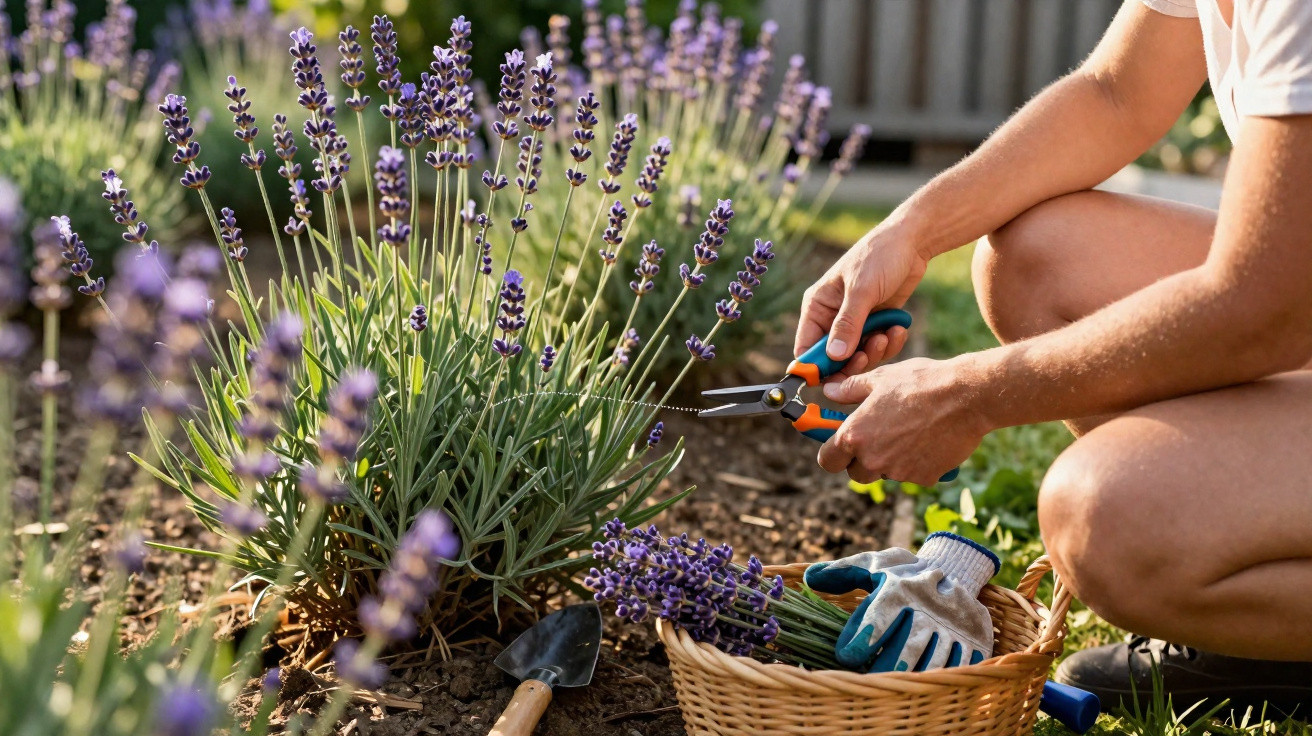
A purple, fragrant cushion outside the patio can suddenly turn into a scraggy broom of dead wood. It is easy to blame the soil, heat or age. Yet one straightforward, frequently overlooked pruning routine determines whether lavender gives up after eight years or flowers dependably for two decades.
Why lavender ages far too quickly without pruning
Botanically, lavender is a subshrub. It rapidly develops tough brown wood at its base, while the upper section consists of young green growth carrying leaves and flowers. This old wood rarely produces new shoots later on. Leave a plant unpruned for years, or cut it back haphazardly, and the result is always similar:
- the plant opens up and splays apart;
- the centre becomes bare;
- shoots turn woody and resemble dry sticks;
- the lavender shrub looks misshapen and tired.
Without purposeful care, a lavender plant is often spent in under ten years. Its base becomes entirely woody, fresh shoots fail to appear and the shrub resembles a stranded twig broom. It is then very difficult to save, particularly if it is “bravely” cut hard back into the brown wood.
Prune lavender only within its green growth every year, and it will stay youthful for considerably longer – in many gardens, for almost 20 years.
Regular pruning keeps the plant young, allows plenty of light to reach it and encourages repeated production of fresh, floriferous shoots. The base ages more slowly, while the shrub remains compact and sturdy.
The ideal time: when lavender should be pruned
Many gardeners hesitate when standing in front of a lavender bush with secateurs in hand. Too early, or too late? Two periods have proved especially useful: one more substantial maintenance prune immediately after the main flowering period, followed by a light shaping or corrective trim towards the end of winter.
The two key lavender pruning dates each year
- Main maintenance prune after flowering – usually from late August until late September. This is when the plant is shortened and reshaped.
- Shaping or corrective prune at winter’s end – depending on the region, between February and March, before sap flow becomes pronounced.
Climate change is bringing the growing season forward slightly in some places. For certainty, do not rely solely on the calendar; assess the plant itself as well. How developed are the buds? Has vigorous new growth already started?
Differences between mild and cold regions
Lavender responds somewhat differently to pruning according to where it is grown. This provides a broad schedule:
| Region | Autumn | Late winter |
|---|---|---|
| Mild locations (wine-growing climates, western areas, sheltered urban gardens) | More substantial maintenance pruning after flowering | A light shaping trim is possible from late February if the buds are still tightly closed |
| Cool locations (northern and eastern areas, upland sites) | Cleaning only: remove spent flowers and frost damage | Carry out the actual structural and shaping prune in March, on frost-free days |
As a rule of thumb, undertake heavier pruning in late summer or early spring, never in the middle of winter or during severe frost.
How to prune lavender correctly – without ruining it
The most important principle is simple: prune only within the green growth. It sounds straightforward, but it is routinely ignored, often with disastrous results.
The invisible safety line
On every lavender shoot, there is a transition from flexible green wood to hard, brown old wood. This is your personal “safety line”:
- Locate the last row of green leaves on each shoot.
- Note that height mentally around the whole plant.
- Always make cuts above this line, never below it.
Following this rule encourages the plant to branch again. The crown stays dense and produces plenty of fresh flower spikes.
The secateurs may cut into young green wood – leave the brown, old wood untouched wherever possible.
The three basic steps of maintenance pruning
In essence, a neat late-summer lavender prune involves three actions:
- Remove spent flowers: shorten old flower stems immediately above the first fresh leaves.
- Reduce the green third: cut back all green growth by roughly one third; younger plants can be cut back by almost half.
- Create the shape: form the plant into a rounded “cushion” so that light and air can reach every part.
Young plants can cope with substantially more pruning. Cutting confidently during the first few years forces the shrub to branch, establishing a strong, dense crown.
Common mistakes that can cost lavender its life
Lavender’s greatest enemy is radical pruning into dead wood. Many gardening guides advocate a “vigorous rejuvenation prune”, but lavender responds differently from roses or elder.
Never cut the entire shrub back into brown wood – many shoots will simply remain dead.
Two errors occur time and again:
- Severe cutting into brown wood: old brown sections contain very few dormant buds. If they are cut, the branches often dry out completely.
- Heavy pruning during sap flow: cutting too late and too hard in spring can leave the plant unable to cope with the intervention, causing individual branches to die back.
Old, severely aged plants can sometimes be “saved” only gradually: each year, remove a few of the oldest branches deeply, prune the remainder moderately within the green growth, and watch closely for fresh green shoots at the base. If no new growth appears, complete replacement is often the only option.
Tools and practical tips to keep lavender healthy for longer
Before pruning, it is worth checking your tools. Blunt or dirty cutting tools leave crushed wounds and create entry points for disease.
- Sharp secateurs: sharpen them before pruning; the blades should make a clean cut rather than tear the stems.
- Disinfection: after working on diseased plants, or before first use, treat the blades briefly with alcohol or boiling water.
- Dry weather: prune on a dry, frost-free day whenever possible. Wet cut surfaces heal more slowly.
For larger, older shrubs, many gardeners use hedge shears. This is quicker, but requires a careful eye to maintain the safety line within the green growth. If unsure, work by hand with sharp garden secateurs instead.
How long lavender can really live
With appropriate care, a lavender plant can reach a surprisingly great age. In typical home gardens, a well-maintained shrub will last for 15 to 20 years, and occasionally even longer. Without pruning, its lifespan is markedly shorter.
Conveniently, healthy, well-grown plants can always provide new cuttings. In late summer, take several semi-ripe shoots, strip the leaves from the lower third, place them in a sand-and-soil mix and keep them moist. This creates replacement plants for tired old specimens later on.
Getting more from lavender: position, varieties and combinations
Anyone already taking the trouble to prune can gain even more from lavender with a few additional measures:
- Position: choose full sun and free-draining, relatively poor soil. Winter waterlogging is lethal.
- Variety choice: true lavender varieties are generally longer-lived and more winter-hardy than many cultivated varieties with exceptionally large flowers.
- Combinations: lavender looks particularly harmonious with roses, catmint, sage or low ornamental grasses in beds kept as dry as possible.
Those who follow this straightforward pruning schedule and consistently work only within the green growth will be rewarded in summer with densely packed flower cushions and an intense fragrance – for far longer than many gardeners now expect.
Comments
No comments yet. Be the first to comment!
Leave a Comment