
An old orchard trick now determines the harvest in spring.
In March, the garden begins to stir: buds swell, and the first mild days create an appetite for home-grown fruit. For a cherry tree in particular, this is when it is decided whether summer brings only a scattering of fruit or baskets full of sweet cherries. Rather than relying on costly fertiliser, the answer is a precise and straightforward pruning method that previous generations already used.
Why the right time to prune a cherry tree determines the harvest
A cherry tree is not merely decorative; it is a sensitive fruit tree. It responds strongly to both the timing and the way it is pruned. Reaching for the saw at the wrong time weakens it, while making cuts at the right moment directs its energy towards fruit.
The crucial window: just before growth begins
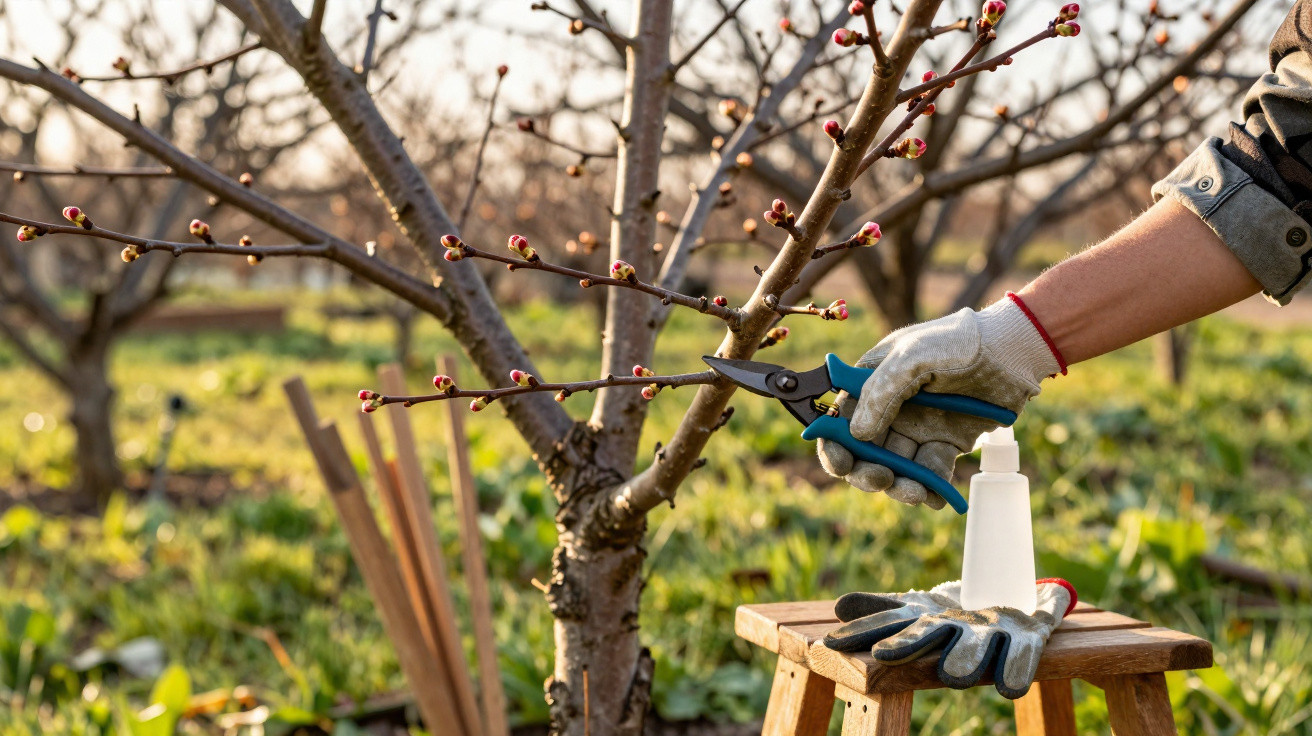
The ideal period for this key pruning work is from late winter to early spring, once the buds are clearly visible but still closed. Sap is already rising through the wood, yet the foliage has not started to obscure the canopy.
“During this brief period, the cherry tree heals pruning wounds quickly – and does not waste its energy on unnecessary foliage.”
If you delay until well into April, or even until after flowering, the tree has already committed its strength to leaves and young shoots. Major cuts at that stage remove valuable vigour, slow the formation of fruit buds and may even increase disease pressure.
Look closely at the canopy before making a cut
Before the pruning shears touch a branch, take a slow walk around the tree. Stand a few metres away and look through the bare branches towards the sky. If the centre of the canopy appears to be an impenetrable tangle of twigs, something needs attention.
An overly dense canopy brings several disadvantages:
- Too little sunlight reaches the interior, leaving the limited number of cherries small and pale.
- Damp areas dry slowly, creating ideal conditions for fungal diseases.
- There is plenty of wood but very few short, fruit-bearing shoots.
The aim of pruning is an airy tree with a well-defined framework that allows light and air to reach the centre.
The old secret: freeing the cherry tree from within
Experienced fruit growers know that a cherry tree needs room to breathe internally if it is to produce a good harvest. The central task is to remove disruptive shoots that consume energy without contributing anything to the crop.
Crossing and rubbing branches: unnoticed sources of disease
On many old cherry trees, branches spread in every direction. Some grow straight into the centre, while others rub against one another. When the wind moves them, they chafe, bark splits and small wounds form. Fungi and bacteria can enter through these exposed areas.
Work methodically:
- Identify branches that cross or rub together.
- In each case, retain the better-positioned branch: one that faces outwards, is strong and does not crowd the canopy.
- Remove the competing branch cleanly at its base, without leaving a long stub.
Every decision of this kind opens up space in the canopy, allowing in more light and making room for fresh fruiting branches.
The hidden sap thieves: water shoots and upright growth
Another frequently underestimated threat to a good harvest is the water shoot, often called a sucker or water sprout by home gardeners. These are long, vertical shoots that race upwards directly from the trunk or thick branches.
“These shoots look vigorous and healthy – but they almost never produce cherries and simply steal energy.”
In spring, a cherry tree covered in powerful upward shoots can seem to be growing well. In fact, it is a reason for caution: these shoots draw large quantities of sap that are then unavailable elsewhere. Remove them as close as possible to their point of origin.
Ideally, cut out water shoots early while they are still soft. Pruning shears or a sharp knife will then be enough, leaving a small wound that closes quickly.
Clean cuts: treating a cherry tree like a patient
Cherry trees are more sensitive to rough pruning than many other fruit trees. Every cut is an injury through which disease can enter. It therefore matters not only which branches are removed, but also how the work is carried out.
Professional-standard tools: sharp and disinfected
Blunt tools tear the wood rather than cutting it cleanly. Smooth cuts heal much more effectively. For a medium-sized garden tree, only a few items are normally needed:
- sharp, sturdy secateurs for thinner branches
- a fine-toothed pruning saw for thicker limbs
- alcohol of at least 70 per cent, or another disinfectant, to wipe the blades
When moving between several trees, or after cutting visibly diseased branches, it is worth cleaning the blade briefly. This prevents fungi and bacteria being carried from one tree to another.
The ideal cut: just above an outward-facing bud
Make each cut just above a bud that points outwards, away from the middle of the canopy. Cut at a slight angle so that rainwater can run away from the bud.
This method has two benefits:
- The bud grows outwards, opening the canopy instead of making it denser.
- The cut surface remains smaller and dries more quickly, making it harder for fungi to establish themselves.
For very thick branches, make the cut in two or three stages, starting from underneath and then from the side. This prevents the branch from snapping off uncontrollably at the end and tearing the bark.
What changes after spring pruning a cherry tree
Anyone who takes the time to prune the tree carefully will notice the difference immediately. The canopy looks lighter and more clearly structured, and the eye can move freely through the network of branches.
The main effects of pruning at a glance
By the end of this spring task, several things within the tree have changed:
- Old, diseased and dead wood has been removed.
- Water shoots and unnecessary competing shoots have been taken out.
- The canopy is open towards the inside, so light reaches right to the trunk.
- Sap is concentrated on short fruiting shoots and flower buds.
“A well-ventilated cherry tree dries more quickly after rain – fungal diseases such as brown rot or leaf spot have far less chance of taking hold.”
If the removed branches are shredded, they can be used as mulch beneath berry bushes or ornamental shrubs. This closes the nutrient cycle directly within the garden.
Light, air and warmth: the ideal conditions for sweet cherries
Once the canopy has been opened up, sunlight reaches far more fruits. This improves colour and intensifies flavour. At the same time, wind can pass through the branches more easily, allowing leaves to dry sooner after dew and rain.
The results become very clear in summer: more flowers develop into fruitlets, fewer cherries rot prematurely and the fruit ripens more evenly. Even areas that were previously hidden within the canopy can suddenly carry whole clusters of red fruit.
How often to prune, and what applies to old and young trees
Not every cherry tree needs radical work every year. Its age and previous care are what matter most.
Building the right structure on young cherry trees
With young trees, the priority is training their form. The aim is to establish a stable framework of a few well-spaced main branches. Side shoots should be shortened moderately so they branch out and later carry fruiting shoots.
A light shaping and thinning cut once a year is generally sufficient. Careful pruning from the start avoids the need for major corrections later.
Rejuvenating old, neglected cherry trees carefully
Older trees that have not been pruned for a long time require a sensitive approach. Do not saw everything back in one go. A phased plan over two to three years is better. Each year, remove only part of the old growth and encourage younger shoots to take its place.
Pruning too severely in a single year otherwise provokes a response: the tree produces masses of new water shoots to compensate for the lost wood, taking it straight back to the outcome you were trying to avoid.
What else home gardeners should consider
Correct pruning is the key to a good harvest, but the wider growing conditions also matter. A cherry tree standing in waterlogged soil, with a damaged trunk or a heavy pest infestation, will not perform at its best even if the pruning technique is flawless.
A few additional points can greatly improve the chances of success:
- Position: sunny and well ventilated, without permanent shade.
- Soil: loose, humus-rich and not continually wet; improve it with compost where necessary.
- Wound care: very large cut surfaces on older trees can be lightly coated with a suitable wound sealant.
- Follow-up checks: inspect the tree during spring for cracks, gummosis or signs of rot.
Anyone who takes up the “old knowledge” of fruit growers and reaches for the shears in spring with a sharp eye and a steady hand can influence their cherry harvest more than any fertiliser could. A few well-placed cuts at the right time turn a leafy tree into a genuine fruit producer – and make summer in the garden considerably sweeter.
Comments
No comments yet. Be the first to comment!
Leave a Comment