
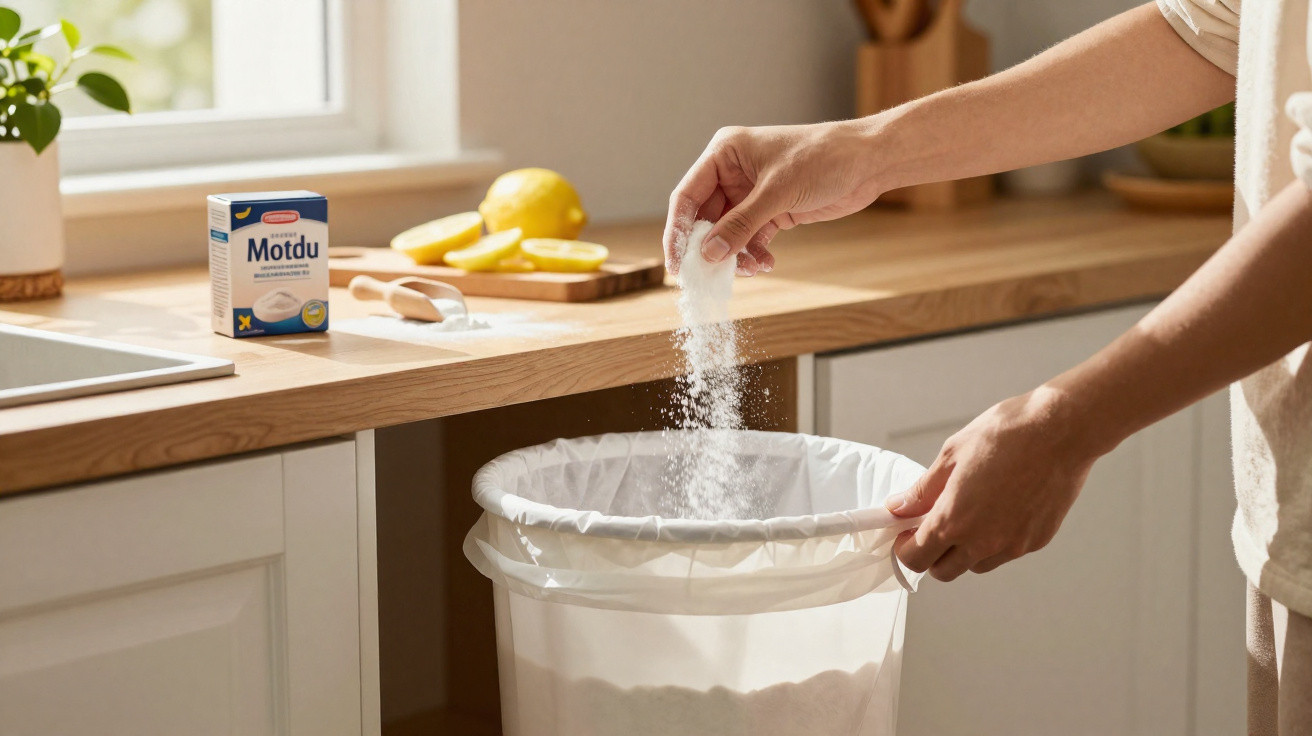
Unpleasant smells from a bin do not always come solely from the rubbish inside the liner. Liquids can leak, organic waste can leave residue at the base, and odours may linger in the container even if the bag appears tightly sealed. A straightforward way to prevent this is to put bicarbonate of soda in the bottom of the bin before fitting a fresh liner.
Why does bicarbonate of soda help remove unpleasant smells?
Bicarbonate of soda is widely used to help neutralise odours in enclosed spaces. In a bin, it creates a protective layer against the sour or strong smell that develops when food scraps, moisture and waste build up.
Crucially, bicarbonate of soda does more than add a pleasant scent. It helps tackle the odour at its source, particularly when there is moisture at the bottom of the bin or minor leaks escape from the liner.
How should you put it in the bottom of the bin?
Once the full bag has been removed, wipe away any visible dirt from the base of the bin and allow it to dry. Then scatter a thin layer of bicarbonate of soda before inserting the new liner. There is no need to use too much: one tablespoon is generally enough for a small bathroom bin. For a larger kitchen bin, use two or three tablespoons.
Spread the powder evenly across the entire base to create a light coating. You can then fit the liner as usual. If liquid leaks out, the bicarbonate of soda will help absorb some of the moisture and reduce the smell before it spreads through the room.
How often should bicarbonate of soda be replaced?
Replace the bicarbonate of soda whenever you change the rubbish bag, especially in the kitchen, where food leftovers, peelings, damp packaging and waste that spoils quickly are common. In bathrooms and offices, where rubbish is usually drier, you can leave longer intervals between replacements.
If the powder becomes damp, clumped or darkened, it has done its job and should be thrown away. It is also worth washing the bin with water and washing-up liquid from time to time, as bicarbonate of soda helps with odours but is not a substitute for cleaning.
What if the smell remains strong?
If the bad smell persists despite using bicarbonate of soda, the bin is likely to need a more thorough clean. Liquid residue can become trapped in gaps, around the lid or in the pedal mechanism, causing a persistent odour that a new liner cannot contain.
In this situation, wash the bin, dry it thoroughly and only then add bicarbonate of soda to the bottom. It also helps not to throw very wet waste straight into the bin. Peelings, coffee grounds, meat, fish and cooked food leftovers should be disposed of in securely sealed bags so that smells do not spread as quickly.
Where else in the home does this trick work?
The same approach can be used in other enclosed areas where odours collect. A small amount of bicarbonate of soda in an open container can help in cupboards, shoe storage, the utility room, bathroom, fridge and even near the laundry basket, provided it is kept out of reach of young children and pets.
The secret to keeping the home free from unpleasant smells is to combine cleaning, ventilation and prevention. Adding bicarbonate of soda to the bottom of the bin before the liner means it works before odours can spread. It is a simple, inexpensive and quick detail that makes a difference, especially in small kitchens and spaces where rubbish remains enclosed for many hours.

Comments
No comments yet. Be the first to comment!
Leave a Comment