
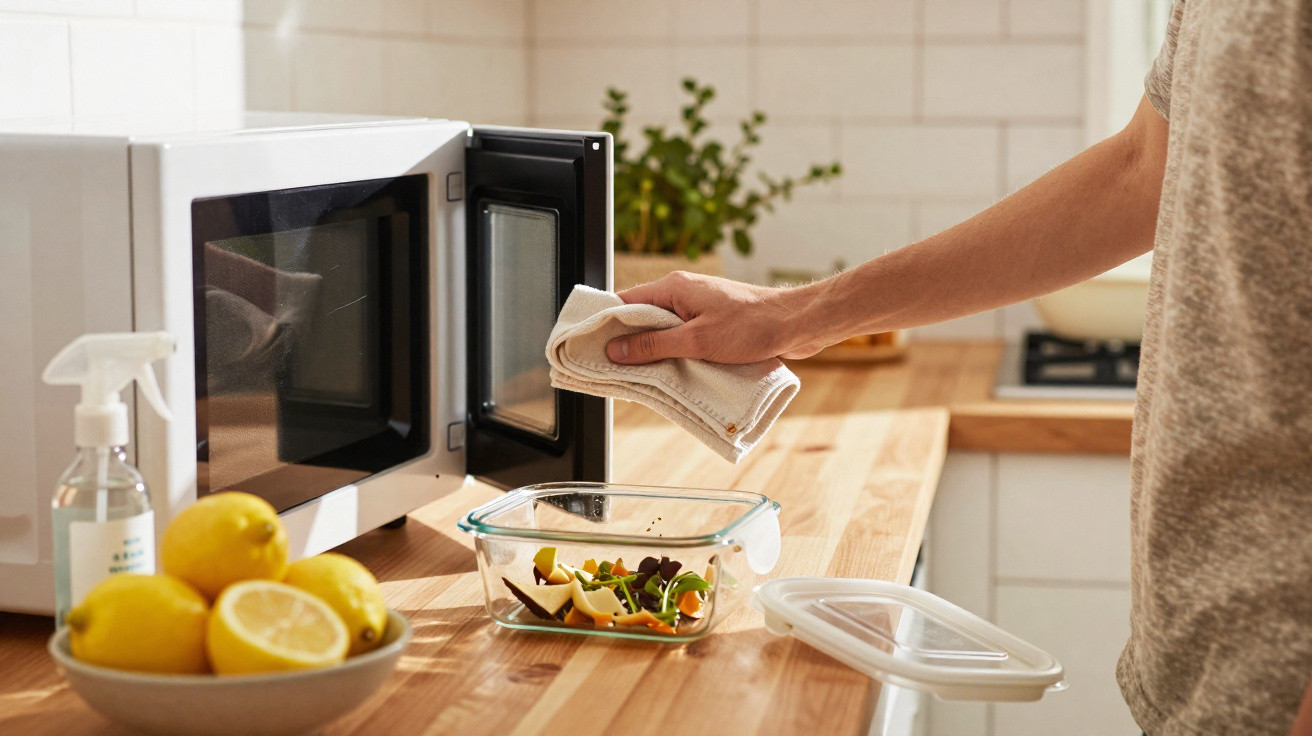
Using a microwave makes everyday life considerably easier, yet daily use can lead to bad habits that often go unnoticed. Stuck-on food residue, unsuitable containers, superheated liquids and a poorly maintained door may reduce the appliance’s performance and even put safety at risk. A few straightforward precautions can heat food more effectively, prevent unpleasant odours and extend the microwave’s lifespan.
Why do daily microwave users need to take extra care?
When a microwave is only used occasionally, minor oversights take longer to become noticeable. In daily use, however, every forgotten splash can turn into dried-on grime, every unsuitable cover can create a mess, and every incorrect container may lead to sparking, warping or unpleasant smells.
It is also important to remember that a microwave does not heat food completely evenly. Food that is poorly arranged on the plate may therefore be hot around the edges but cold in the middle. This can affect flavour, texture and, in certain cases, food safety.
How should you clean a microwave without damaging it?
The most effective cleaning routine is simple and regular. Once the appliance has cooled after any splashes, wipe it with a damp cloth and mild washing-up liquid. Harsh products and scouring with wire wool are unnecessary. Abrasive materials can scratch the interior and damage its surfaces.
For food that has stuck fast, place a microwave-safe bowl containing water and a few drops of lemon juice or vinegar inside. Heat it for a few minutes until steam forms, leave it to work briefly with the door shut, then wipe the interior with a soft cloth. The steam softens grease and makes it easier to remove.
- Wipe up splashes as soon as possible.
- Use a soft cloth or a non-abrasive sponge.
- Avoid wire wool and overly harsh cleaning products.
- Take out and wash the turntable separately.
- Dry everything thoroughly before closing the door.
Which containers are safe to use in a microwave?
Ideally, use containers labelled as microwave-safe. Glass, ceramic and certain specific plastics can be suitable, provided they are undamaged and approved for this use. Metal, aluminium foil, cutlery, containers with metallic decoration and packaging without suitable guidance should not go into the appliance.
Cracked, stained, warped or very old plastic containers also require caution. If a container melts, becomes soft, gives off a strong smell or gets excessively hot, stop using it. If in doubt, transfer the food to a microwave-safe glass or ceramic dish.
How can you heat food properly in a microwave?
For better results, spread the food into a more even layer and cover it with a microwave-safe lid without sealing it completely. This helps retain moisture while preventing splashes. Where possible, stir the food halfway through heating to reduce cold spots.
Standing time matters too. Once the appliance switches off, heat continues to spread through the food for a short while. This pause helps finish the heating process and improves texture, particularly with dishes containing rice, beans, meat, pasta and denser foods.
- Spread food over the plate rather than piling it up high.
- Stir or turn the food during heating.
- Use a suitable lid to prevent splashes.
- Allow the standing time before eating.
- Take care when heating liquids, as they can become extremely hot without looking it.
Which mistakes cause the most damage to a microwave?
A common mistake is running the microwave empty. This may damage internal components because there is no food or liquid to absorb the energy. Other errors include slamming the door, using the appliance with a dirty seal, or continuing to use it when the door is misaligned, loose or difficult to close.
Daily care helps a microwave last longer. Cleaning it regularly, choosing the correct containers, keeping ventilation outlets clear and watching for unusual signs can prevent more serious problems. If there are sparks, a burning smell, unusual noise, a damaged door or irregular operation, the safest option is to switch off the appliance and seek professional repair assistance before using it again.



Comments
No comments yet. Be the first to comment!
Leave a Comment