
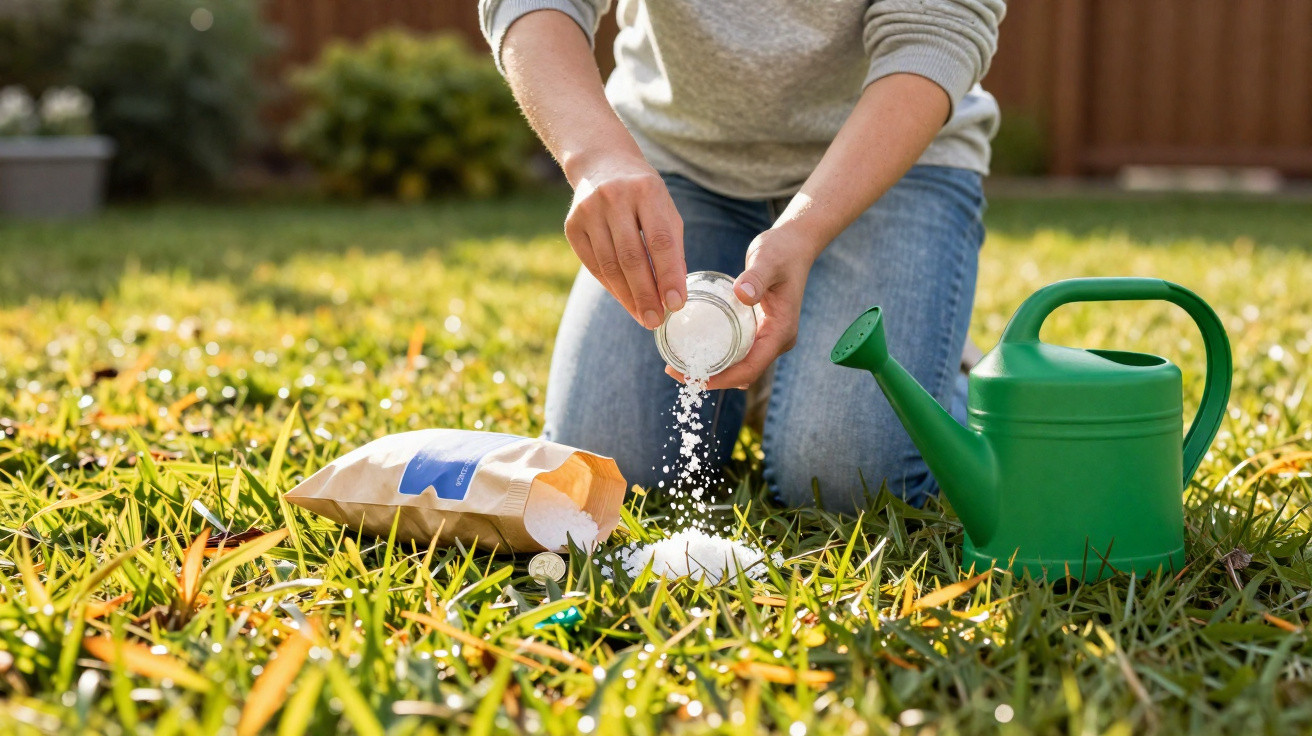
Garden forums and social media are currently sharing a tip that sounds almost too easy: rather than buying costly specialist fertiliser, amateur gardeners use a product normally poured into the bath and scatter it over the lawn. The focus is a long-established mineral that supplies the soil with magnesium and may help grass as it starts growing again for the warmer months.
Why a bath additive can help the lawn
The supposed insider tip is not really a secret at all: it is Epsom salt, chemically known as magnesium sulphate. Many people recognise it as crystals for a relaxing bath, while gardeners value it chiefly as a straightforward source of magnesium.
Magnesium has a vital function in plants. Without it, a plant cannot produce chlorophyll, the pigment that gives leaves their green colour. A shortage in the soil can quickly cause noticeable effects:
- grass looks dull and pale
- growth becomes slower
- yellowish patches appear between the leaf veins
This is where magnesium sulphate comes in. Once it reaches the soil with water, the magnesium is rapidly available to the roots. The lawn can produce more chlorophyll again, blades absorb light more effectively, and photosynthesis improves.
“Many garden professionals have used magnesium sulphate for years to restore a richer colour to pale lawns and stimulate root nutrient uptake.”
Magnesium also has a second benefit: it helps plants take up nitrogen and phosphorus, the nutrients found in many lawn fertilisers. Anyone already feeding their lawn can make better use of existing soil reserves with a targeted magnesium boost.
When Epsom salt genuinely benefits a lawn – and when it does not
Despite the hype, these inexpensive crystals are not a miracle cure for every patch of grass. Specialists stress that they make sense only where there is a genuine deficiency.
Typical signs of magnesium deficiency in lawns
The following situations are particularly suggestive:
- light, sandy soils that retain nutrients poorly
- older lawns that have been heavily watered and mown for years
- yellowing grass blades whose veins remain green
- a lawn that still looks washed out despite watering and ordinary fertiliser
In these circumstances, insufficient magnesium is often the cause. Rain leaches the mineral from light soils more quickly, while heavy use and frequent mowing intensify the problem.
Anyone wanting certainty can arrange a soil test. Many garden centres and laboratories offer straightforward testing kits. The results indicate whether magnesium is actually lacking or whether another issue is responsible.
When the £1 trick is more likely to cause harm
Many domestic lawns in residential areas already contain enough magnesium, either naturally in the soil or through standard lawn fertilisers, which often include the mineral. Adding Epsom salt in those cases delivers very little benefit.
Applying it too often or at excessive rates can even create problems:
- nutrients are leached out and enter groundwater
- the soil’s nutrient balance is disrupted
- sensitive nearby garden plants show signs of stress
“Anyone who scatters it ‘just in case’ without a deficiency simply ends up paying more for an effect the lawn does not need.”
According to many specialists, other measures remain crucial for a healthy lawn: mow at a higher height rather than cutting it too short, water deliberately instead of every day, and use a slow-release fertiliser that feeds the area gradually.
How gardeners apply Epsom salt correctly to a lawn
Where a deficiency has been confirmed or is highly likely, a single spring application can be worthwhile. Choosing the correct product, rate and timing is essential.
Selecting the right product
Not every item on the bath-additive shelf is suitable for the garden. It is worth checking the label carefully. Only pure magnesium sulphate with no added ingredients is appropriate.
- no fragrances or essential oils
- no colourings
- no added conditioning oils or foaming agents
Epsom salt specifically sold as a garden fertiliser is an even safer option. Its composition is clearly stated, and manufacturers usually provide specific application guidance.
Spreading method for larger areas
For a typical domestic lawn, manufacturers often recommend one application in early spring. One example rate found in many guides is up to 600 grams of Epsom salt per 10 square metres of lawn.
Apply it as follows:
- Mow the lawn one or two days beforehand, without cutting it too short.
- Lightly dampen the area, or choose a time just before forecast rainfall.
- Spread the Epsom salt as evenly as possible, ideally using a fertiliser spreader.
- Water thoroughly immediately afterwards if rain is not expected.
“Water is essential: the soil can take up magnesium and deliver it to the roots only when it is dissolved.”
A gentler watering-can method
Anyone treating only a small area or wanting to test cautiously can use a diluted solution. Dissolve one cup of crystals in a large watering can of water, then distribute the mixture promptly across the area.
This approach reduces the risk of over-fertilising, but it requires patience and several passes if a larger lawn is affected.
What else a lawn needs to thrive before summer
Magnesium sulphate can support a struggling lawn, but it is not a replacement for basic care. Particularly after a harsh winter, many lawns have compacted soil and a layer of thatch from old grass blades as well as nutrient issues.
Useful additions around the first spring treatment include:
- scarifying to remove moss and thatch
- aerating the soil with a lawn aerator roller or hollow tines
- overseeding bare or thin patches
- a moderate application of slow-release fertiliser with a balanced nutrient ratio
Combining these measures with a targeted magnesium boost gives the lawn a better chance of forming dense, green turf before summer. However, where waterlogging, shade or constant pressure from children and dogs are the main problems, Epsom salt crystals also quickly reach their limits.
Risks, misconceptions and sensible alternatives
Many claims surrounding the £1 trick are inaccurate. Epsom salt will not turn a thatchy, permanently wet problem lawn into an English golf course. It addresses one specific deficiency – no more and no less.
If unsure, gardeners can start with a high-quality lawn fertiliser containing magnesium. Many products combine nitrogen, phosphorus, potassium and additional trace nutrients in a balanced formulation. Their magnesium content is already sufficient for normal garden soils.
“Diagnosis remains crucial: identify the cause first, then act – not the other way around.”
Over the long term, it is worthwhile looking at the whole garden system: How heavily is the lawn used? How often is it watered? What type of soil is present? Those who keep these factors in mind generally get more from their lawn than someone who simply follows fast-moving trends on social media.
The supermarket bath additive can therefore help, but only where the soil is genuinely “hungry” for magnesium. Anyone who assesses this correctly and applies it carefully can achieve a noticeable result for little money. Those who scatter it indiscriminately risk disappointment, expense and unnecessary pressure on the soil and groundwater.





Comments
No comments yet. Be the first to comment!
Leave a Comment