
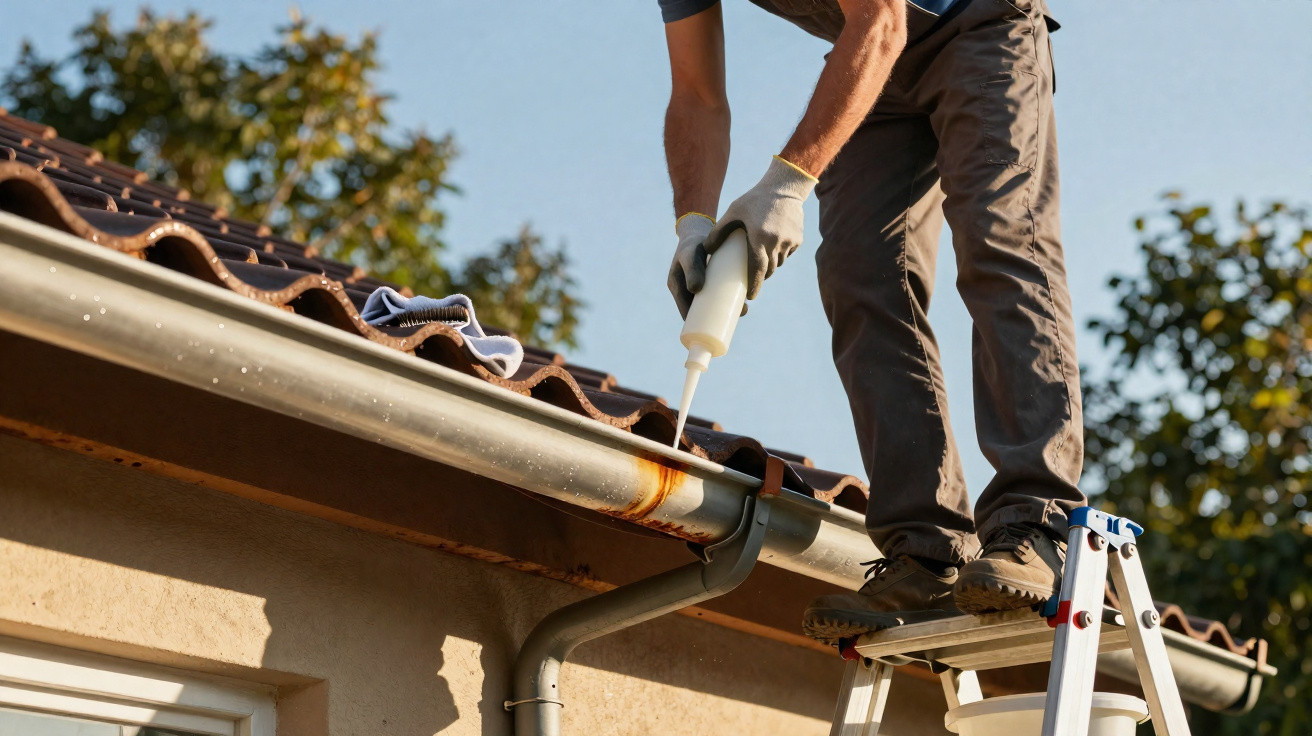
On many domestic roofs, the gutter is the first component to cause trouble during spells of heavy rain. Leaks and blockages can appear without warning, and a builder is not always immediately available to deal with them. Knowing how to make a DIY seal for blocked and leaking gutters can therefore be a practical option, provided that basic precautions are taken regarding safety, surface preparation and preventative maintenance.
How can you identify the leak in a gutter?
Before applying any seal, it is vital to find where the water is actually escaping from the gutter. The leak is often not directly above the point where water drips; it may be several centimetres earlier, at a joint, bend or fixing point.
A controlled rainfall test using a hose can make the source easier to locate. Direct the water at individual sections and watch for any overflow or escape route. It is equally important to establish whether the issue is a genuine leak or water overflowing because the gutter is blocked.
How should the gutter surface be prepared and cleaned?
The success of a simple seal depends heavily on how well the surface is cleaned first. If it is dirty, damp or greasy, the sealant will not bond properly, greatly reducing the lifespan of the temporary repair.
Once safe roof access has been arranged with a secure ladder and, where needed, protective equipment, cleaning will usually follow this basic order:
- Remove large debris: clear away leaves, twigs, plastic bags and built-up dirt;
- Brush the leaking area: use a stiff brush to loosen mud, algae and heavy dust;
- Rinse with water: wash away loose particles with a light rinse;
- Dry thoroughly: allow the area to dry, or speed up the process with a dry cloth, before applying any product.
Where metal gutters show visible rust, lightly sanding the damaged section helps remove loose material and improves adhesion. A more even, smoother surface will generally produce a better seal.
Which materials and steps should be used to seal a gutter?
The product selected has a direct effect on the durability of the repair. Readily available choices include self-adhesive waterproof tape, exterior silicone sealant, polyurethane mastic, and gutter-specific products sold in cartridges or tubs.
Once the area is clean and dry and the leak has been found, apply a continuous layer of sealant over the hole or crack, extending it several centimetres beyond the damaged section. When using tape, measure the required length, cut it with extra allowance, and press it down firmly while avoiding creases and air bubbles. Always observe the curing time specified by the manufacturer.
Which safety and preventative measures are essential?
Any work on a roof demands extra care. Do not work during strong winds or while the roof is wet, make sure the ladder is firmly supported, and seriously consider using a specialist professional where access is particularly high or difficult.
After sealing the gutter, regular cleaning before and after periods of heavy rain can help prevent further leaks and blockages. A quick visual inspection every few months makes it possible to spot minor damage at an early stage, when a straightforward repair is often enough to protect walls, structures and indoor areas from hidden water ingress.






Comments
No comments yet. Be the first to comment!
Leave a Comment