
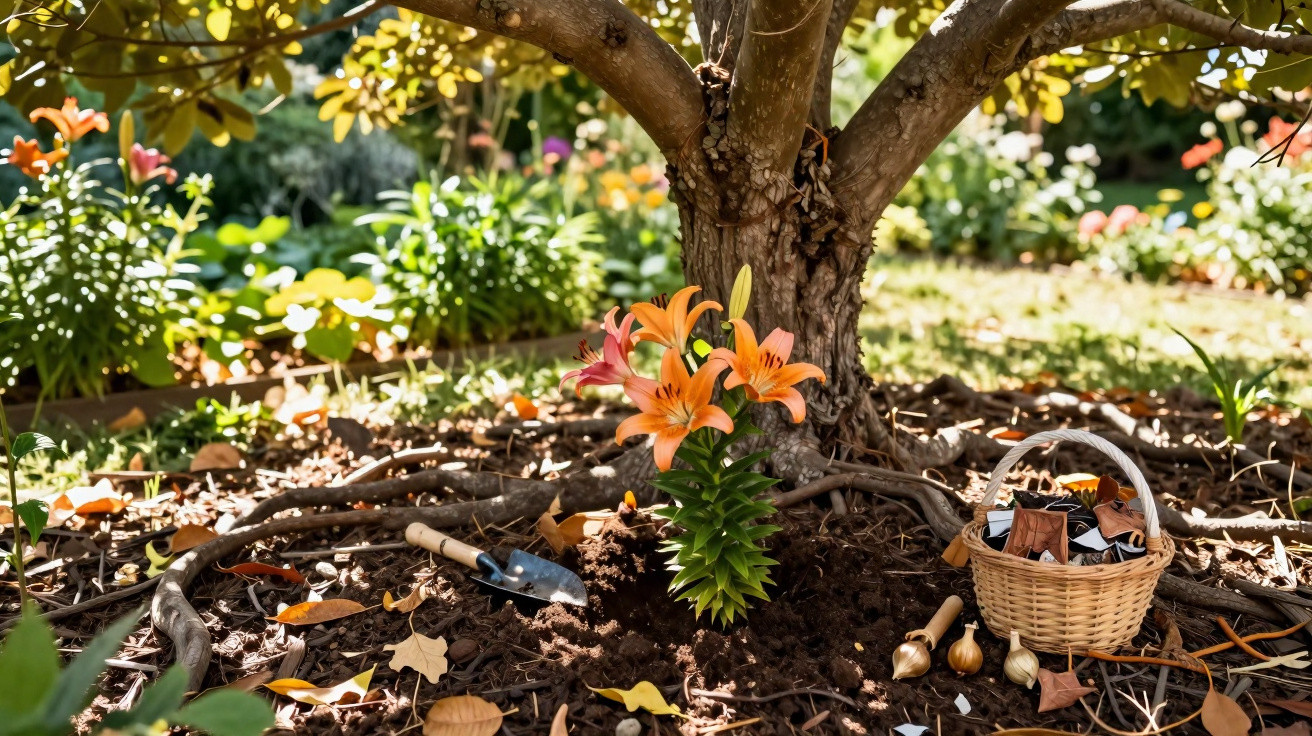
Anyone with a black walnut or walnut tree in the garden is likely to know the problem: many plants languish or simply die within the root zone. The culprit is the toxin juglone. One popular bulbous flower copes with it surprisingly well: the Asiatic lily. This article explains just how resilient it is and what matters when planting it.
What juglone does in the garden
Black walnut trees release juglone into their surroundings through their roots, leaves and husks. The substance suppresses other plants, acting as the tree’s natural protection against competition. Its concentration is greatest around the drip line, although its effects may extend 15 to 20 metres from the trunk.
When a sensitive plant takes up juglone through its roots, it will generally react very quickly:
- Leaves turn yellow
- Shoots wilt even though the soil is moist
- Growth declines sharply
- The plant dies within days or a few weeks
Species do not all respond with the same severity. Some appear entirely unaffected, some seem only slightly weakened, while others collapse completely.
| Tolerance level | Typical symptoms | Chance of survival |
|---|---|---|
| very tolerant | no visible damage | 95–100 % |
| moderately tolerant | slight yellowing, slower growth | 60–80 % |
| sensitive | severe wilting, leaf drop | 10–30 % |
| very sensitive | rapid total failure | 0–5 % |
The amount of juglone varies throughout the year. It is especially high during the tree’s growing season. The substance also remains hazardous in fallen autumn leaves and fruit husks, which can continue to release toxins into the soil for months as they decompose.
Anyone gardening within the influence of walnut trees needs plants that can tolerate juglone – otherwise frustration is inevitable.
How Asiatic lilies cope with juglone
Experience from numerous gardens and trial sites shows that Asiatic lilies clearly belong among juglone-tolerant plants. They often grow entirely normally even within the dense root mat of black walnut trees.
Common observations from these plantings include:
- normal abundance of flowers over several years
- strong, upright stems measuring 60 to 120 centimetres
- healthy, deep-green foliage without the typical signs of juglone damage
- no need to move the plants after only a few years
Science has not yet fully established why these lilies respond so robustly. There are two plausible explanations:
- The plants produce enzymes that quickly break down juglone into harmless substances.
- Their cell membranes allow very little juglone to enter the cells.
Both mechanisms are very likely involved. For home gardeners, the important point is the result: Asiatic lilies retain their floral display where many perennials have long since failed.
Choosing a position beneath black walnut and walnut trees
Despite their strong juglone tolerance, Asiatic lilies still require suitable growing conditions. If they are planted directly beneath walnut trees, several points deserve attention.
The best spot in the root zone
- Light: A position receiving morning sun or sunshine in the early afternoon is ideal. Beneath a very dense canopy, lilies struggle to flower strongly.
- Distance from the trunk: The closer to the trunk, the denser the network of roots. A site towards the outer canopy area gives the lily an easier start.
- Air movement: A light breeze helps foliage dry more quickly after rain and reduces the risk of fungal diseases.
Soil makes the difference
Asiatic lilies do not tolerate waterlogging. Under large trees, soil is often compacted and densely threaded with roots.
To give them a good start:
- loosen the soil with compost
- ensure adequate drainage, with no standing water after heavy rain
- work in coarse sand or fine grit where necessary
Well-drained, humus-rich soil cannot neutralise juglone – but it gives lilies enough vigour to compensate for the stress.
Planting guide: helping Asiatic lilies establish strongly
To ensure the bulbs get off to a good start in the challenging environment around a black walnut, it is worth paying close attention to planting technique.
Planting depth and timing
- Plant bulbs 15 to 20 centimetres deep, roughly three times the bulb’s height.
- In areas with severe winters, plant in autumn so roots can form before frost arrives.
- In exposed locations, planting in late spring can be sensible once the soil has warmed.
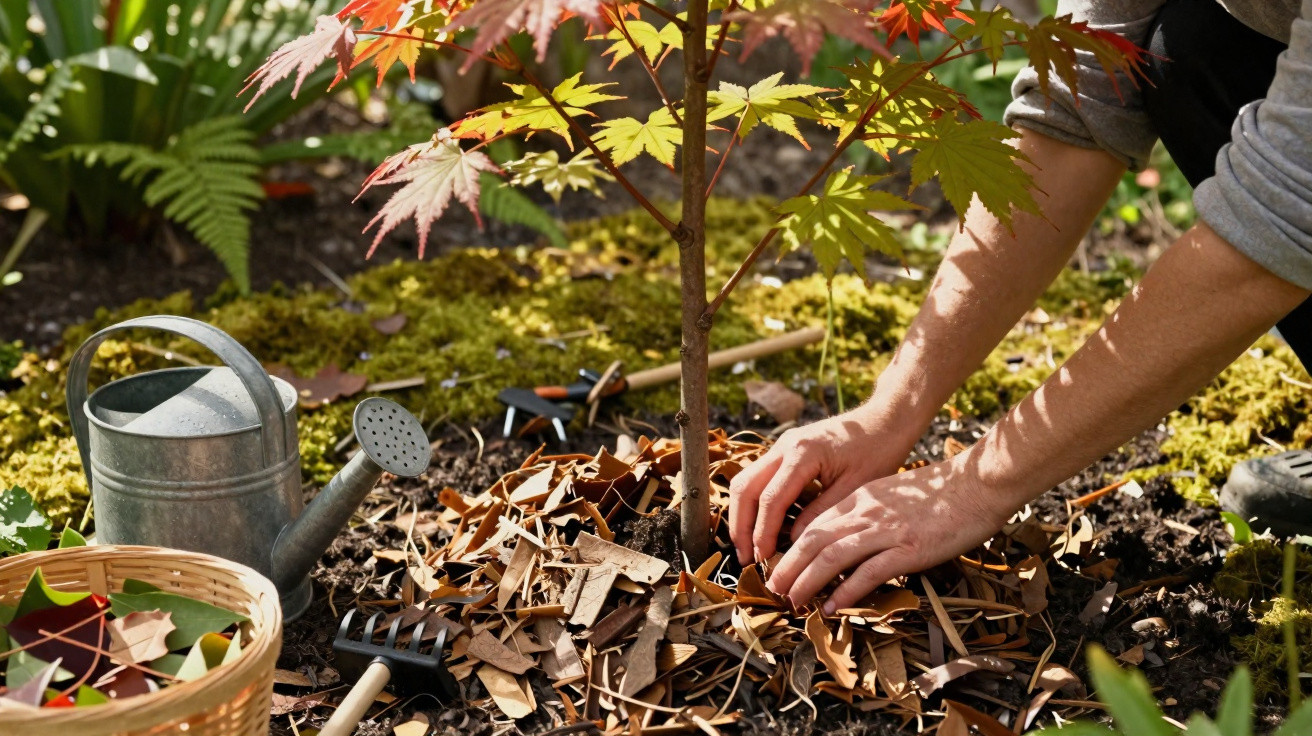
Mulching – yes, but not with walnut leaves
A layer of mulch helps retain moisture and improve soil structure. The material used is crucial:
- suitable: bark mulch that is not too coarse, leaves from other tree species, partially matured compost
- unsuitable: fresh walnut leaves, walnut shells and undecomposed parts of the walnut tree
These materials increase the amount of juglone close to the bulbs and should consistently be kept out of the beds.
Caring for lilies in the shade of a toxic tree
Once established, lilies need relatively little maintenance, even beneath black walnut trees. A few regular measures are still worthwhile.
- Watering: Water deeply during dry periods, but not every day. Thorough watering is preferable to frequent small amounts.
- Feeding: In spring, feed with a balanced organic fertiliser or well-rotted compost.
- Flower care: Remove spent flower heads so the plant directs its energy into the bulb rather than seed production.
- Division: Every three to four years, lift dense clumps, divide them and replant them in fresh soil.
This keeps the plants flowering freely for many years, even as the walnut tree puts on considerable growth over that time.
Suitable companions: plants that work alongside them
In areas affected by juglone, it is worth creating a bed made up almost entirely of tolerant species. Asiatic lilies can be incorporated into it very effectively.
Reliable bulb combinations
Layered combinations are suitable for achieving a long flowering season:
- Spring: daffodils, which are considered highly robust against juglone
- Late spring: ornamental allium species, which fill the gaps between daffodils
- Summer: Asiatic lilies as the colourful highlight
This creates an uninterrupted sequence of flowers even in the difficult root zone of a black walnut tree, attracting bees and other insects.
Perennials and herbs as additions
Depending on the site, further robust perennials and a few herbs that tolerate a drier root zone can be planted between the lilies. Gardeners familiar with the principle of mixed planting, such as in fruit growing or herb beds, can apply many of these ideas in a more limited form within a juglone-affected area. The key remains choosing species able to withstand stress from competing roots and mildly toxic soil.
Risks, limitations and realistic expectations
Although Asiatic lilies perform reliably beneath walnut trees, there can never be a guarantee. Individual varieties may react more sensitively, while extreme drought or compacted soil intensifies every form of stress. Those gardening on very heavy clay soils should therefore consider raised beds, planting rings or slightly raised planting areas to lift the bulbs out of the most critical zone.
Understanding how juglone works makes it easier to judge what is realistic in your own garden. The toxin disrupts particular metabolic processes in the roots of other species. Plants that can bypass or break down this blockage have the best prospects. Asiatic lilies unquestionably belong to this group, demonstrating impressively even beneath “problem trees” that, with the right selection, difficult soil is not a deal-breaker for an attractive garden display.




Comments
No comments yet. Be the first to comment!
Leave a Comment