
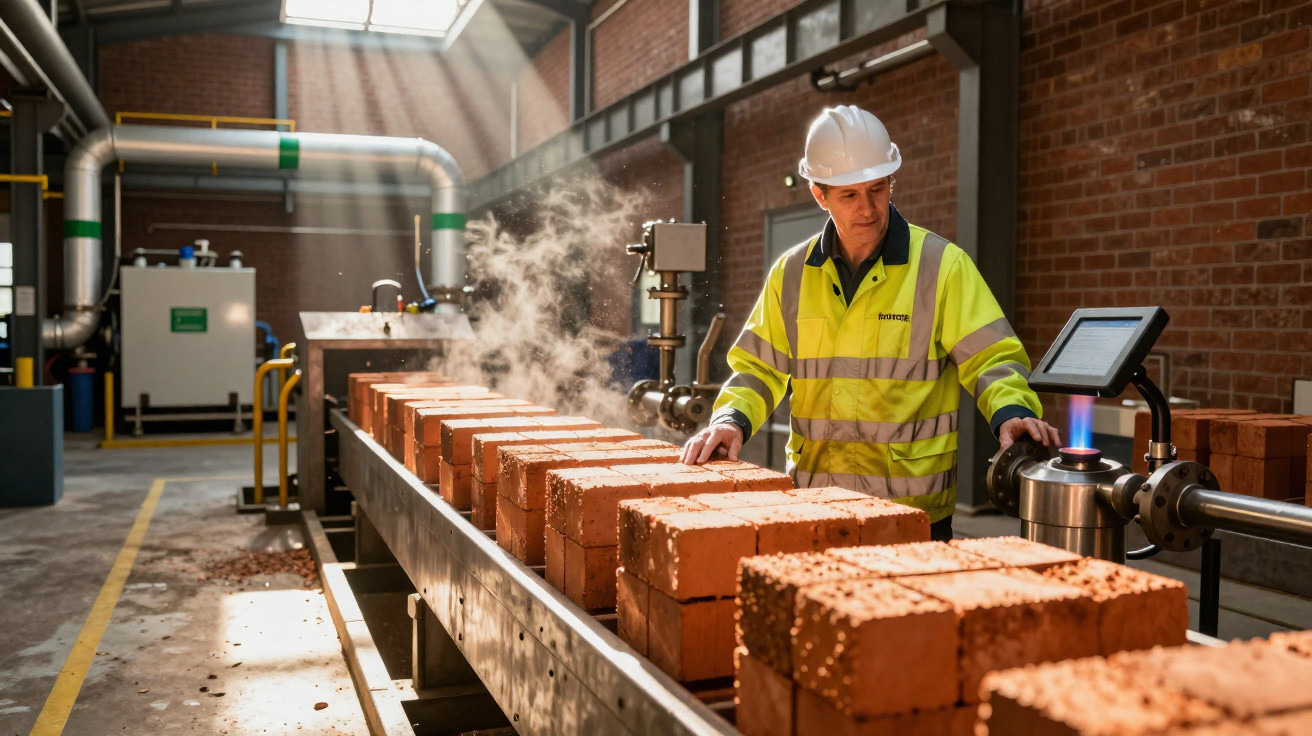
The search for sustainable alternatives in the construction industry has entered a new and groundbreaking phase through the radical overhaul of conventional industrial processes. The global energy transition has now reached the manufacture of fundamental structural components, showing that even the most established industries can substantially cut their environmental impact.
How does the United Kingdom plan to transform industrial brick production?
Replacing fossil fuels entirely with clean energy sources marks a major step forward for the heavy ceramics sector. With government financial backing, a major factory in Greater Manchester has begun converting its operating infrastructure to use an entirely environmentally friendly energy source.
This pioneering move sets ambitious objectives for the coming years, accelerating decarbonisation through extensive changes to the factory’s infrastructure. The project is intended to prove that alternative energy sources can be used viably at scale, providing an example for comparable facilities.
- Pioneering factory: The innovative project is being developed at Wienerberger’s industrial site in Denton.
- Clean fuel: The conversion will replace natural gas completely with green hydrogen alone.
- Financial support: The upgrade is funded directly through the Government’s Industrial Energy Transformation Fund.
What structural changes will be made to the factory kilns?
The technological conversion requires substantial investment in re-engineering the existing equipment so that it can accommodate the thermal characteristics of the new chemical element. Specialist engineers intend to replace hundreds of older firing components with technologically compatible models.
Those leading the project have confirmed that the upgrade work will not affect the structural integrity of the existing brickwork facilities. All changes will be focused on the electronic flow-control systems and the internal mechanisms responsible for direct firing.
What is the timetable for the full energy transition?
The delivery strategy has been split into progressive stages to maintain operational safety and preserve steady production rates. Directors expect to activate the first practical phase during autumn 2027.
Transition stages at the Denton plant
Timetable targets for the environmental project
Initial forecasts indicate that one kiln will be running on the new technology, or that both will have been partly converted, by autumn 2027.
The definitive move towards operating with 100 per cent clean fuel will begin in autumn 2028.
Putting this detailed plan into effect is intended to turn the factory into a global benchmark for sustainability in heavy industry. The stated dates demonstrate the group’s commitment to leading the market through practical changes supported by environmental targets:
- Initial activation scheduled for mid-2027.
- Full installation of new highly efficient burners on the production line.
- Complete operation with no carbon emissions from 2028.
How will the supply of the environmentally friendly fuel be made possible?
Supply logistics have been arranged through strategic long-term commercial agreements with specialist regional providers. A continuous supply of the clean gas will be safely transported to the industrial site in dedicated freight vehicles.
Management has confirmed that a dedicated on-site facility will be built to enable the fuel to be unloaded correctly. Installing this pressure-control station will ensure that the flow is directed properly to the industrial burners:
- Long-term commercial partnership with Trafford Green Hydrogen.
- Specialist road transport using modern tube trailers.
- Construction of a dedicated unloading and pressure-reduction station.
What environmental effects will this pioneering project have?
Replacing the conventional fossil fuel will deliver significant reductions in annual greenhouse-gas emissions. Technical studies indicate that the switch will prevent thousands of tonnes of pollutants from being released directly into the atmosphere.
The initiative forms part of a much broader sustainability plan that also includes the development of modern electric kilns. This varied combination of innovative technologies strengthens the company’s aim of reaching net-zero carbon emissions in the coming decades.
References: Wienerberger secures funding for world’s first hydrogen-fired brick kiln



Comments
No comments yet. Be the first to comment!
Leave a Comment