
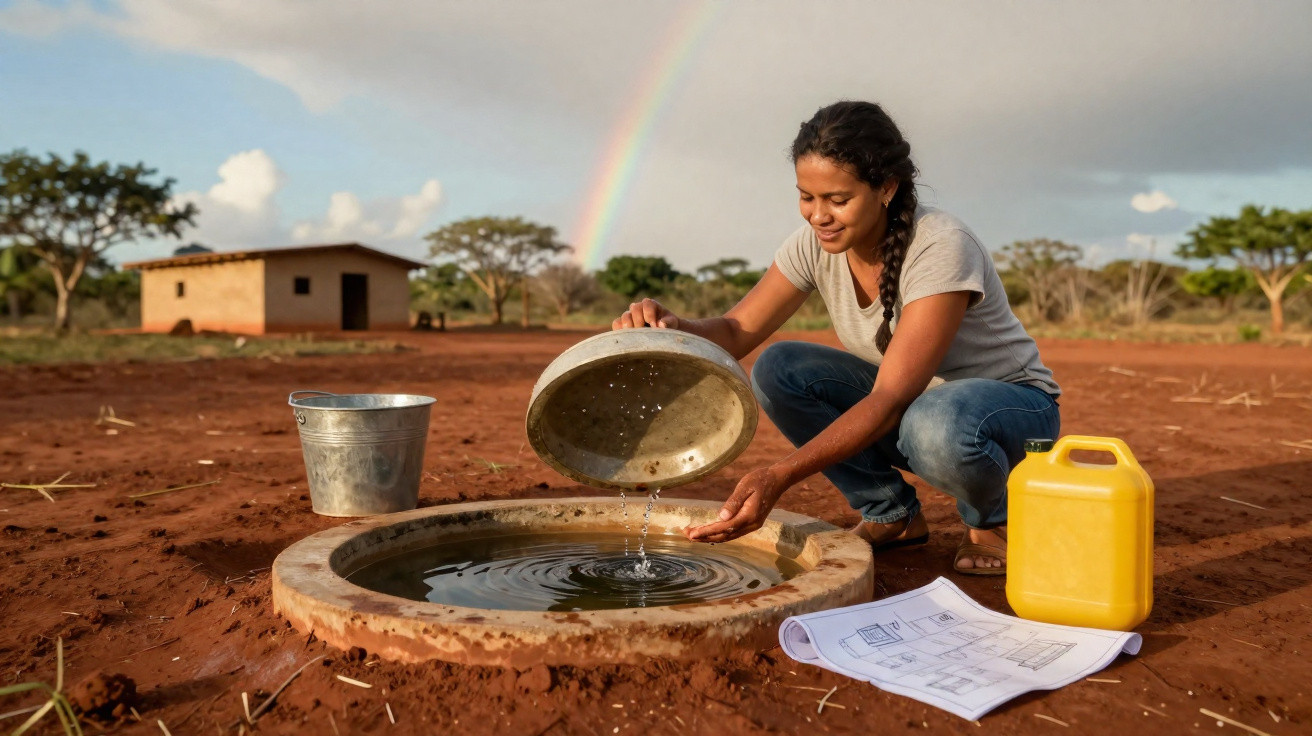
Water scarcity in Brazil’s semi-arid region found an ingenious answer in the creativity of a rural worker. Despite having no formal education, a bricklayer from the North East independently created an innovative social technology. The system harvests rainwater to provide the vital storage needed by households.
How did the remarkable plate cistern come about?
The project emerged from the urgent need to endure the lengthy droughts of the sertão. After watching cement being handled on urban building sites, its creator identified a practical alternative. He returned to his home region resolved to build a completely efficient reservoir.
This clever structure relies on cement plates, allowing it to be assembled quickly beside homes. Rain falling on roofs is collected through gutters and channelled into the reservoir. By keeping the water protected, the method limits evaporation and prevents external contamination carried by the wind.
- Storage capacity: Holds up to 16,000 litres of rainwater in total.
- Guaranteed autonomy: Provides a continuous water supply for up to eight months.
- Family benefit: Fully meets the basic needs of up to five people.
Who created this important technology?
The inventive mind behind this solution was Manoel Apolônio de Carvalho, a bricklayer widely known as Nel Carvalho. Born in Bahia during the 1930s, he experienced the harsh effects of poverty and severe water scarcity from childhood.
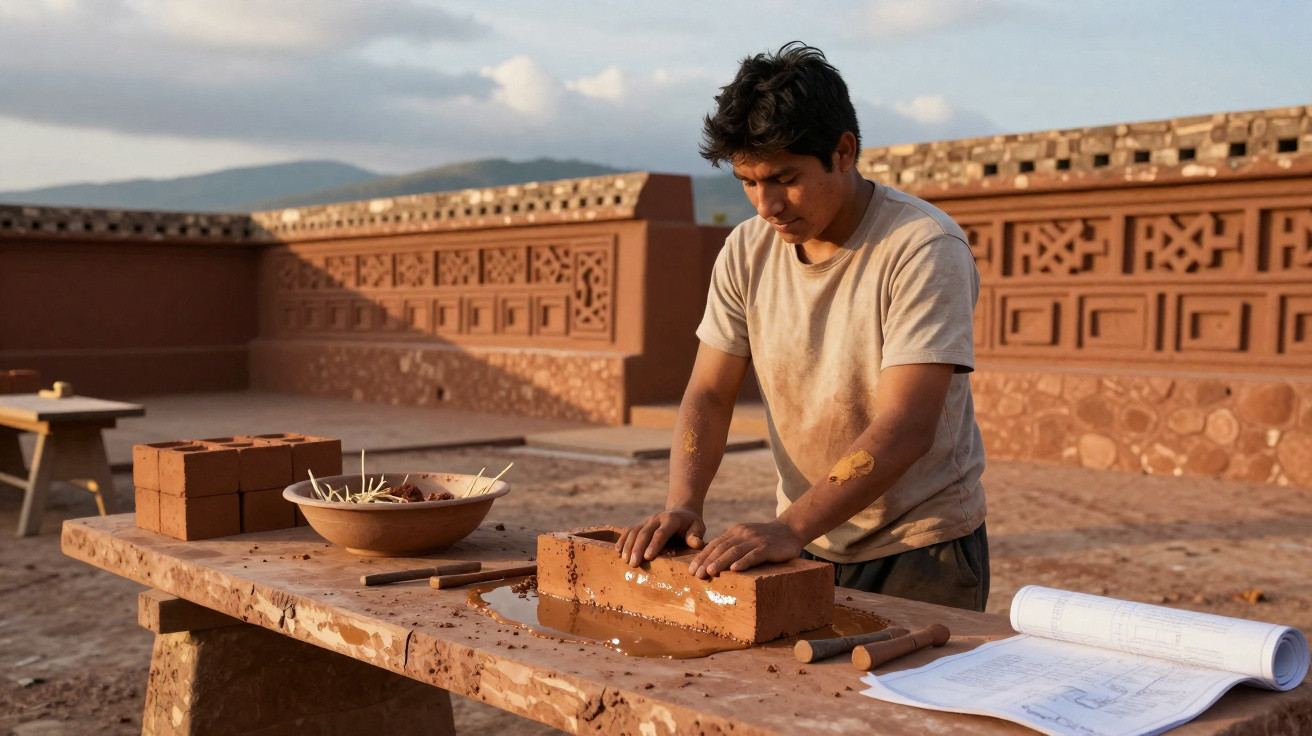
Although he had no access to formal schooling and remained unable to read or write, his practical intelligence overcame social barriers. When he moved to São Paulo as a young man, he worked in construction and learned how to handle cement. That knowledge changed his own circumstances and produced a solution for the sertão.
What are the reservoir’s technical specifications?
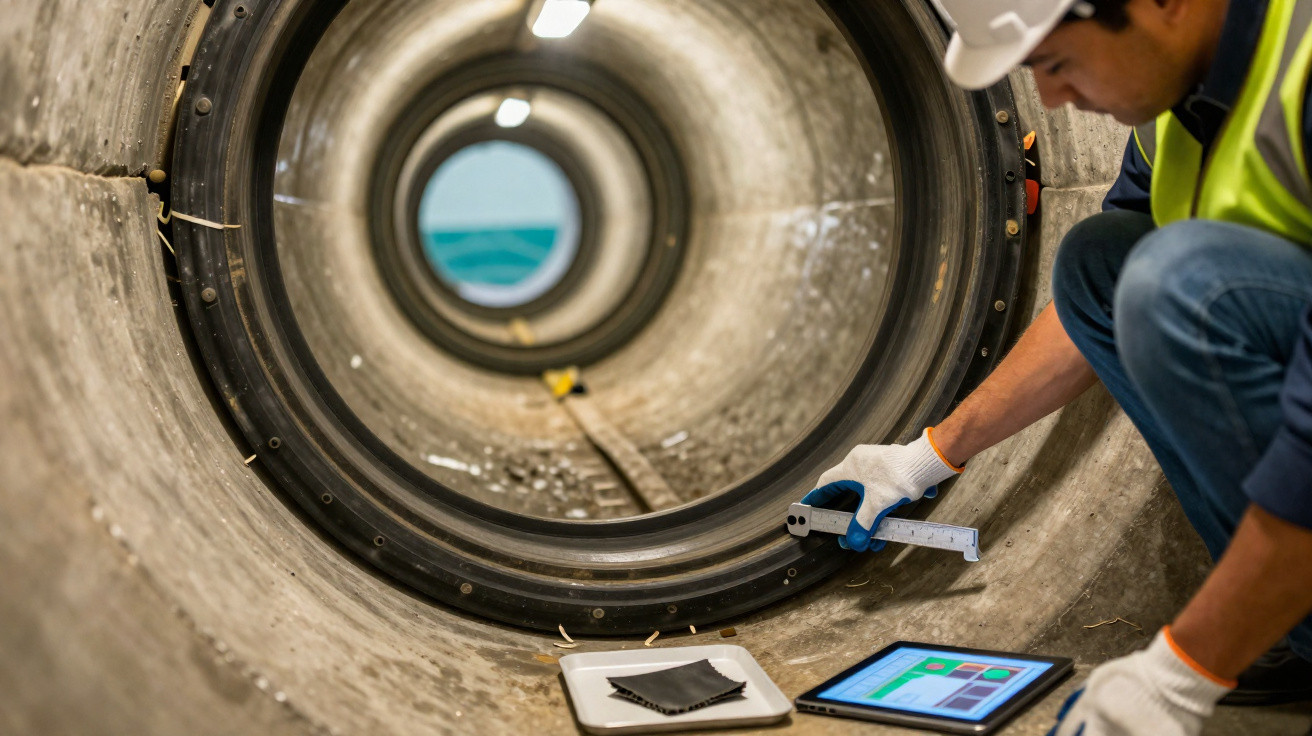
Its cylindrical design was developed specifically to withstand water pressure and ensure the system lasts as long as possible. The structure is partly buried in the ground, helping to keep its internal temperature comfortable while shielding the cement from weather-related wear caused by the sun.
Dimensions and structural components
Precise measurements of the traditional model
The full diameter is exactly 3 metres and 46 centimetres, while its height reaches 2 metres and 40 centimetres.
This social engineering solution uses exactly 88 cement plates for the side walls, along with another 21 plates for the upper cover.
When these parts are correctly installed, they provide a complete seal against water leaks in the semi-arid region. Residents use the collected water chiefly for drinking, cooking and daily hygiene. The key elements required to understand this ingenious construction include the important details below.
- Pre-cast cement plates forming the cylindrical wall.
- Purpose-made, durable plates for the protective cover.
- Gutters and pipework for direct collection from roofs.
How did this invention influence public policy?
Nel Carvalho’s creation moved beyond obscurity to become a national benchmark for survival. Social organisations recognised the enormous potential of this efficient storage method. Its straightforward construction enabled the innovative idea to achieve considerable scale and receive broad institutional support.
The invention provided the technical basis for major government programmes in the North East. This initiative extended the model to thousands of homes, helping to combat drought. The main historical developments in the establishment of these public policies produced the impacts listed below.
- The official establishment of the renowned One Million Cisterns Programme.
- Large-scale distribution of the social technology across several states of the sertão.
- Water security and citizenship for rural communities.
Why does this system remain so relevant?
Even after decades, the plate cistern remains indispensable to survival in the sertão. It offers an environmentally sound way to live in harmony with the semi-arid climate. The approach enables families to retain water autonomy without relying on water tanker lorries.
The story of this creator shows how popular knowledge can solve complex problems with extraordinary ingenuity. His major invention established a lasting legacy of dignity that continues to transform rural life. This simplified technology safeguards lives and reinforces regional development in the countryside.
References: Cisterns Programme exceeds 100,000 deliveries since 2023, 88% in the North East - Ministry of Development and Social Assistance, Family and the Fight Against Hunger




Comments
No comments yet. Be the first to comment!
Leave a Comment