
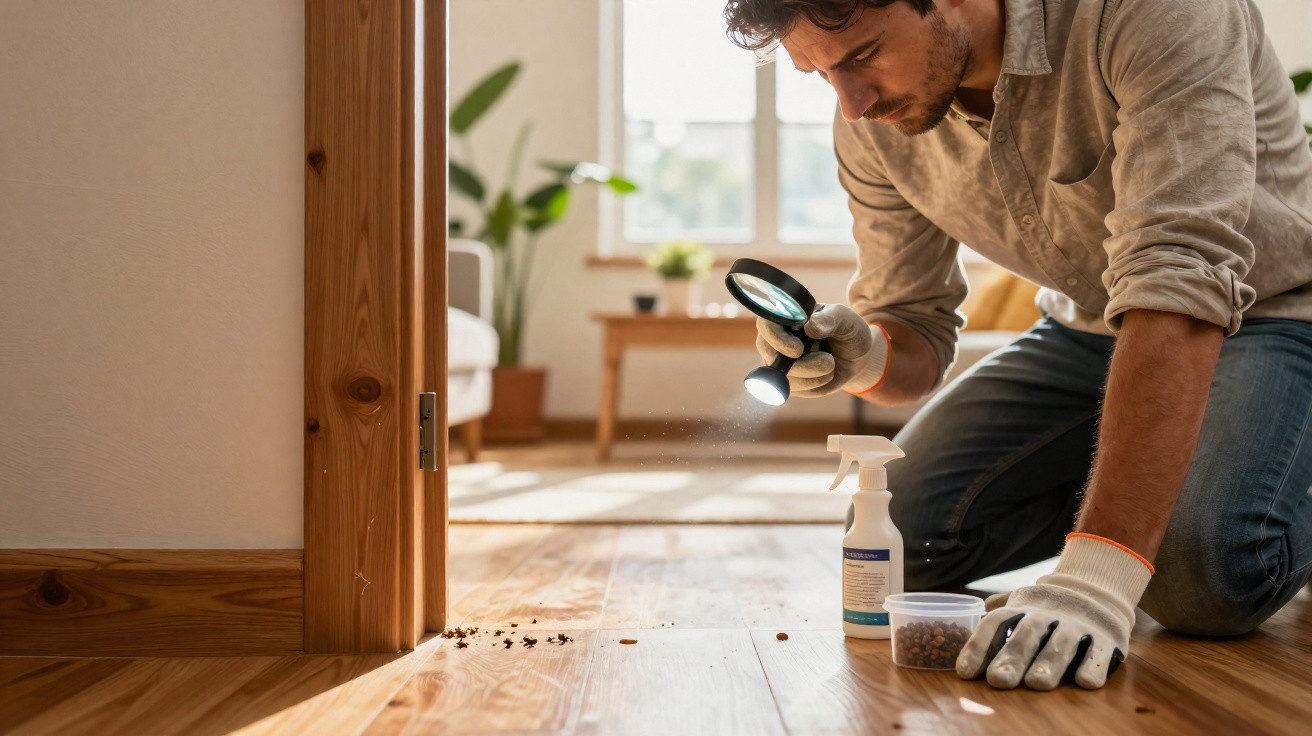
Termites are insects that feed on cellulose-containing materials, including timber, cardboard, books, skirting boards, doors, furniture and internal parts of a property. The difficulty is that they often work unnoticed inside the timber, only becoming apparent when dust, tunnels, hollow areas or small wings appear on the floor.
What are termites and why do they attack timber?
Termites live in organised colonies and seek out cellulose as a food source. Depending on the species, they may establish themselves in dry furniture, damp areas, soil or concealed parts of a building.
They attack because timber provides both food and shelter. Since the damage begins internally, an item may look sound from the outside while already being compromised within, particularly in poorly ventilated or damp places.
Which signs indicate a termite infestation?
The most frequent warning signs occur around furniture, door frames, doors, cupboards and skirting boards. Small piles of dust, hollow timber and discarded wings are important indicators.
- Granular dust: may be found near furniture and gaps in timber.
- Hollow timber: a hollow sound when it is tapped gently can point to internal galleries.
- Discarded wings: these can appear after swarms of winged termites.
- Mud tunnels: common with subterranean termites, often near walls and floors.
- Doors or drawers that begin to stick can also indicate internal damage.
How can you get rid of termites safely?
Where an infestation is small and limited to one piece of furniture, begin by isolating it, clearing away any accumulated dust and watching where the debris is emerging from. This can help establish whether the issue is confined to that item or has already spread to other areas of the home.
- Separate the affected furniture: move it away from walls and other wooden items.
- Avoid moving infested objects around: do not take drawers or planks into other rooms.
- Lower moisture levels: repair leaks and improve ventilation.
- Do not use pesticides without proper guidance: unsuitable products can be hazardous indoors.
- Contact a pest-control company if there is termite activity in walls, ceilings, floors or the structure.
When does the problem require professional help?
Professional assistance is advisable if termites are present in several rooms, there are tunnels in the walls, structural timber has been affected, swarms occur regularly or the problem returns after basic cleaning. In these situations, the aim is not simply to kill visible insects, but to locate the colony.
It is also important to tell termites apart from wood-boring beetles. Wood-boring beetles usually leave small holes and fine dust, whereas termites can create larger galleries, tunnels and more extensive damage. Correct identification prevents time being wasted on the wrong solution.
How can you prevent termites from returning?
Prevention starts with regular checks of furniture, doors, skirting boards, fitted cupboards and damp areas. Avoid storing cardboard, old timber and objects directly against damp walls, as these materials can attract pests and conceal signs of an infestation.
Keeping the home well ventilated, repairing leaks, noticing unusual dust near timber and responding at the first signs can make a significant difference. The earlier termites are identified, the greater the chance of controlling the issue before important furniture and structures are damaged.




Comments
No comments yet. Be the first to comment!
Leave a Comment