
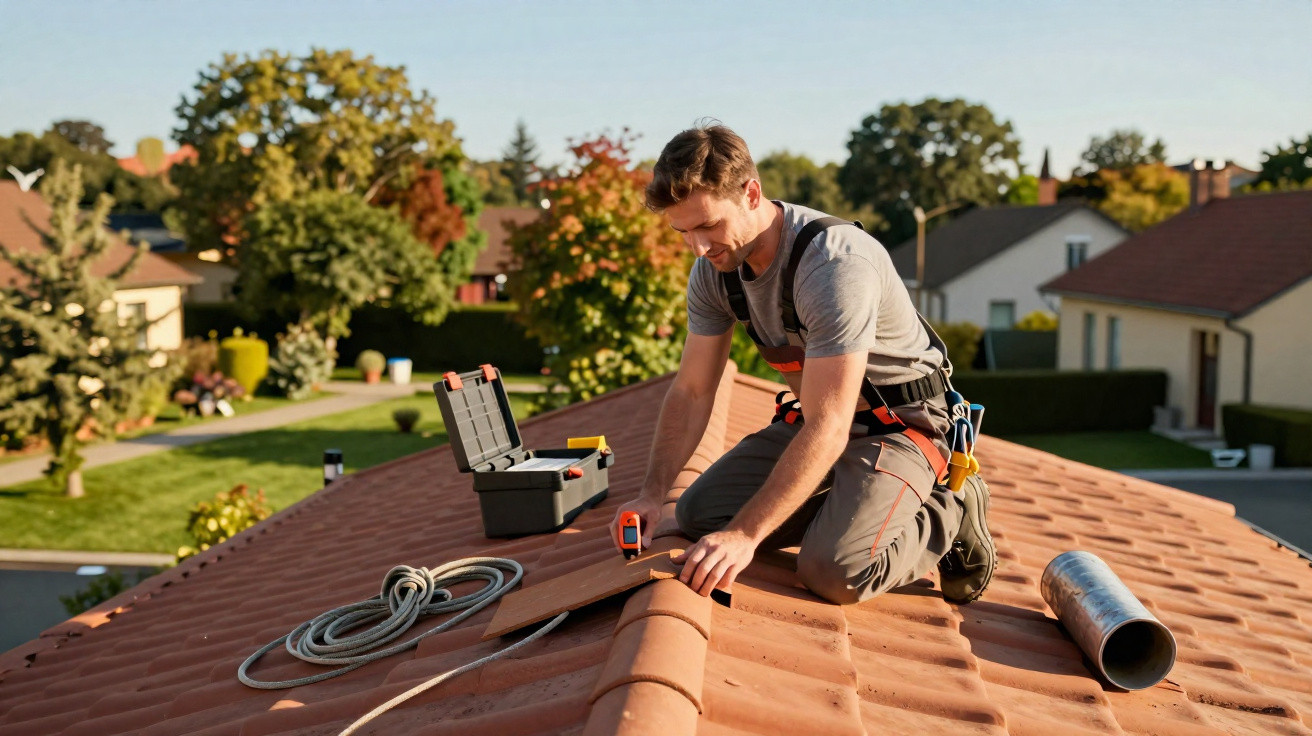
Choosing the right time to arrange roof maintenance has a direct effect on the team’s safety, the standard of the work and the longevity of the repair. Many roofs are only attended to once leaks, water ingress or loose tiles appear, often during periods that are less suitable for work. Understanding how weather conditions affect the job is therefore essential for planning ahead.
What is the best time of year for roof maintenance?
In general, the driest part of the year in each area is usually the best time for roof maintenance, as rain is less likely and weather conditions tend to be more settled. Across much of the UK, this will commonly be during the drier spells of spring and summer, although local rainfall patterns can vary considerably between regions.
During a dry period, visual inspections can be carried out more accurately, while products such as sealants, mortars, paints and bitumen membranes generally perform better because they are less affected by moisture. Planning is also easier, as the team is more likely to keep to the schedule with fewer stoppages and less risk of leaving the roof partly exposed during heavy rain.
Which seasons are less suitable for roof work?
Roof maintenance becomes more challenging in rainy periods because tiles can become slippery, increasing the risk of falls and requiring greater attention to safety. Sudden changes in weather may also halt the work, extending the project timeline, causing rescheduling and potentially creating additional costs.
In summer, intense heat combined with showers and windstorms can make the work even more difficult, particularly on metal roofs, which can become extremely hot. In colder areas, persistent mist, frost and even ice formation can leave surfaces damp, affect the performance of certain materials and require changes to working hours and application methods.
Key considerations before booking roof maintenance
Before setting a date for a roof inspection, it is worth reviewing the building’s history of issues, including recurring water ingress, broken tiles and leaves collecting in gutters. It is also useful to assess access to the roof and whether scaffolding, safety lines or changes to the property’s usual routine will be needed to allow the team to work safely.
These details make it easier to estimate the time required and anticipate effects on the day-to-day use of a residential, commercial or industrial property. The following practical points often guide this planning:
- History of leaks, cracks and mould on ceilings and walls;
- Age of the roof and waterproofing system;
- Ease of roof access and the need for protective equipment;
- Nearby trees, aerials, solar panels and other obstructions;
- Internal activity schedules, to minimise disruption to normal routines.
How does weather affect the durability of roof repairs?
Weather conditions directly affect the durability of maintenance work because they influence both application and the ageing of materials used on the roof. Sealants and waterproofing products need a minimum rain-free period to cure properly; if this does not happen, blistering, cracks or detachment may occur, reducing the repair’s service life.
Sharp temperature changes can also affect roof performance, gradually widening small cracks in clay and concrete tiles and causing expansion in metal roofs. For this reason, planning maintenance for the longest dry period in the local area and arranging regular inspections, preferably before the rainy season begins, helps extend protection against water ingress, premature wear and damage to internal installations.



Comments
No comments yet. Be the first to comment!
Leave a Comment