
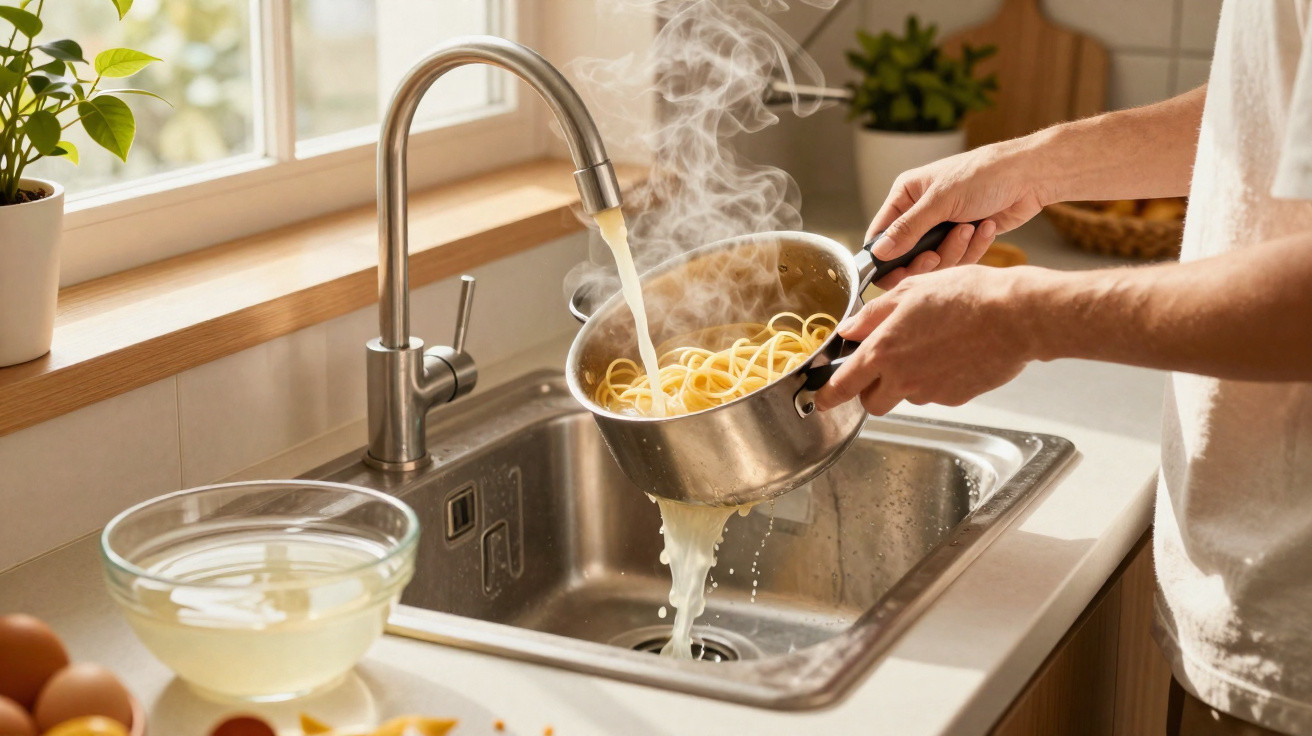
Pasta water: rethink an everyday kitchen habit
When cooking pasta, most people automatically tip the hot water down the drain. Yet this routine can gradually damage pipes, the sink and seals – while also wasting a liquid that professional chefs have long valued like liquid gold. It is time to question this everyday habit.
Hot water in the drain: how pasta water puts pressure on pipes
Pasta water quickly reaches temperatures close to boiling point. When it is poured straight into the drain, it enters the pipework virtually untreated. In many homes, these pipes are made from PVC – a plastic that is far more heat-sensitive than many people realise.
PVC starts to soften at roughly 60 to 70 degrees Celsius. Pasta water is often close to 100 degrees Celsius. There is therefore little margin for error and considerable strain. An occasional occurrence is usually manageable for pipes. However, anyone who cooks several times a week and pours boiling water into the sink each time exposes the pipework to ongoing heat stress.
The real damage is not dramatic; instead, it develops gradually over months and years.
Possible effects on pipework
This may result in:
- slight distortions in pipe bends





Comments
No comments yet. Be the first to comment!
Leave a Comment