
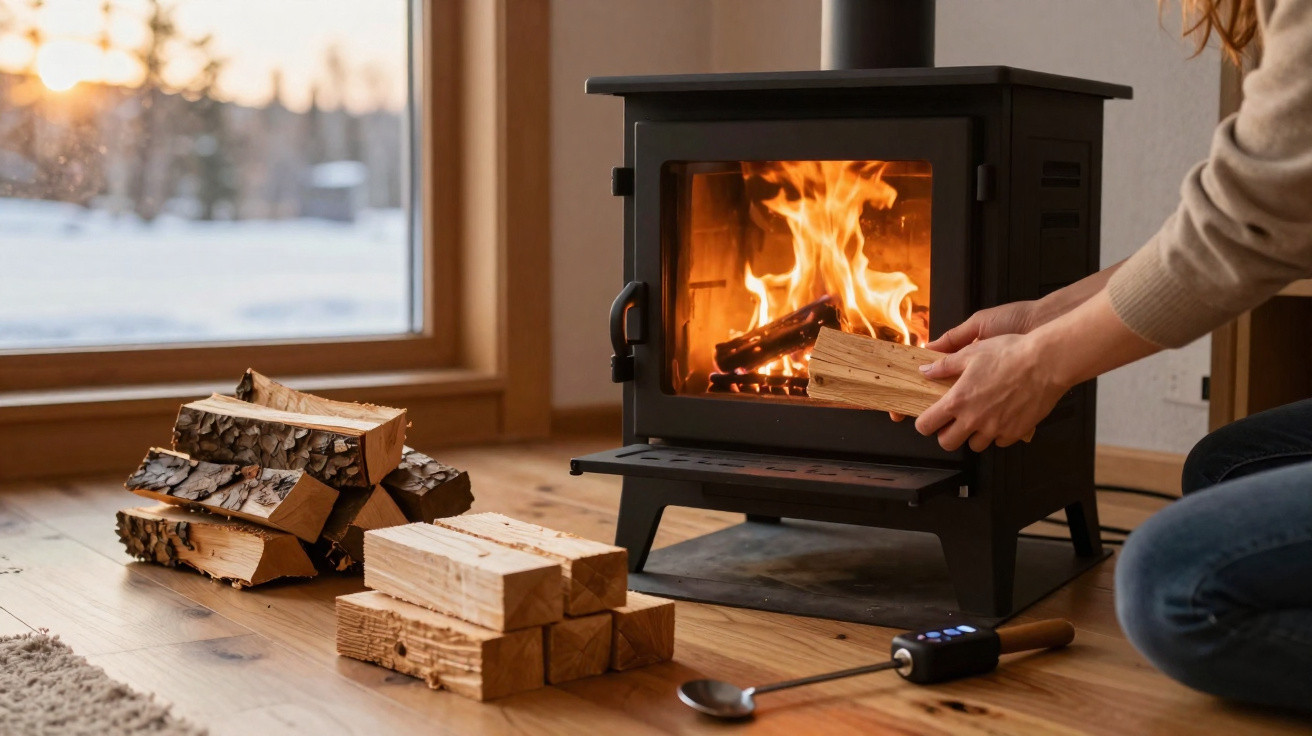
As electricity and gas prices fluctuate, many households are turning back to fireplaces and wood-burning stoves. However, rather than stacking conventional logs, a growing number of people are choosing a less conspicuous fuel: highly compressed wood briquettes made from waste material generated by the timber industry. According to manufacturers, they can be up to 300 per cent more efficient than traditional firewood.
What highly compressed wood briquettes are made of
Often sold as wood briquettes, compressed wood or densified logs, these products are produced from sawdust and leftover timber. Manufacturers do not add glues or chemicals. Instead, wood residues are compacted under extremely high pressure to create a dense, hard block.
The result is a consistent, dense fuel with very little residual moisture and a substantially higher energy content than air-dried firewood.
As they are made by machine, every briquette is virtually identical. Anyone who has struggled with poorly dried or misshapen logs will notice the difference immediately: compressed briquettes stack more neatly, burn more predictably and produce steadier temperatures.
Why wood briquettes can produce up to three times more heat
A significantly higher calorific value per kilogramme
The crucial factor is water content. Even well-seasoned conventional firewood generally still contains 20 to 30 per cent moisture. Some of its energy is then quite literally lost as water vapour up the chimney.
High-quality wood briquettes, by contrast, often have residual moisture of below ten per cent. As a result, they typically achieve a calorific value of around 4.8 to 5.2 kWh per kilogramme. Dry logs usually reach only 2 to 3 kWh per kilogramme.
Anyone heating their stove with compressed wood therefore needs considerably less fuel to achieve the same room temperature.
More consistent and cleaner combustion
The uniform density allows the material to gasify in a more controlled way and burn down slowly. The flames and ember bed are calmer, while the heat lasts for longer. Many users say they need to refuel less often overnight.
It also produces less smoke and soot. This means fewer deposits in the chimney, on the stove glass and inside the firebox. Regular sweeping remains essential, but cleaning intervals can often be extended.
Direct comparison: compressed wood versus conventional firewood
The key differences are easy to compare side by side:
| Feature | Wood briquettes / densified logs | Conventional firewood |
|---|---|---|
| Calorific value per kg | approx. 4.8–5.2 kWh | approx. 2–3 kWh |
| Moisture content | below 10% | 20–30% (air-dried) |
| Storage requirement | up to 4 times less space | large log stack required |
| Ash volume | low | significantly higher |
| Environmental credentials | good, as wood residues are used | dependent on source and harvesting |
The space-saving benefit is especially important in small cellar storage areas or terraced houses. Rather than stacking several cubic metres of logs, a single corner is often enough for neatly packaged bundles.
How to use compressed wood briquettes correctly
Anyone switching from logs should adjust their usual routine slightly. Briquettes behave somewhat differently in a stove than conventional pieces of firewood.
Lighting the stove properly
- First establish a strong base fire using dry kindling or natural firelighters.
- Only place the first briquette on the fire once a stable bed of embers has formed.
- Initially provide more air until the briquette is fully alight, then reduce the air supply slightly.
Depending on the size of the stove, many manufacturers advise burning no more than two to three briquettes at once. Too many compressed blocks can overheat the firebox.
Storage: dry, ventilated and protected
Although their residual moisture content is low, compressed briquettes are sensitive to damp conditions. They absorb water and can then easily break apart.
- Choose a dry, well-ventilated storage location.
- Do not open paper or plastic packaging until immediately before burning.
- Avoid placing them directly on a concrete floor; use a pallet or timber battens instead.
What wood briquettes offer environmentally
Heating energy from waste wood
Compressed blocks are generally made from sawdust and timber offcuts created when furniture, doors or construction timber are cut. Rather than disposing of these leftovers, companies press them into fuel.
This creates a circular product that protects forests and makes better use of materials already available.
Burning does release CO₂, but this originally came from the atmosphere and was stored in the wood. With sustainable forestry, the cycle remains broadly balanced.
Less particulate matter and less dirt
Because the fuel is dry and burns consistently, it generally creates less particulate matter, soot and unburned gases than damp logs. This benefits not only the chimney sweep, but also nearby neighbours.
What are the drawbacks?
Despite their many advantages, wood briquettes are not a miracle fuel without disadvantages.
- Price per tonne: Often higher than loose firewood, although the improved calorific value partly offsets this.
- Availability: Readily available in urban areas, but sometimes more limited in rural locations depending on local retailer networks.
- Sensitivity to damp: Once moisture becomes an issue, the compressed blocks lose their shape and quality.
- Stove suitability: Very old stoves or open fireplaces are not ideal; ask a chimney sweep beforehand.
Owners of modern wood-burning stoves with glass doors usually benefit most: less soot on the glass, even heat and lower wood consumption.
Where to buy the fuel and what buyers should check
Retailers use several names for these products, including wood briquettes, compressed wood, densified logs and overnight briquettes. They are available from:
- Builders’ merchants and DIY stores
- Fuel merchants and stove showrooms
- Online shops offering pallet delivery by freight carrier
When buying, it is worth checking:
- The stated moisture content, with below ten per cent being ideal.
- The wood type: pure hardwood briquettes often retain embers for longer, while softwood produces a faster flame.
- The origin of the sawdust and any certificates for sustainable production.
Everyday examples and practical tips
Many users combine logs with compressed briquettes. They light the stove with a few logs, then place a briquette on the embers later. This brings together the familiar flame display of wood with the long ember phase of compressed blocks.
During the shoulder seasons, when evenings are cool but daytime temperatures remain mild, a single briquette is often enough to provide background heat for several hours. In the depths of winter, a mix of logs and briquettes can maintain stable temperatures without requiring constant trips to the stove.
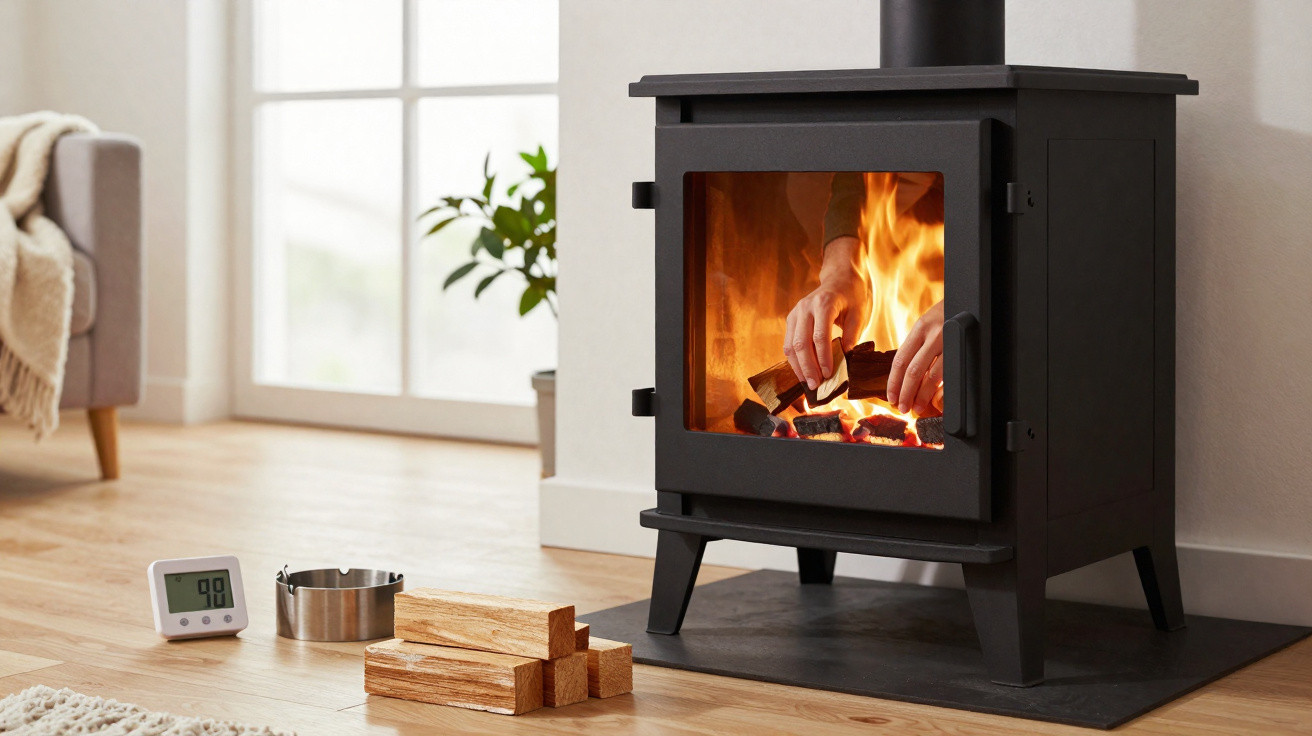
Anyone changing fuel should initially keep an eye on their flue-gas thermometer or the stove manufacturer’s guidance. The greater energy density can place more strain on the stove if too much fuel is loaded at once. It is better to use moderate quantities and gradually find the ideal amount.
For many households, compressed briquettes create a new calculation: less carrying, less storage space and more usable heat. Anyone who already owns a stove and keeps an eye on the fuel market can scarcely ignore this densified wood.




Comments
No comments yet. Be the first to comment!
Leave a Comment