
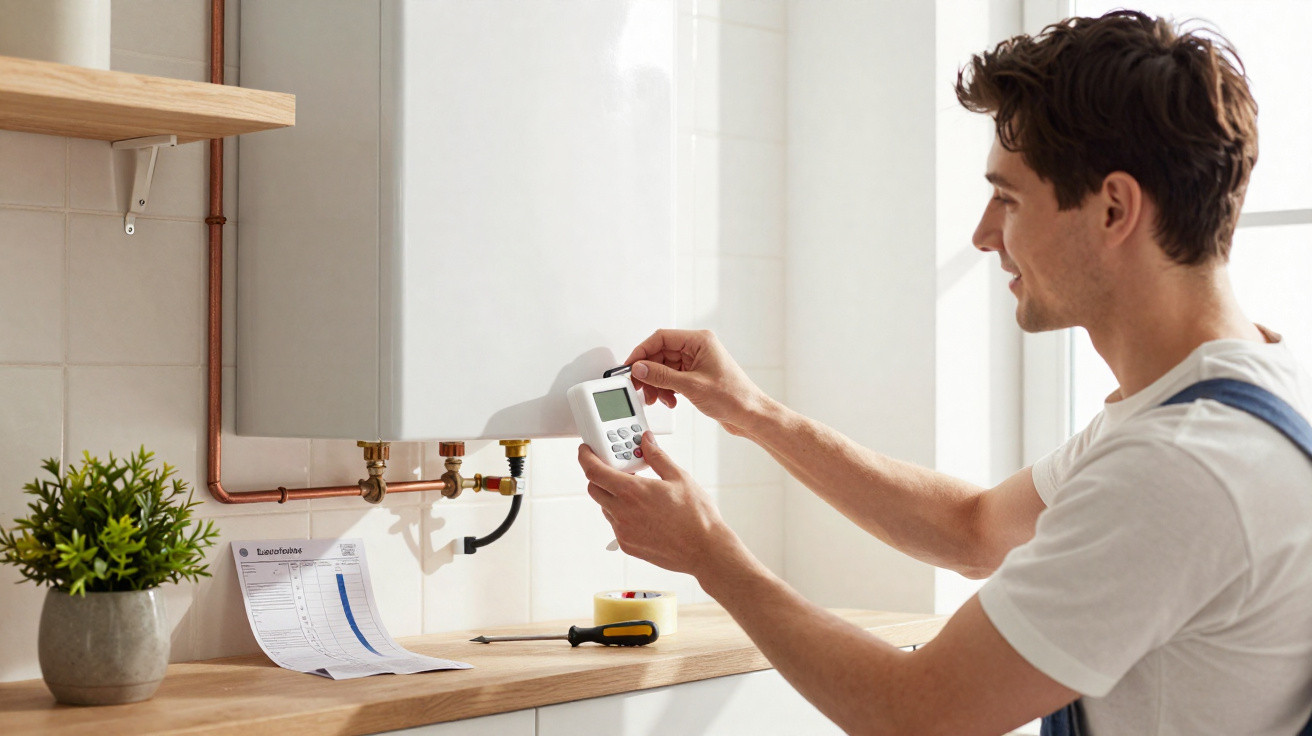
An electric water heater is among the biggest consumers of electricity in a home. A small add-on device now promises to tackle this very issue: it precisely controls heating periods, keeps the water temperature steady and can still cut electricity bills considerably. How does it work, who can benefit from it, and what should you consider?
Why a boiler uses so much electricity
A conventional electric boiler operates rather like a kettle that is never switched off. It keeps a supply of hot water at temperature, whether somebody is showering or the entire household is away on holiday. This continual reheating costs money.
Typical operating modes on many appliances include:
- Continuous operation: The boiler repeatedly reheats so that the cylinder always holds a full supply of hot water.
- Automatic operation with day/night control: The boiler mainly runs during set periods, usually overnight.
- Off: No water is heated at all, which can quickly become impractical in day-to-day life.
In many homes, the boiler runs for far longer than is genuinely necessary. This is exactly where the small unit in question comes in: an external programmer for the water heater.
The small box on the boiler: what does this device actually do?
The programmer is a compact control unit fitted between the electricity supply and the boiler. Rather than allowing the boiler to run continuously, it determines precisely when electricity may be supplied and when it may not.
“The principle is simple: the boiler heats only at set times, stores the heat in the cylinder and still provides the household with consistently hot water.”
The concept is straightforward. Hot water is chiefly needed in the morning and evening. During the remaining hours, the cylinder can generally manage without further heating cycles because water cools only slowly inside an insulated tank.
Benefits: why a boiler programmer can pay for itself
Controlling heating times carefully can affect costs in several ways:
- Fewer unnecessary heating cycles: The boiler does not keep switching on merely to replace the loss of a few degrees.
- Better use of cheaper tariff periods: Combined with an off-peak electricity tariff, expensive hours can be avoided.
- Less strain on the equipment: Fewer switching operations and shorter running times may extend the appliance’s service life.
- Noticeably lower electricity bills: Depending on the starting point, savings in the double-digit percentage range are possible.
This is particularly appealing for households that are often empty during the day, or where guests and family members shower at regular times. The device then stops the boiler from running needlessly for hours.
How installation works in practice
How the programmer is connected depends heavily on the existing electrical installation. The basic rule is clear: DIY work on the electrical connection is not appropriate for a high-power appliance such as a boiler.
Check the installation before buying
- Boiler with an ordinary plug socket: Professionals often warn against using simple plug-in timer switches here, as boilers draw high power and may overload sockets.
- Boiler wired directly to the consumer unit: In many homes, the water heater is connected to its own circuit. In this case, a DIN-rail programmer can be neatly integrated into the consumer unit.
Anyone who is unsure about the electrical installation should not hesitate to call in a qualified professional. Safety must come first, especially with appliances rated at 2,000 to 3,000 watts.
Choosing the right programmer
Several types are available from retailers:
- Mechanical models with a rotary dial and small switching pins – durable, straightforward and inexpensive.
- Digital devices with a display and programming accurate to the minute.
- Connected versions that can be controlled by app and offer additional functions such as usage analysis.
The key factor is always the permitted switching load. The programmer must be able to handle at least the boiler’s wattage; ideally, it should provide some additional capacity.
Typical settings for everyday use
Once installation is complete, the most important step follows: setting sensible times. One example for a two-person household is:
- Morning heating period: 5:30–7:00 (for showers and morning routines)
- Evening heating period: 17:30–20:00 (for cooking, washing up and evening showers)
Between these periods, the boiler has no power supply and only the water already heated is used. After a few days, it should be possible to judge whether the running times are sufficient or need adjusting.
Other ways to save on hot water
A programmer is especially effective when it forms part of a wider package of energy-saving measures. Many adjustments can be made with little effort.
Set a sensible temperature
Experts generally recommend a cylinder temperature between 55 and 60 degrees. This lowers energy demand while also slowing limescale build-up inside the boiler.
“Every additional degree increases energy consumption, yet often provides barely any noticeable extra comfort in everyday use.”
Regular maintenance is worthwhile
Over time, limescale accumulates in the cylinder, especially in areas with hard water. The heating elements must then work harder to warm the same quantity of water. Professional descaling every few years can make a substantial difference.
Reduce water use without losing comfort
- Fit a water-saving shower head: Modern models mix air into the water, substantially reducing consumption.
- Install flow restrictors on washbasins: These cut the amount of water used per minute without creating an irritating trickle.
- Insulate hot-water pipes: Particularly in cellars and unheated spaces, many degrees can otherwise be lost before water reaches the tap.
How much can realistically be saved?
The precise saving depends on several factors: the living situation, number of people, boiler size, starting temperature and electricity tariff. Many reports of experience indicate noticeable double-digit percentage reductions in the boiler’s electricity consumption.
| Scenario | Effect on consumption |
|---|---|
| Boiler currently runs continuously | A programmer can greatly reduce running times |
| Use of off-peak electricity | Moving heating periods lowers the cost per kWh |
| In addition: temperature optimised and pipes insulated | Combined effect, noticeably lower annual bill |
The purchase cost of a programmer is usually well below the annual cost of electricity for the boiler. In many cases, the device pays for itself within one to two years – sometimes sooner where heating was previously completely uncontrolled.
When the device is particularly worthwhile – and when it is less so
It is ideally suited to older electric boilers with large cylinders, especially in detached houses or larger flats. Those who regularly shower at fixed times and rarely have unexpected peaks in demand will gain the greatest benefit.
A programmer has less impact in the following situations:
- Boilers with modern integrated controls and very good insulation
- Households that already use extremely little hot water
- Homes with highly variable daily routines, where spontaneous showers around the clock are standard
Practical guidance: what should non-specialists know?
Anyone hearing the term “boiler programmer” for the first time may immediately think of sophisticated smart-home technology. In many cases, however, it is simply a robust time switch installed in the consumer unit. The technology is not new; it is simply that the focus on targeted electricity savings is now greater.
The important point for non-specialists is this: do not experiment with the consumer unit yourself. A short appointment with a qualified electrician does cost money, but it can prevent damage, fire risks and problems with insurance.
A second consideration is comfort. During the first few weeks, it is worth paying close attention to the hot-water supply. If you find that hot water is running short in the evening, extend the heating period by 15 to 30 minutes. This allows a practical routine to develop that reduces consumption without making the daily shower a lottery.





Comments
No comments yet. Be the first to comment!
Leave a Comment