
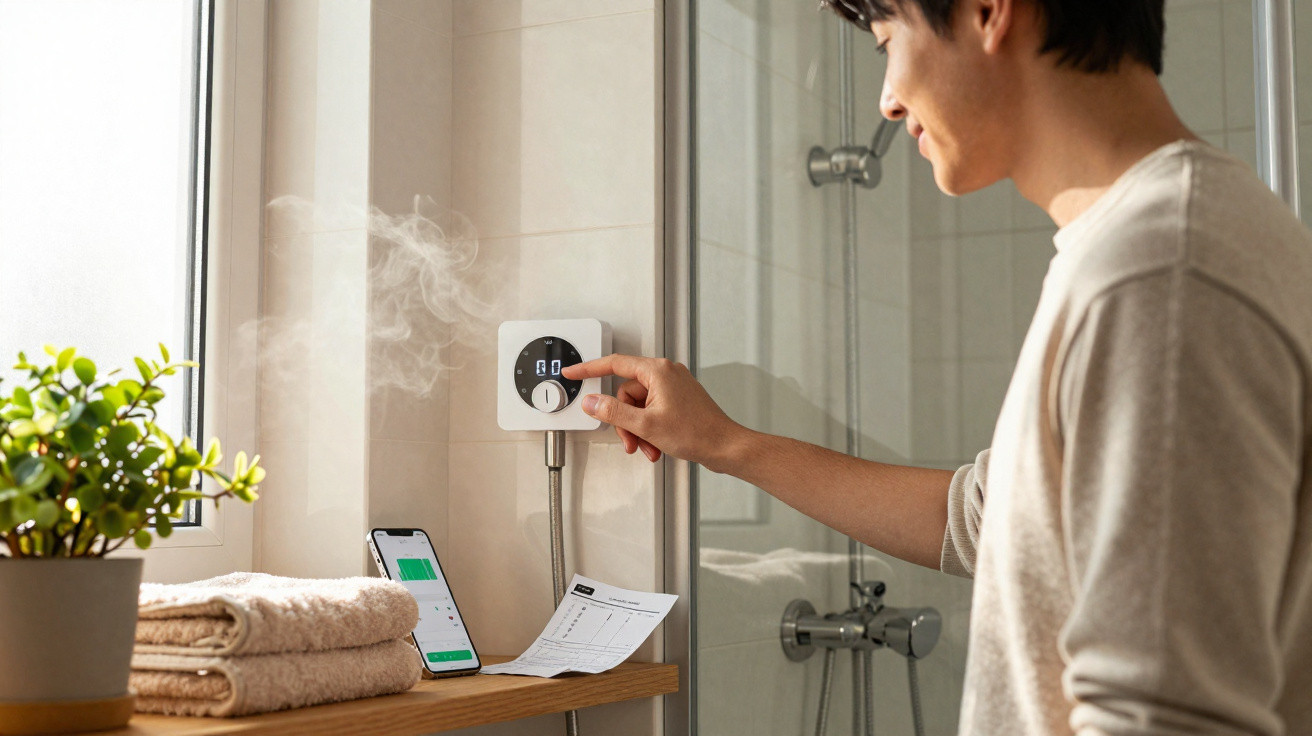
Sounds like a trick – but it is technology.
Many households are feeling the impact of rising energy prices in their wallets. The hot water boiler in particular often runs unnoticed in the background, consuming electricity month after month. A small programmer for the hot water boiler is intended to change that: it substantially cuts operating time, keeps the water temperature steady and can deliver noticeable savings. But how exactly does it work, and what should tenants and homeowners in Germany know about it?
Why a hot water boiler uses so much electricity
An electric boiler is among the biggest electricity users in a home. It often operates around the clock simply to keep water hot, even when nobody needs it at that time. This standby period is precisely what creates high costs.
Although many appliances offer several operating modes, they are frequently left running in the least efficient setting:
- Continuous operation: The boiler keeps reheating constantly, whether anyone is showering or not.
- Automatic operation with a day-night switch: Water is heated mainly during cheaper time slots – but this requires a suitable electricity tariff.
- Off mode: The boiler stays cold, which is only practical during longer absences.
In many flats, the boiler has never been properly adjusted since it was first installed. It therefore runs almost “just in case”, because people fear a cold shower. This is exactly where the small programmer comes in.
“The trick is not a lower temperature, but fewer unnecessary heating periods.”
How a small programmer slows down the hot water boiler
The programmer is an additional module that controls the electricity supply to the boiler in a targeted way. Rather than leaving the boiler connected to the mains all the time, the unit only enables the power supply during set time windows.
Targeted heating periods instead of constant operation
Essentially, the device works like a timer, but one designed for a high-powered appliance. It determines exactly when the boiler can heat and when it is completely disconnected from the power supply. This allows heating periods to be matched to a household’s actual routine:
- one period in the morning before getting up;
- if needed, a short top-up at midday;
- another period in the evening before showering or having a bath.
Between these time slots, the boiler remains off, but the water does not cool down completely. The cylinder’s insulation keeps its temperature sufficiently high for several hours, so everyday comfort is barely affected.
Mechanical, digital or smart control
A range of versions is available in shops:
- Mechanical programmers with a dial and small pins – robust and straightforward to set.
- Digital models with a display and several programmes – ideal for more varied daily schedules.
- Connected devices that can be controlled through an app – useful for households with irregular routines.
The important point is that the device must be able to handle the boiler’s power rating. Many hot water boilers are rated between 2,000 and 3,000 watts. A cheap standard timer plug is generally not suitable for this load.
Everyday benefits: lower costs and greater control
The most noticeable result is a lower electricity bill. As the boiler heats for far less time overall, electricity consumption falls. Depending on the starting point, experts report potential savings of up to around 30 per cent.
- Lower consumption: No continual reheating when no one requires hot water.
- Greater control: Heating periods follow the household’s genuine daily routine.
- Less wear: Fewer heating cycles place less strain on the heating element and thermostat.
- Useful during absences: The boiler does not continue running unnecessarily during weekend breaks or holidays.
“Anyone who is only home in the evening on weekdays does not need to keep hot water on standby around the clock.”
What to consider when installing a hot water boiler programmer
Before using the programmer, it is worth checking the existing electrical installation. Not every option is permitted or safe.
Boiler with a plug or permanently wired?
- Boiler with a plug: A heavy-duty plug-in timer may work, but there is a fire risk at high power levels if the device is unsuitable.
- Permanently wired boiler: In many detached homes, the hot water cylinder is connected directly through its own miniature circuit breaker. In these cases, DIN-rail programmers are normally fitted in the consumer unit.
There are essential rules that should never be ignored:
- Switch off the circuit breaker for the boiler before carrying out any work.
- Use only devices approved for the boiler’s power rating.
- If in doubt, hire a qualified electrician.
An electrician should always handle devices installed in the consumer unit. For professionals, fitting one is quick, but unqualified work on 230 volts can be life-threatening in the worst case.
How households can set the programmer effectively
The device delivers the greatest savings when its time windows genuinely fit the household routine. Here is an example for a typical working household:
| Time window | Purpose |
|---|---|
| 05:30–07:00 | Showering and bathing in the morning |
| 12:00–13:00 | Potentially a brief hot-water period for the lunch break |
| 18:00–21:00 | Evening showers, washing up and household tasks |
People living alone who generally shower only once a day can shorten the heating periods even further. Families with several shower times should allow slightly more time, while still building in breaks during which the cylinder does not reheat.
Further ways to reduce hot water costs
The programmer is only one part of the solution. A few additional measures can cut costs further without noticeably reducing comfort.
- Set a sensible temperature: Around 55 to 60 degrees is usually entirely sufficient. Higher temperatures not only increase consumption but also encourage limescale deposits in the cylinder.
- Regular maintenance: A limescale-covered heating element needs more energy to heat the same amount of water. Specialist firms generally recommend descaling every two to three years.
- Water-saving shower heads and aerators: Shower heads with flow restrictors and aerating tap regulators can significantly reduce hot water use.
- Limit heat losses: Uninsulated hot water pipes in cold cellars or garages lose heat rapidly. Pipe insulation from a DIY shop costs little and can make a major difference.
“Every litre of water that does not need heating in the first place saves more money than any modern tariff.”
Common practical questions
Is less heating time really enough?
Modern cylinders are insulated well enough for water to remain usefully hot for many hours. The programmer simply prevents continual reheating. It is important to monitor the first few days carefully: is there enough water for everyone’s showers? Does it become too limited by the evening? Small adjustments to the time windows usually resolve such issues quickly.
What about hygiene and legionella?
Standard recommendations advise heating the cylinder to at least around 60 degrees on a regular basis. Anyone choosing a lower temperature should ask specialists whether hygiene programmes are necessary for their particular system. Many cylinders already have a function that automatically heats the water to higher temperatures at longer intervals.
When buying a programmer is particularly worthwhile
A programmer is especially worth considering for households with:
- irregular usage, such as people who commute home only at weekends;
- no one at home during the day on weekdays;
- older boilers without an integrated timer;
- electricity tariffs without a clear distinction between peak and off-peak rates.
The purchase price is generally in the low-to-mid two-figure range. In many cases, the device pays for itself within a year, or even sooner, depending on previous settings and hot water habits.
Anyone already considering replacing their boiler can also use the programmer as a temporary solution. The investment can often be moved without difficulty to the next flat or a new cylinder. Especially in rented flats, where replacing the existing boiler is not simply permitted, the small unit offers a rare opportunity: it directly addresses one of the household’s biggest electricity costs without needing to involve the landlord.






Comments
No comments yet. Be the first to comment!
Leave a Comment