
Cement is seldom part of discussions about climate change. However, the sector generates approximately the same amount of carbon dioxide as every passenger car in the world.
A recent study outlines an unexpectedly simple solution: replace the rock used to make cement.
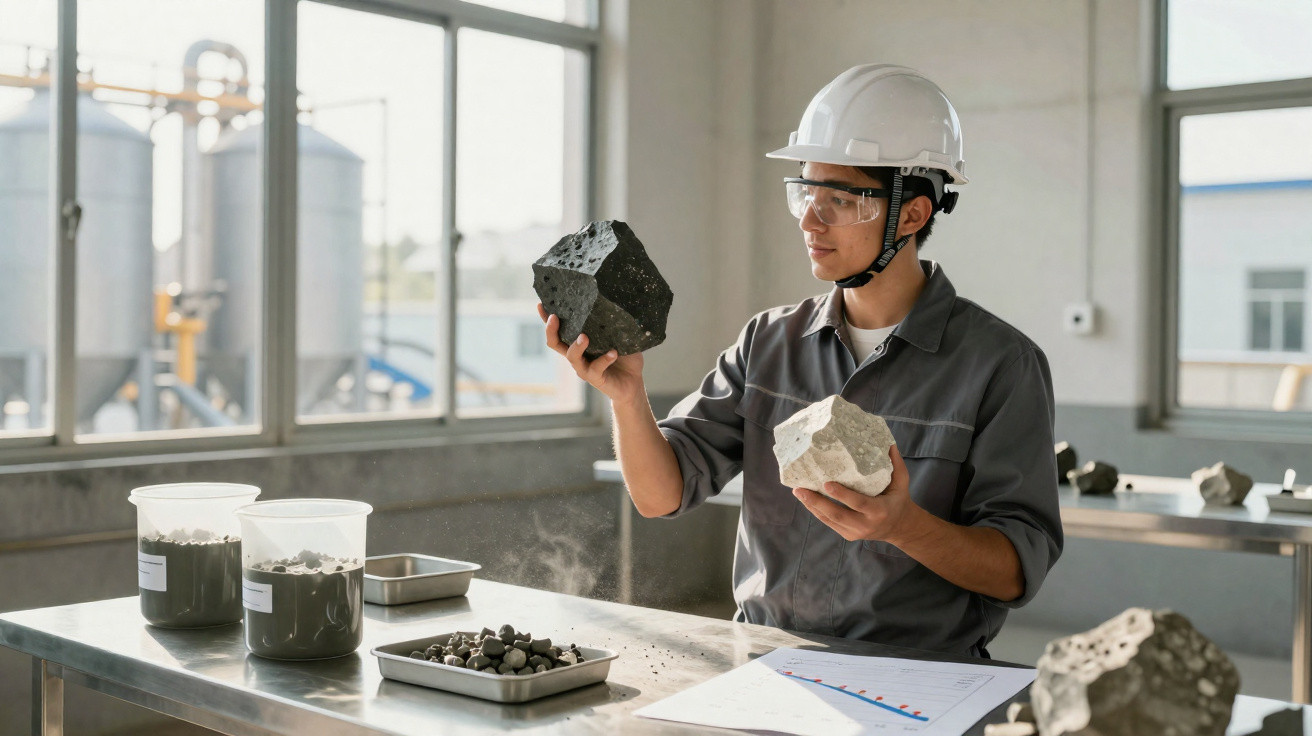
Using another type of rock as the feedstock could reduce energy consumption by more than 40% and cut related carbon emissions by over 80%.
The research was headed by Jeff Prancevic, a geologist at UC Santa Barbara, alongside Cody Finke of Brimstone Energy, Inc.
Cement production and CO2 emissions
Portland cement – the material used in almost every modern building project – accounts for about 4.4% of worldwide greenhouse gas emissions.
This figure catches many people off guard, understandably, because cement is far less visible than vehicles or power stations.
“Cement barely registers in the public mind as a major driver of climate change, but the CO2 emissions from cement production are similar to all the world’s passenger cars,” Prancevic said.
The issue stems from the source material. At present, cement obtains its calcium from limestone, which is chemically composed of roughly half CO2.
When producers heat limestone to approximately 1,500°C to create quicklime, cement’s essential ingredient, that carbon dioxide is emitted straight into the atmosphere.
About 500 kg of CO2 is released for every metric ton of cement made, even before the energy consumed by the process is considered.
The process is straightforward and has been improved for more than a century, yet its carbon emissions are effectively built in.
A different rock, a different chemistry
The study poses a simple question: could calcium be sourced elsewhere?
The researchers examined calcium-rich silicate rocks – chiefly basalt and gabbro – as alternatives to limestone.
In contrast with limestone, silicates do not contain carbon within their chemical structure, meaning their processing does not release CO2 in the same manner.
Their first task was to establish whether adequate supplies exist. Drawing on existing geological maps, the team evaluated the worldwide surface availability of silicate rocks.
They identified enough material to support cement production at present levels for several hundred thousand years.
“Not all of that basalt is easily accessible, but the numbers suggest that calcium from basalt is virtually inexhaustible,” said Prancevic.
A drastic cut in cement emissions
The researchers next modelled the energy use and emissions of cement production based on silicate rocks.
Its theoretical minimum energy demand was found to be below 60% of that required to process limestone.
If natural gas were used for energy, minimum CO2 emissions for each ton of cement could drop from 609 kg to about 50 kg, depending on the precise rock type.
Even with average grid electricity and today’s unoptimised processes, this method would lower emissions by more than 25% compared with conventional production.
Iron and aluminium from basalt
Another particularly notable result concerns the materials produced alongside the cement.
As well as calcium, basalt includes iron and aluminium. Its calcium-to-iron ratio is almost precisely aligned with the ratio at which society uses cement and steel.
Consequently, both products could potentially be made from the same rock, while wasting little of either material.
Basalt also holds around 20 times more aluminium than current global consumption levels. That abundance could create entirely new opportunities for production.
Creating several valuable materials from one feedstock is a key reason why the silicate method is substantially more efficient than the limestone route.
Instead of being a single-purpose operation that produces one material and considerable CO2, it functions more like an integrated industrial system.
Changing an entrenched industry
Despite its advantages, the approach faces a major challenge: cement manufacturers have operated in much the same way for well over a century.
“The construction industry is built around Portland cement, from design to placement to maintenance,” Prancevic said.
“Even subtle changes in standards are painstakingly considered and are slow to be adopted. This is exactly why we’ve focused on technology to make the same Portland cement builders are used to.”
Lower-carbon alternative cements have been available for decades. They have not replaced conventional cement in part because financial incentives have not been sufficiently strong.
A transition would also involve altering long-established supply chains and construction standards.
Because it makes standard Portland cement from a different rock, the silicate route avoids that obstacle. It could fit within existing infrastructure instead of forcing the sector to rebuild around an unfamiliar material.
Cement is inexpensive as well, costing about $150 per ton. For a new manufacturing process to gain genuine momentum, it must show substantial cost savings, or at least achieve cost parity.
Experimenting with new technologies
Prancevic’s co-authors at Brimstone Energy are seeking to commercialise the technology. The paper also encourages the broader research community to investigate it.
“This paper is really a call for other researchers to experiment with new technologies to accelerate cement decarbonization because there is the potential to solve a climate problem as big as cars simply by sourcing calcium from a different rock,” Prancevic said.
“I’m surprised that it’s taken so long for this solution to be considered,” he concluded.






Comments
No comments yet. Be the first to comment!
Leave a Comment