
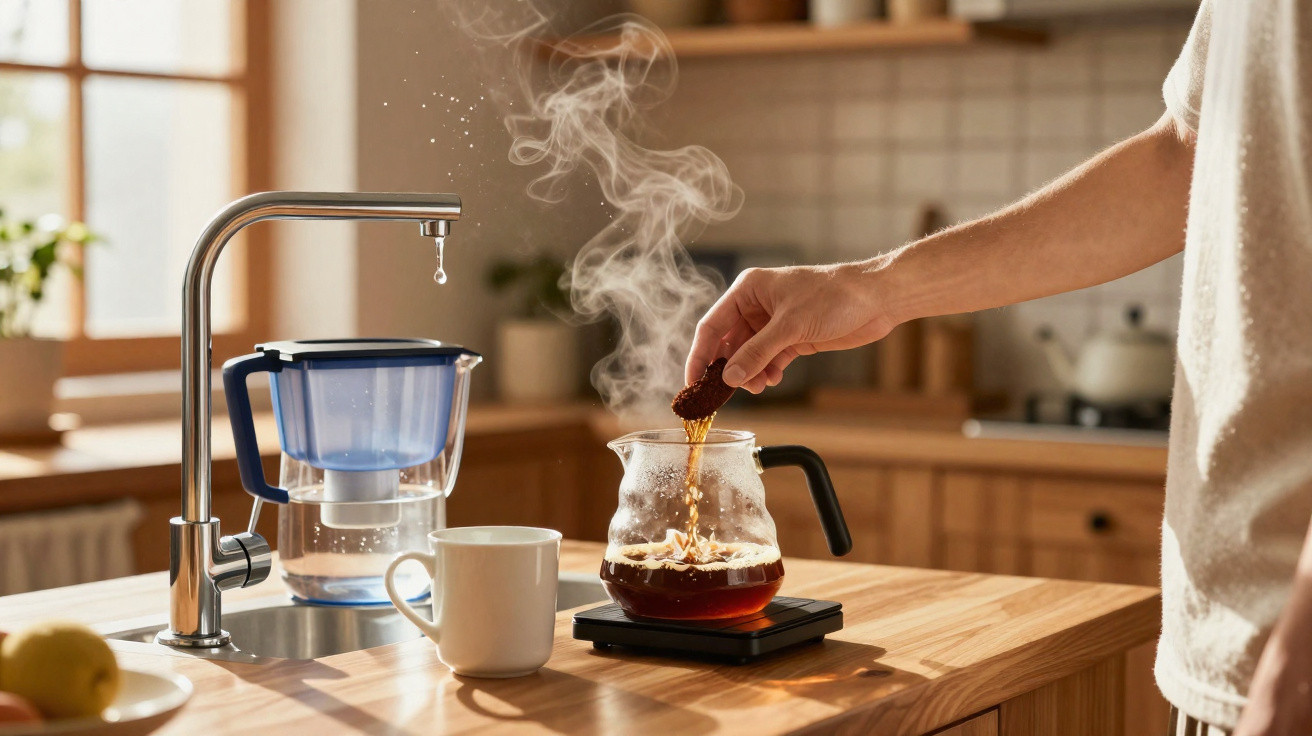
The day has barely begun, your eyes are half open and the coffee machine is already humming. Who wants to wait ages for the pot to fill? So it can seem tempting to turn the tap to ‘hot’, pour the water straight into the machine and get on with it. Handy, right? Health authorities say this shortcut is far from sensible – and it has much more to do with your pipework than you might think.
What authorities say about tap water and coffee
Health ministries and specialist bodies across Europe have made the same point for years: only cold tap water is officially classed as drinking water and subject to strict checks. Although hot water from the tap travels through the same household pipes, it then enters a boiler or storage tank – and that is where its ‘status’ changes.
“Hot tap water is technically service water rather than drinking water – it is intended for showering, not for improving your coffee.”
In most cases, testing covers the cold-water supply at the property connection. What happens in the hot-water cylinder and ageing internal pipes is monitored far less closely. Authorities therefore specifically recommend:
- Use cold tap water only for all drinks, including coffee, tea and cocoa, as well as for baby food.
- When cooking pasta, rice or soup, always start with cold water and heat it afterwards.
- After a prolonged break, such as overnight, over a weekend or after a holiday, run the cold tap for 1–2 minutes before filling a jug or kettle.
There is no need to discard the flushed water. It can be used for cleaning, soaking dishes or watering plants.
Why hot tap water can contain more metals
The main concern is not primarily the water itself, but what it can draw out of pipes and storage systems. Many older properties still have isolated pipe sections or connections made from lead. Newer buildings generally use copper or stainless-steel pipes, often with nickel present in alloys or fittings.
When water remains in these pipes for an extended period, it absorbs tiny amounts of metal. Temperature is the crucial factor.
“The warmer the water, the more readily it releases metals from pipes and fittings – which then end up directly in your cup of coffee.”
Measurements indicate that raising the temperature from 15 to around 25 degrees can almost double the amount of lead in water. Temperatures in hot-water systems and cylinders are considerably higher still. Water may circulate there for hours, increasing the contamination further.
A common misconception is: “I boil the water afterwards, so everything is safe.” Boiling works against germs, but not against metals. As water evaporates during heating, dissolved metals such as lead, copper and nickel remain behind – so their concentration can even rise slightly.
How a hot-water cylinder can become a problem area
Hot-water cylinders, instantaneous water heaters and so-called boilers are designed first and foremost for hygiene in bathrooms and kitchens. Their job is to provide enough warm water for showering, handwashing or washing up – not for drinking.
Inside a storage system, the following can happen:
- Water frequently remains stagnant for long periods.
- Metals may leach out from the appliance itself or its connecting components.
- Certain temperatures provide particularly favourable conditions for bacteria such as Legionella.
Legionella multiply mainly in lukewarm to warm water. Proper settings and maintenance can reduce the risk, but a storage tank remains a system that was never intended to provide drinking water.
Many systems operate at 55 to 60 degrees. This is a compromise: hot enough to lower the risk of Legionella, while using less energy than very high temperatures. That is suitable for a shower, but it still does not make the water a good choice for a cappuccino.
Who may be particularly affected by metal exposure
According to specialist authorities, some groups are more sensitive to metals in water, especially lead:
- Pregnant women, because lead can interfere with the development of an unborn child.
- Babies and young children, whose nervous systems and organs are still developing.
- People with kidney disease, because their filtering function is reduced.
Across Europe, the drinking-water limit for lead is 10 micrograms per litre. This value applies to cold water at the tap following normal use. Actual levels in stagnant, warmed water from old pipes can be significantly higher – especially in the morning after the night or following a holiday.
“Anyone living in an older property should let the tap run first thing in the morning and always use cold water for drinks – a small step with a major effect.”
How to prepare coffee more safely at home
A few straightforward habits can clearly reduce everyday risk without affecting your caffeine intake. A sensible routine looks like this:
- Turn on the cold tap and let it run for 30 seconds to 2 minutes, particularly after a longer period without use.
- Fill the coffee pot, kettle or espresso machine with the fresh cold water.
- Heat the water in the appliance, rather than at the tap or in the storage system.
Many coffee enthusiasts also report a more pleasant flavour. Fewer traces of metal and less stale water can mean fewer unwanted notes in the cup. The difference is particularly noticeable with lighter roasts and filter coffee.
Quick check: when should you be especially careful?
| Situation | Recommended precaution |
|---|---|
| Older property built before 1970 | Let the water run for longer before use and, if necessary, check whether a water analysis is available |
| Pregnancy in the household | Use cold tap water consistently for drinks only |
| Food for babies or young children | Never use hot tap water; always boil fresh cold water |
| Long absence, such as a holiday or weekend break | Flush all taps thoroughly before cooking or making coffee |
Why using hot water feels so tempting – and what helps
The instinct is understandable: hot water appears to save time because it reaches boiling point sooner. In reality, with a standard kettle, the difference is usually only a few seconds. Set against that are potential metal exposure and hygiene concerns in the storage system.
Looking realistically at everyday routines often reveals that this ‘trick’ offers almost no benefit, while the remaining risk seems unnecessarily high by comparison. To avoid slipping into the habit, place the kettle or filter jug directly beside the cold tap and fill it with cold water straight away. That way, you will naturally reach for the right side.
What else to know about pipes, filters and alternatives
Many people wonder whether a water filter solves the issue. Jug filters may improve flavour and reduce certain substances, but they are no substitute for replacing old lead pipes. If you live in a very old building and are unsure, you can ask your landlord or local authority for information on pipe materials and possible testing.
There is another consideration: coffee is not the only source. Using hot tap water for tea, instant soups, instant products or baby purée increases overall intake. Over the course of a day, this can become relevant, particularly in problematic buildings.
Ultimately, it comes down to one simple rule: use fresh cold tap water, let it run briefly, then heat it. This small extra step may take half a minute, keeps metals out of the equation and can often improve the taste in your cup as well. It is a start to the day that not only wakes you up, but also feels a little more reassuring for your health.

Comments
No comments yet. Be the first to comment!
Leave a Comment