
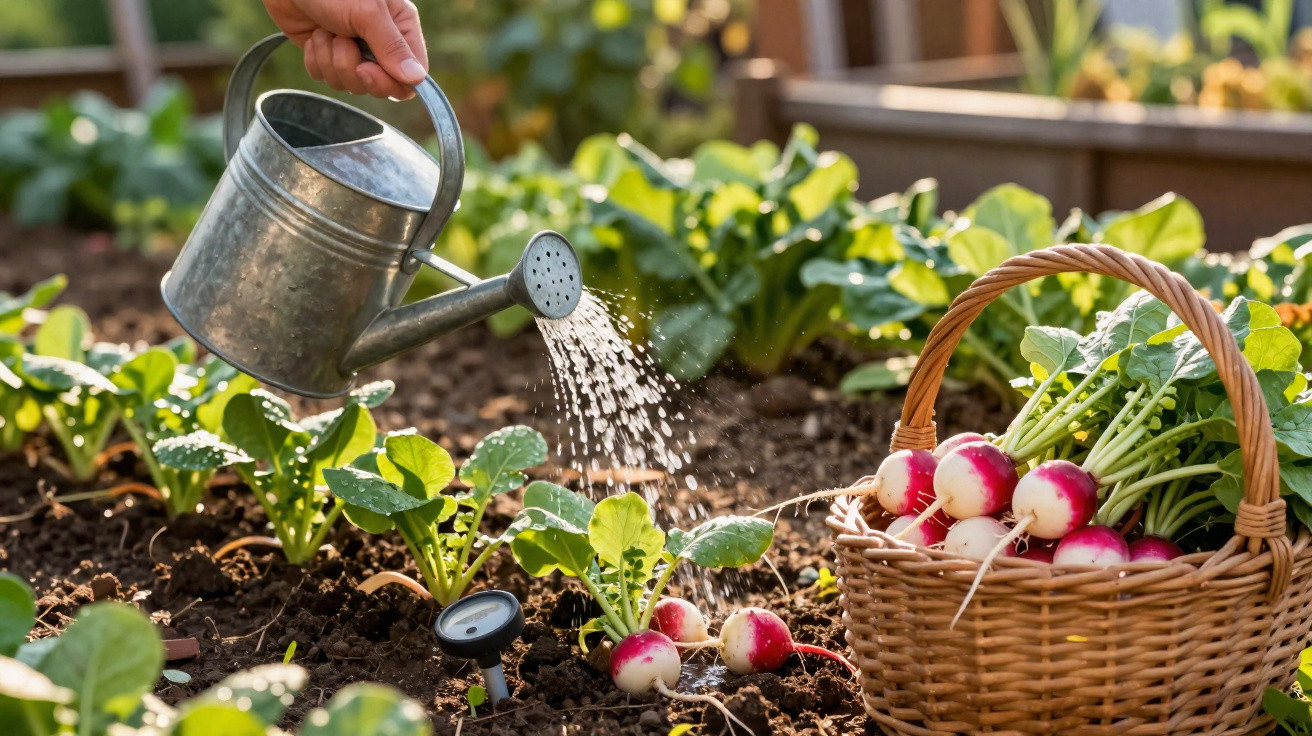
One inconspicuous detail in the bed determines whether radishes turn out tender and mild or hot, woody and split – and almost every amateur gardener overlooks it.
Radishes are widely seen as an ideal vegetable for beginners: they grow quickly, need little attention and take up very little room. Yet many amateur gardeners are still disappointed in practice. The roots can become hot, spongy inside or split just before harvesting. This frustration is usually not caused by the wrong fertiliser, but by watering mistakes – and that is where this straightforward trick comes in.
Why supposedly easy-care radishes can be so fussy
Radishes develop exceptionally fast. It often takes only four to six weeks from seed to a harvestable root. Even small changes in water supply can have a major impact on quality during this brief period. When the bed repeatedly dries out, the plants become stressed.
“The key to crisp, mild radishes is a bed that remains evenly moist – without waterlogging and without extreme dry spells.”
When water is lacking, the pungent mustard oils become more concentrated in the root and the flesh turns woody. If the plants then receive a great deal of water all at once after a dry spell, they effectively fill up with it. The root swells rapidly and may split – a familiar result of severely fluctuating soil moisture.
The simple trick: water on “cruise control”
The crucial approach is not to water radishes heavily on some days and not at all on others according to instinct, but to give them small, consistent amounts. Rather than filling the watering can to the brim every few days, it pays to establish a regular watering routine.
- Check the soil once a day, particularly in sunshine and wind.
- Water small amounts more frequently instead of watering rarely but very heavily.
- Moisten the soil only until it is lightly damp rather than sodden.
- Fine grass clippings or leaf mulch between the rows helps retain moisture.
This routine is particularly important in a cold frame or during dry spring spells. Regular, moderate watering prevents the plants from becoming stressed. The result is tender roots with a delicate flavour, rather than hot, cracked little balls.
Position: where radishes thrive
For watering to work as intended, the bed must offer suitable growing conditions. Radishes prefer a bright position, but not intense heat throughout the day.
The best place in the garden
- A sunny to lightly shaded spot, such as one receiving morning or evening sun.
- Avoid very dry south-facing areas beside house walls or garden walls.
- Sheltered beds also reduce additional drying from the wind.
Soil structure matters just as much. Loose, humus-rich soil is ideal because it retains water without becoming prone to waterlogging. Heavy clay soils compact and hold moisture for too long, whereas pure sandy soils dry out extremely fast. If the garden has difficult soil, improve it with compost and a little fine sand.
How to sow without common beginner mistakes
Once the site has been chosen, a good start determines later success. Many people sow radishes too deeply or too closely together, affecting both their shape and flavour.
Correct depth and spacing
A shallow drill is sufficient for sowing:
- Sowing depth: about 1 centimetre.
- Space between seeds: 3–5 centimetres.
- Space between rows: about 15 centimetres.
If seeds are scattered more densely, the seedlings must be thinned after they emerge. Aim for a final gap of around 5–8 centimetres between the young plants. This is the only way to give the roots enough room to form evenly and roundly.
“Sowing too densely produces thin roots and misshapen bulbs – not double the harvest.”
Importantly, the bed must not dry out before germination. The top one to two centimetres of soil should remain lightly moist at all times. A fine spray is more suitable than a hard jet of water, which can wash away the seeds.
Timing: why the variety must suit the garden calendar
Radishes are available in spring, summer and, in some cases, autumn varieties. They react differently to day length and temperature. Sowing a strictly summer variety in March can result in more leaves than root, or cause the plants to bolt straight into flower.
| Period | Variety characteristics | Benefit |
|---|---|---|
| Spring (March–April) | Early varieties that tolerate cool nights | Reliable roots despite changeable weather |
| Summer (May–July) | Heat-tolerant varieties, less likely to bolt | Stay mild for longer and retain a stable shape |
| Autumn (August–September) | Robust varieties with a slightly longer development time | Makes good use of beds after main crops |
It is worth checking the variety description on the seed packet. It states which period the variety is intended for and how many days it needs before harvest. Following this guidance reduces stress on the plants – and therefore lowers the risk of pungency and woody flesh.
Succession sowing: small batches, a long harvest
Radishes mature quickly, but they remain at their best for only a short time. Rather than sowing an entire row in one go, another method has proved effective: sow a small section of the bed every two weeks.
“Several small sowings instead of one huge sowing provide steady harvests – and always-fresh roots for the kitchen.”
This prevents the harvest window from being limited to just a few days. Sowing a new strip every fortnight provides crisp radishes over many weeks. The garden also feels more lively, as new rows keep emerging while others are already ready to pick.
Do not delay harvesting: the right moment matters
Radishes are ready when the root is clearly visible above the soil and has reached the diameter stated on the packet. Depending on the weather, this may happen after only four to six weeks.
- It is better to pull them slightly early than too late.
- Oversized roots soon become pithy and lose flavour.
- Harvest rows promptly, but in several passes.
Anyone who postpones harvesting for convenience will be rewarded with spongy flesh and increasing heat. That is part of the crop’s character: radishes are excellent catch crops, but only if they are not left sitting in the ground and are instead harvested and replaced consistently.
Practical tips: common problems and simple solutions
Radishes become hot or woody
- The soil has repeatedly dried out badly.
- Watering intervals were too long and the amounts too large.
- Harvesting took place much too late.
Solution: adjust the watering rhythm, improve the soil with compost, choose earlier varieties and harvest consistently once the roots reach the appropriate size.
Roots split
- Very heavy rain or watering follows a dry spell.
- Soil moisture fluctuates sharply.
Solution: water regularly and moderately during dry periods so that the plants do not experience “drought stress”, and harvest promptly after heavy rain if the roots already appear ripe.
Why even watering has more influence than fertiliser
When radishes fail, many amateur gardeners first suspect a nutrient deficiency. Most home-garden soils already contain sufficient basic nutrition, especially where compost is incorporated from time to time. Water management has a far greater effect on flavour and texture.
Radishes are among the crops with a very short, concentrated growth period. Everything needs to be right within that window: sufficient light, loose soil and, above all, a consistent supply of water. Anyone who controls this factor can make full use of the small root’s potential without buying expensive specialist products.
For many people, that is exactly the appeal: with a simple watering trick, some discipline at harvest time and a considered sowing rhythm, it is possible to grow radishes in even a small urban garden or raised bed that easily match shop-bought produce – and often taste even better because they go directly from the soil to the plate.



Comments
No comments yet. Be the first to comment!
Leave a Comment