
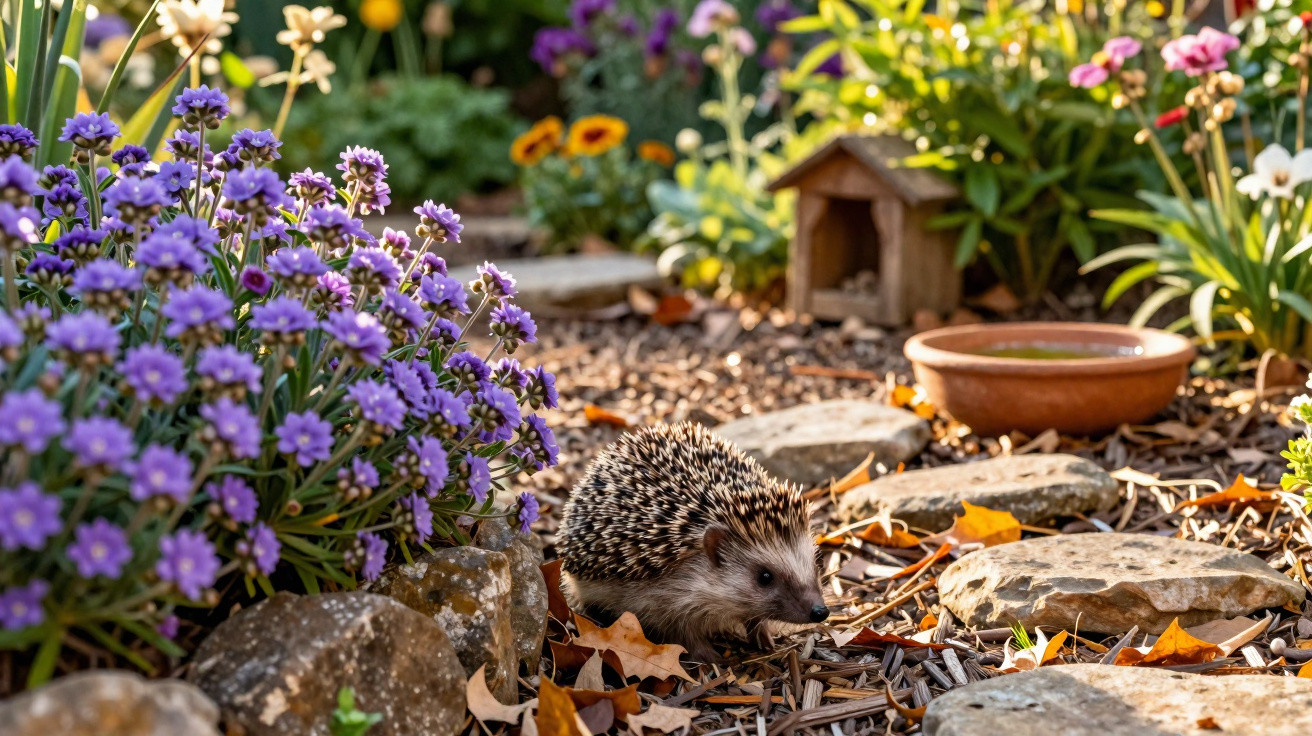
Not seen a hedgehog for years?
A simple, hardy perennial can transform your own garden into a small prickly paradise.
Many amateur gardeners wonder why not a single hedgehog visits, despite a lovingly maintained lawn and smart flowerbeds. These appealing animals are under considerable pressure in Central Europe. One frequently overlooked plant can help provide them with a safe home right behind the house again: aubrieta, an early-flowering ground-covering plant with a remarkable effect on biodiversity.
Why hedgehogs love gardens like this
Hedgehogs are quiet nocturnal creatures. They hide away during the day, then hunt insects, worms and slugs after dark. Above all, they need three things: shelter, food and protected routes.
In many residential areas, these places of refuge are disappearing: closely mown lawns, gravel gardens and sterile new-build plots. For hedgehogs, this means stress, longer journeys and a greater risk of being run over or encountering pets.
A garden rich in structure, with densely planted corners, becomes a safe feeding area for hedgehogs – while also providing natural pest control.
Where dead wood, piles of leaves, small stone walls and dense ground cover alternate, protected corridors develop. This is precisely where hedgehogs thrive, as they can move around without being seen. Within this mosaic, aubrieta plays a surprisingly important part.
Aubrieta: far more than a purple carpet of flowers
Most people know aubrieta as a generously flowering cushion-forming perennial that covers walls and bed edges from April to June. At garden centres, it is often sold without a name in colourful trays, usually in purple, blue or pink. Many people do not realise that it can offer practical help to small wild animals.
The plant grows low and forms dense cushions. Beneath this cover, countless hiding places and gaps emerge, allowing insects and other small creatures to establish themselves. For hedgehogs, it is rather like a buffet with a built-in shield.
Wherever aubrieta grows, microhabitats develop naturally – small hunting grounds for hedgehogs, protected from view and danger.
Its dense growth delivers several benefits at once:
- Shelter: Hedgehogs can travel between the plant cushions without being exposed on an open lawn.
- Food: The flowers attract insects, while dead plant material and stones between the plants provide hiding places for small creatures.
- Climate: The ground remains slightly cooler and damper, benefiting earthworms and other tasty prey.
In some regions, aubrieta is deliberately planted near vegetable gardens or along paths, so that hedgehogs can quickly find food and cover in spring when they emerge from hibernation.
Creating a hedgehog-friendly aubrieta carpet
With a little planning, you can establish a lasting hedgehog territory within a few months. This perennial is considered hardy and undemanding – ideal for anyone seeking lively corners rather than a perfectly manicured garden.
Choosing the right garden position
Aubrieta prefers bright, relatively dry conditions. Suitable locations include:
- sunny wall tops or dry-stone walls
- the edges of beds or paths
- gentle slopes and rock-garden areas
- the transition between lawn and hedge
The soil should ideally be free-draining and slightly gritty, with a helping of well-rotted compost. The cushions do not tolerate waterlogging well, but cope remarkably well with dry spells.
Planting or sowing: getting off to a good start
There are two ways to create a flowering carpet: established young plants or seed. The following overview provides a general guide:
| Option | Best time | Benefit |
|---|---|---|
| Young plants in pots | Spring after the last frosts | Faster results, often flowering in the same year |
| Direct sowing | Early spring or late summer | Cost-effective and well suited to larger areas |
When planting young specimens, leave 20 to 30 centimetres between each cushion. The gaps will fill in after one to two years, creating the characteristic carpet. For hedgehogs, even a strip of a few square metres is enough if it is well connected.
Transitions are especially interesting for these animals: for example, the edge between an aubrieta cushion and a hedge, leaf pile or small stone wall. These create safe “passageways” for their nightly rounds.
Care tips: turning the flower carpet into a hedgehog magnet
Cut back, but do not scalp it
After the main flowering period in late spring, a firm trim is worthwhile. Shorten the cushions by a good third. The perennials will then regrow densely and vigorously, forming even more compact cushions – perfect for cover.
Important: do not cut back to woody growth or down to ground level. Some green growth must remain so that the plant can recover quickly.
Water, mulch and stones: small additions with a big impact
Aubrieta manages with little water. During very dry weeks, moderate watering is sufficient. A thin mulch of fine bark material or leaves retains moisture and provides extra hiding places for small creatures.
A mixture of plant cushions, small stones and a little rubble creates a miniature mountain landscape teeming with life.
Small gravel patches, pieces of brick or broken stones can be incorporated between the aubrieta plants. This creates subtle contours that are ideal for insects, spiders and woodlice. The more varied the structure, the more appealing the area becomes to foraging hedgehogs.
What makes a garden a true hedgehog hotspot
The right plant combination
Aubrieta provides the foundation, but the garden only becomes a genuine refuge when combined with other species. Proven choices include:
- Ferns for shady, cool corners
- Ground-growing ivy as another ground cover that offers shelter
- Loose ornamental grasses, which provide cover in summer and winter
- Bellflowers and burdock species around the edges for greater floral diversity
By arranging a few branches and logs into an unobtrusive woodpile, you create additional habitat for beetles and other insects – indirectly laying out the hedgehogs' menu.
A water source and everyday safety
A shallow water dish or a small mini-pond with stones to help animals climb out can become a meeting point for many creatures, especially in dry periods. The water should not be too deep, so hedgehogs cannot fall in and become trapped.
Several hazards can be found in everyday gardens: robotic lawnmowers, brushcutters and leaf blowers. Anyone hoping to welcome hedgehogs should use these tools carefully. Robotic lawnmowers should always be kept in the garage at night, as they can seriously injure nocturnal animals.
A quick look through leaf piles, beneath dense cushions and in corners before blades or cutting line are started can quite literally save hedgehogs' lives.
Open light wells, ponds with steep sides and cellar steps should also be secured so that a hedgehog that falls in can get back out – for example, with a sloping board or a pile of stones.
How the garden changes when hedgehogs arrive
Anyone who gives their garden more structure and stops using pesticides will usually notice a clear change within a few years. More birds, more butterflies, more beetles – and eventually the familiar sound of rustling leaves at dusk.
Hedgehogs help control slug numbers, also eat the larvae of pest insects, and therefore contribute to vegetable beds suffering fewer attacks. At the same time, they bring a certain sense of ease to the garden: not everything needs to be immaculate and tidy; quite the opposite.
Some terms appear more frequently in this context. Here is a brief overview:
- Biodiversity: describes the variety of plants, animals and habitats within an area.
- Corridor: a continuous, protected route that enables animals to move between different areas.
- Ground cover: low-growing plants that cover the soil, suppress weeds, retain moisture and create habitat.
So, anyone setting aside a few square metres for aubrieta in spring is doing more than planting a decorative carpet of flowers. They are creating one building block of a small ecosystem that offers hedgehogs a safe haven. With every new season, the carpet becomes denser, the life beneath it more varied – and the likelihood grows that, one evening, a prickly visitor will snuffle cautiously through the new plant corridor.






Comments
No comments yet. Be the first to comment!
Leave a Comment