
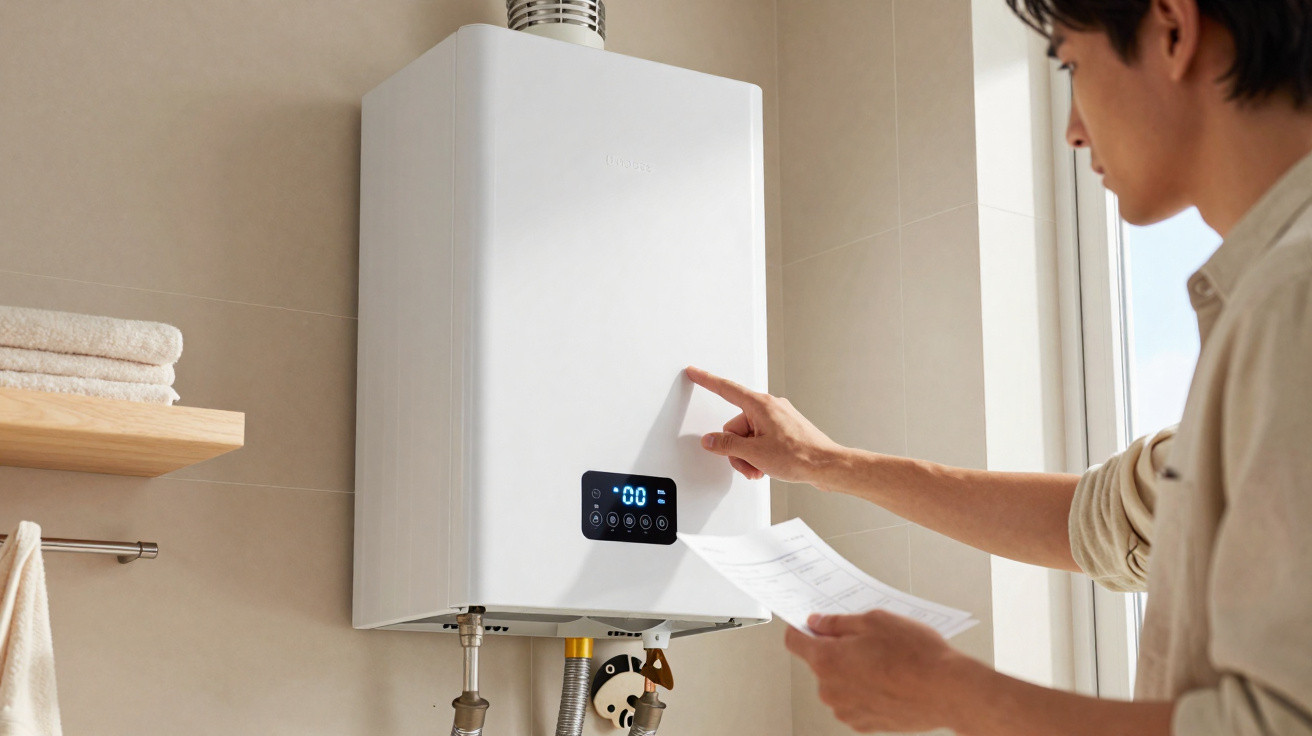
Many households are surprised by rising electricity bills, yet fail to notice that the hot-water boiler is quietly adding substantially to the cost in the background.
Anyone using a hot-water storage cylinder with an integrated heat pump - known as a hot-water heat-pump boiler - can cut their costs considerably, or accidentally increase them. A handful of apparently minor settings and habits determine whether this efficient appliance becomes an expensive electricity guzzler.
Why a hot-water heat-pump boiler needs careful settings
Hot water accounts for 15 to 20 per cent of total electricity consumption in many homes. A modern heat-pump boiler is designed to reduce this demand by operating like a small air-source heat pump: it extracts heat from the surrounding air and uses it to raise the temperature of the water in its cylinder.
When correctly planned, such a unit uses only around one third of the electricity required by a conventional electric boiler. Studies indicate that a 200-litre cylinder typically reduces consumption from roughly 3,500 kWh per year to around 800 to 1,300 kWh. In monetary terms, this can ideally turn €700 into €160 to €260 - a saving of approximately €500.
“The same heat-pump boiler can either save several hundred euros a year - or, because of poor settings, cost almost as much as an old electric boiler.”
The key factors are sizing, installation location, temperature, operating modes, scheduling, maintenance and personal bathroom habits.
Mistake 1: The wrong cylinder size wastes electricity
The first, and often most significant, error can happen when choosing the cylinder capacity:
- Too small: The cylinder is quickly depleted, causing the backup immersion heater to switch on and reheat the water electrically - which is considerably more expensive than using the heat pump.
- Far too large: A huge volume of water must be kept hot continuously, increasing standing losses day and night.
The following capacities are a useful rule of thumb:
| Household size | Recommended capacity |
|---|---|
| 1–2 people | 150–200 litres |
| 3–4 people | 200–250 litres |
| 5+ people or frequent full baths | 300 litres or more (assess individually) |
Households that regularly take baths or have particularly long showers should allow some extra capacity, but should not overdo it. A qualified installer can calculate the required size more precisely from daily usage patterns.
Mistake 2: The wrong location - the boiler is effectively in a fridge
A hot-water heat-pump boiler depends on warm air. If it is installed in an icy, draughty cellar room, its efficiency falls noticeably. Temperate spaces are ideal, such as a utility room, a mild ground-floor area or a lightly heated garage area.
Key points when choosing the installation site include:
- The room should be frost-free and, ideally, not permanently very cold.
- There must be enough air volume - not a tiny enclosed cupboard.
- Basic ventilation is often sufficient, through door gaps, grilles or ventilation openings.
Placing the cylinder inside a completely sealed cupboard forces the heat pump to work against its own cold exhaust air. This increases running time and, consequently, electricity use.
Mistake 3: Restricting airflow and allowing heat to escape
A hot-water heat-pump boiler draws air in and expels it again. Its output declines if this airflow is obstructed. Uninsulated surfaces that continually lose heat are equally problematic.
A quick check of the unit should cover the following:
- Is the room sufficiently large and not entirely airtight?
- Are the air intake and outlet openings clear, unobstructed and free from dust?
- Does the cylinder feel warm on the outside? If so, an additional insulation jacket can often help.
- Are hot-water pipes insulated where they pass through cold areas? There is up to 10 per cent saving potential here.
“Every metre of uninsulated hot-water pipe in the cellar may end up heating only the spiders - rather than the shower in the bathroom.”
Mistake 4: Temperature set too high - every degree costs money
Many owners set their hot-water temperature high “just in case”, so that nobody has to take a cold shower. This is reflected in the bill. Most manufacturers recommend a setting of 50 to 55 degrees Celsius.
Above 55 degrees, heat losses and electricity consumption rise significantly because the appliance has to work harder. Each additional degree can increase hot-water costs by roughly 7 per cent.
For hygiene reasons, the temperature should not remain below 50 degrees permanently, due to the risk of Legionella. Anyone concerned about this can use an automatic “Legionella cycle” or a temporary temperature increase at longer intervals, rather than maintaining 60 degrees all the time.
Mistake 5: Using the wrong mode continuously - ignoring Eco and leaving Boost on
Modern heat-pump boilers offer several programmes, and this is where particularly costly misunderstandings arise:
- Eco or heat-pump mode: This relies mainly on ambient air, is the most economical setting and should be the default.
- Boost or rapid mode: This makes greater use of the electric immersion heater. It is useful after several consecutive showers or when guests are staying, but becomes an electricity guzzler if used continuously.
- Away mode: This lowers the temperature during holidays or extended absences, reducing heat losses.
Many users leave the appliance in comfort or boost mode at all times for convenience. In practice, the hot-water heat-pump boiler then becomes almost an ordinary electric boiler with air as decoration - and the expected savings fail to materialise.
Mistake 6: Poor time schedules - cheap electricity, but freezing air
People on time-based electricity tariffs with cheaper overnight periods often schedule most hot-water heating for these hours. For a hot-water heat-pump boiler, however, this has a drawback: air in the installation room is usually colder at night, so the heat pump works less efficiently.
A sensible compromise looks like this:
- Part of the heating cycle runs during the cheaper tariff periods.
- Another part is scheduled for hours when daytime warmth or heated indoor air makes the room somewhat milder.
- The main period of use, whether morning or evening, is included in the programme so sufficient hot water is available at the appropriate time.
Rather than putting “everything at night”, it is worth considering the tariff structure, room temperatures and the household's showering habits.
Mistake 7: Neglecting maintenance - blocked filters and a scaled-up cylinder
Like every heat pump, a hot-water heat-pump boiler requires maintenance. A clogged air filter forces both fan and heat pump to run continuously at high output. This results in noise, wear and higher consumption.
A simple maintenance routine is often enough:
- Switch off the appliance and isolate it from the electricity supply.
- Remove the air filter from the upper part of the unit.
- Clean it using lukewarm water and a little mild washing-up liquid.
- Allow it to dry thoroughly before refitting it.
There is also the water side to consider: in hard-water areas, limescale builds up inside the cylinder and on the immersion heater. Regular descaling and a professional inspection of the safety valve prevent declining performance and extend the appliance's service life.
Mistake 8: Wasteful everyday hot-water habits
Even the most efficient appliance cannot rescue the bill if hot water is constantly running in the bathroom and kitchen. Some seemingly harmless habits have a direct effect on the meter:
- Long, hot showers instead of short, lukewarm ones.
- Frequent full baths, even where a shower would be enough.
- Leaving hot water running while brushing teeth or washing up.
- Dripping taps or leaking mixer taps.
“Anyone who consistently chooses a shower over a bath, uses water-saving shower heads and groups hot-water use together will reduce energy demand considerably - without sacrificing comfort.”
Practical everyday aids include:
- Water-saving shower heads and aerators on taps.
- Short, deliberate shower times - perhaps with a timer in the bathroom.
- Washing laundry that permits it at a lower temperature.
- Using a dishwasher on its Eco programme with a hot-water connection, where available and appropriate.
Why checking the technology is always worthwhile
Many users underestimate how closely the technology, its settings and user behaviour are linked. A wrongly sized or poorly located heat-pump boiler quickly reaches its limits. Conversely, those who manage capacity, temperature, programmes and maintenance properly can turn exactly the same appliance into a genuinely economical solution.
Checking the instruction manual can be helpful: it often contains features such as holiday programmes, intelligent learning modes or fine temperature adjustments that are rarely used in day-to-day life. A brief handover from the installer at commissioning also pays off over the long term.
Finally, a straightforward check of the household electricity meter is worthwhile. Before-and-after comparisons over several weeks quickly reveal whether the new settings are working. This turns an apparently complicated high-tech boiler into a manageable household appliance that can genuinely help ease the next electricity bill.




Comments
No comments yet. Be the first to comment!
Leave a Comment