
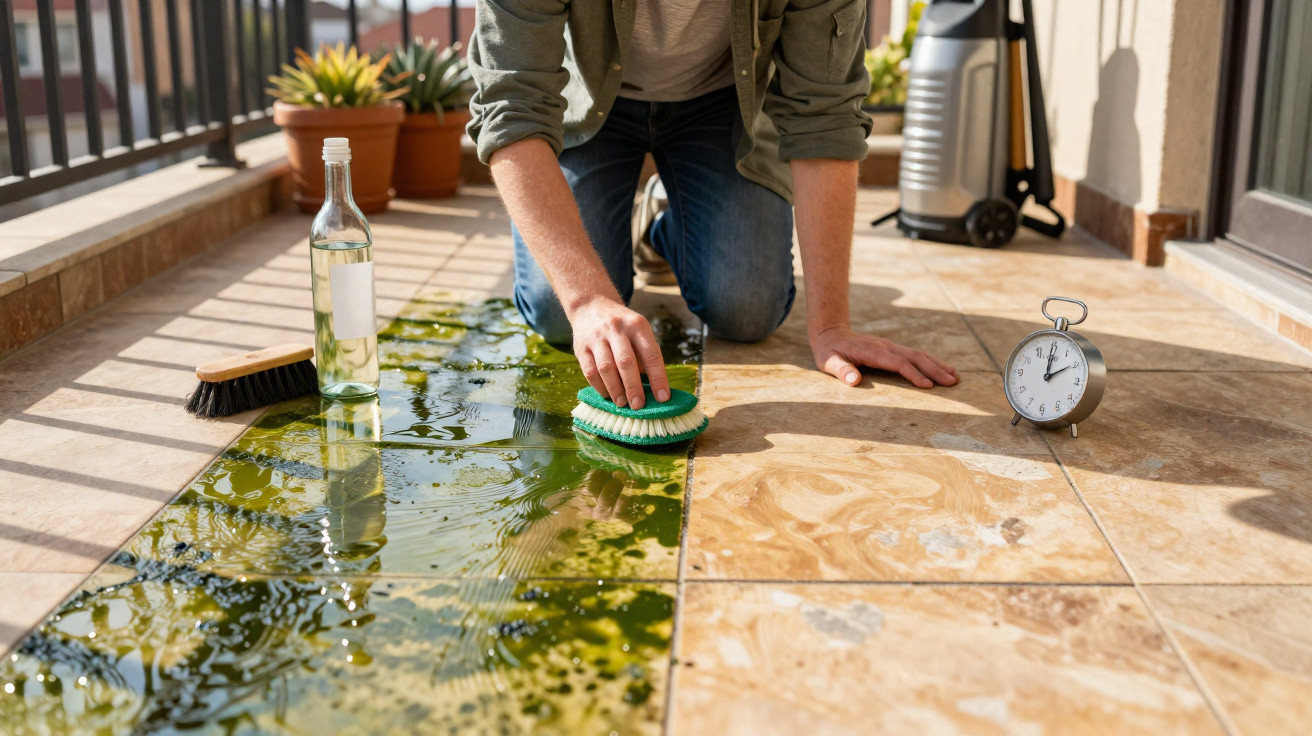
When you open the patio door in spring, the view is often familiar: grey or greenish paving slabs, slippery deposits and dark marks. Many people instinctively reach for pricey specialist cleaners or haul the pressure washer out of the shed. Yet one inexpensive kitchen cupboard staple, costing only a few pence, is often enough.
Why the patio becomes so hazardous after winter
Months of persistent rain, limited sunshine and damp fallen leaves leave their mark. Concrete, block paving and tiles develop a thin layer of dirt, micro-organisms and dust. This coating provides an ideal breeding ground for moss and algae.
When spring temperatures rise, green growth takes off – not only in flower beds, but across the patio too. The result is a surface as slippery as an ice rink.
Moss and algae do not merely look neglected; they create a genuine slipping risk – particularly for children and older people.
Simply waiting for everything to dry out on its own often makes matters worse. Damp patches linger, green growth thickens and dark stains work their way into the material's pores. By the time you reach for a brush in summer, considerably more effort and chemicals will be needed.
The 30p kitchen ingredient: what household vinegar can do
At the heart of this method is a cleaning-cupboard classic: clear household vinegar, commonly sold as vinegar cleaner or vinegar essence. A viral account in the UK already uses precisely this technique every spring, spending less than £1 per patio.
The principle is straightforward: household vinegar contains acetic acid. It attacks the thin nutrient layer on which moss and algae feed, while loosening limescale and dirt residues that hold the deposits in place.
The acid damages the cellular structure of moss and algae, dries them out and makes them much easier to remove.
Rather than scrubbing for hours through sheer physical effort, the deposits are first weakened chemically – using a product that millions of households already keep in a kitchen cupboard.
How the 1-hour patio and balcony routine works
This approach can be used on most patios and balconies: concrete slabs, block paving, clay pavers and glazed porcelain tiles can all benefit from this quick treatment. The surface should ideally be frost-free and out of strong direct sunlight, so the mixture does not evaporate too quickly.
Step-by-step guide to a clean patio
- Prepare: Sweep away loose leaves, twigs, soil and gravel thoroughly.
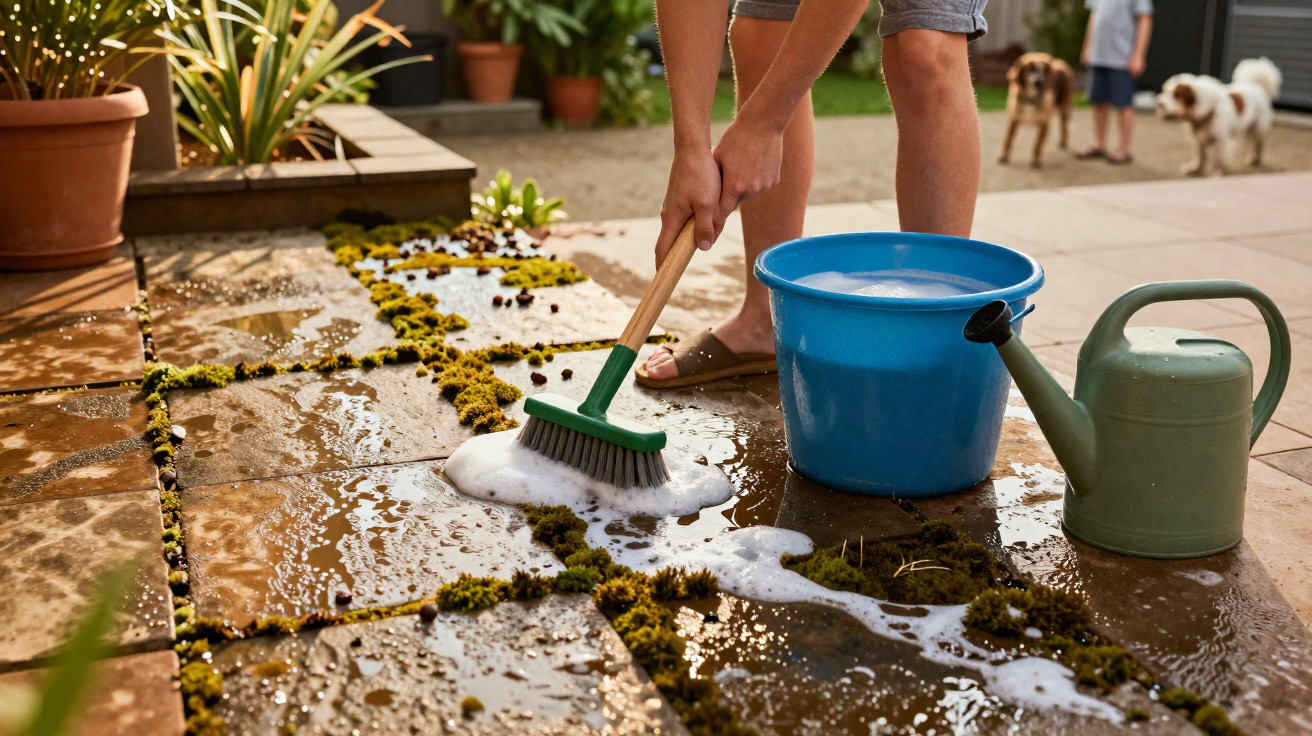
- Make the mixture: Combine 1 part clear household vinegar with 1 part warm water in a bucket.
- Apply: Spread the solution generously across all green and dark areas using a watering can, pump sprayer or scrubbing brush.
- Leave to work: Allow around 60 minutes for the acid to loosen the deposits.
- Brush: Work over the surface with a stiff scrubbing brush or yard broom, applying only light pressure.
- Rinse: Thoroughly wash the slabs down with plenty of clean water from a garden hose or bucket.
Heavily affected sections can be treated a second time if required. In most cases, though, one application is enough to remove the thickest layer of moss and algae.
Caution: acid is not suitable for every surface
Useful though the method may be, a quick check of the material helps avoid unwelcome surprises. Acid-based cleaners can damage or discolour certain surfaces.
| Material | Is vinegar suitable? | Note |
|---|---|---|
| Concrete slabs, paving slabs | Yes, diluted with water | Do not allow it to sit in puddles for long; rinse well. |
| Ceramic tiles, porcelain tiles | Usually yes | Keep an eye on grout; test first on natural-stone-look tiles. |
| Clay pavers, block paving | Generally yes | Test on an inconspicuous corner first. |
| Marble, travertine, limestone | No | Acid can etch the surface and leave it dull. |
| Untreated timber decking | Best avoided | The wood can fade and its fibres may lift. |
Anyone with stone containing a high level of limestone or sensitive natural stone should avoid vinegar and use mild specialist cleaners instead.
Protecting planted areas also matters: if a large amount of vinegar solution reaches beds or lawns directly, delicate plants may be damaged. Edge areas can easily be covered with cardboard or old towels.
A small extra: tackling weeds in paving joints too
A welcome side effect is that the vinegar-and-water mixture does more than affect moss and algae: it also weakens newly emerging weeds spreading through the joints. Young plants without deep root systems are especially easy to pull out after treatment.
If you are planning to refill the joints anyway, once the surface has dried you can top them up with specialist paving-joint material or silica sand. This limits future weed growth and also creates a more stable surface.
When a pressure washer still makes sense
Many patio owners swear by a pressure washer. In some situations, it can genuinely help after a vinegar treatment, such as with thick cushions of moss that have been present for several years. The acid loosens the growth, while the high-pressure jet flushes remaining debris and dirt from the pores.
However, this combination carries risks too: excessive pressure can wash out paving joints, roughen delicate tiles or damage the surface structure of concrete. If using the machine, reduce the pressure and keep a sufficient distance from the surface.
Prevention: keeping the patio cleaner and slip-resistant for longer
Once the area is clean again, a few habits can help prevent it from becoming completely green by the following winter:
- Clear leaves regularly: Do not leave wet leaves for weeks; sweep them up at least once a week.
- Raise plant pots: Moisture builds up beneath pots, so small feet or pot stands allow air to circulate.
- Monitor shaded areas: Nothing dries properly, particularly on north-facing patios. Clean these areas at shorter intervals.
- Plan a spring check: When the first mild days arrive, briefly check where green growth is forming and act early.
For very shaded patio areas, consider trellises or light pruning of shrubs to allow more light onto the ground. Every hour of sunshine helps the slabs dry faster and deprives algae of the conditions they need.
How effective is vinegar compared with specialist cleaners?
Shops offer a wide selection of moss and algae cleaners, often based on stronger acids or biocidal active ingredients. They work more aggressively, but are also more expensive and may place a greater burden on the environment and wastewater.
Vinegar's main advantages are price and availability. It usually deals easily with light to moderate growth, but reaches its limits with deposits that have built up over decades. In that case, only a combination of methods will help: loosen the deposits chemically first, then remove them mechanically.
For many typical urban and terraced-house patios, one vinegar treatment each spring is enough to keep the area safe, clean and visually appealing.
Anyone sensitive to smells should work with doors and windows open, or choose a breezy, dry day. After thorough rinsing, the familiar vinegar smell generally disappears within a few hours.
A practical reality check for everyday life
The final question is whether the effort is genuinely worthwhile. A typical real-life example shows how manageable the method can be. For a medium-sized patio of around 20 square metres, you will usually need half a litre of vinegar, the same amount of water, a bucket, a scrubbing brush and one hour of time. There is no muscle soreness the following day, and the slipping hazard is significantly reduced.
If you prefer to split the job up, apply the mixture in the morning, get on with other tasks indoors, then quickly brush and rinse later. Particularly for people without garden equipment or a pressure washer, this is a straightforward way to make the patio usable again in time for the start of the outdoor season.
Comments
No comments yet. Be the first to comment!
Leave a Comment