
Burglar alarms, cameras and security doors are the usual measures people think of for burglary protection. Yet many homeowners pay far less attention to their garden, even though it can become a remarkably effective line of defence. Carefully positioned plants with unpleasantly sharp thorns can make access to the house so unattractive that burglars choose to move on.
Why thorny shrubs genuinely deter burglars
A burglar will normally look for the easiest route: getting in and out quickly, quietly and without the risk of injury. This is where a defensive garden can help. Dense shrubs covered in strong thorns slow every movement, scratch clothes and skin, and create noise when branches snap or someone becomes caught while trying to move hurriedly.
“The more uncomfortable access is, the more likely it is that offenders will not choose your property in the first place.”
Security professionals have long pointed out that a well-designed plot can make a break-in considerably more difficult. Useful features include:
- thorny hedges at likely entry points
- crunching gravel on paths and beneath windows
- motion-sensor lighting in dark areas
- an unobstructed view of the front door from the street
Plants are not a substitute for a burglar alarm. Instead, they complement one, while operating around the clock without electricity, an app or a subscription.
Four plants that turn your garden into a thorny exclusion zone
There are countless shrubs with thorns, but four species are particularly suitable for planting close to a house. They are hardy, comparatively easy to maintain and exceptionally unpleasant to force a way through.
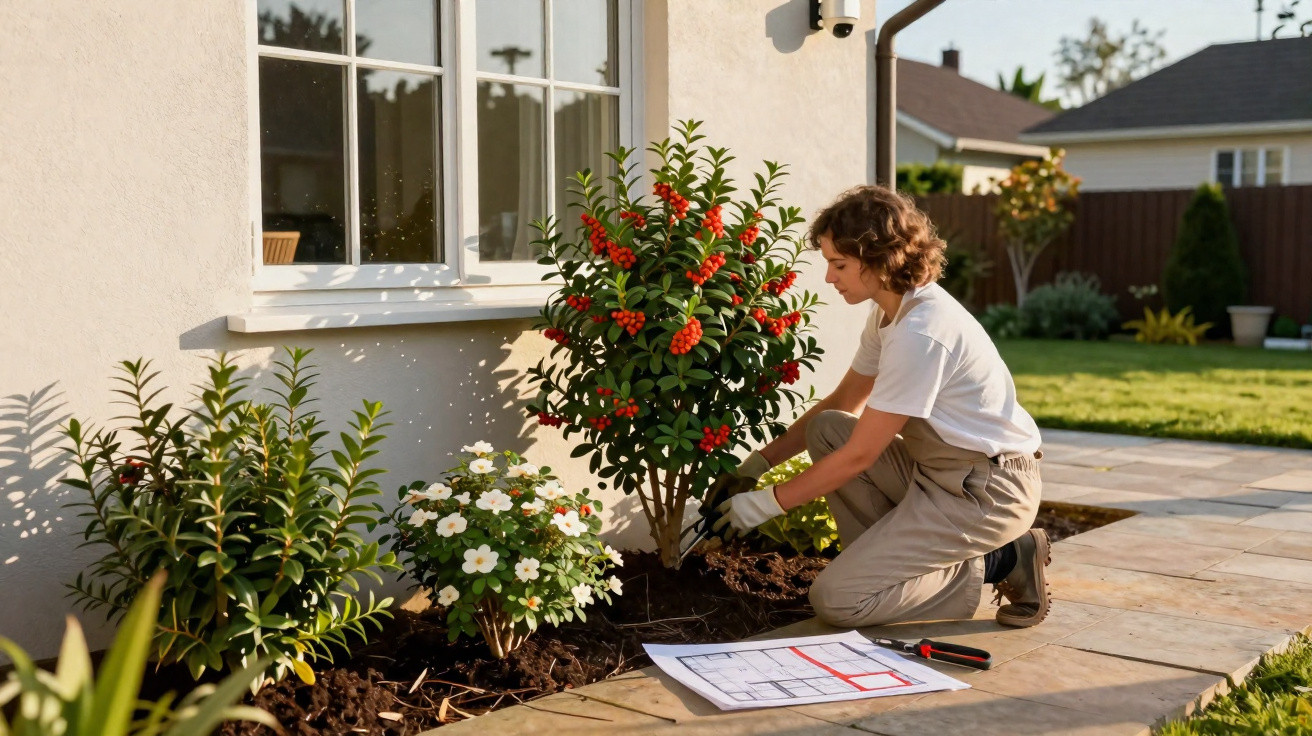
Pyracantha – firethorn as a natural roll of barbed wire
Pyracantha, commonly known as firethorn, is a classic choice for defensive hedging. It grows densely, responds well to pruning and produces razor-sharp thorns that few people would willingly confront.
- Where to plant: along fences and walls, or below low windows
- Spacing: roughly 50 to 70 centimetres between plants
- Height: easily kept at 1.5 to 2 metres
Anyone attempting to climb through a firethorn hedge will quickly suffer bloody scratches. For burglars, that means a greater chance of leaving DNA traces behind, creating an additional deterrent.
Berberis – the unobtrusive but mercilessly prickly barrier
At first glance, barberry plants can look harmless, and some varieties with reddish foliage even appear decorative. Their thorns tell a different story: short, hard and extremely unpleasant.
- Where to plant: side passages, narrow paths and concealed routes beside the house
- Advantage: compact growth that needs little space
- Effect: turns convenient shortcuts into genuine no-go areas
A row of barberry can almost block routes from the street into parts of the garden that cannot be seen easily. Anyone trying to pass through soon realises that the effort is not worthwhile.
Rosa rugosa – a tough shrub-rose belt below windows
Shrub roses such as Rosa rugosa may look romantic, until someone tries to step through the middle of them. Their branching stems and abundant thorns create an effective yet visually appealing protective belt beneath windows.
- Where to plant: beneath easily accessible windows and in front of patio doors
- Effect: makes it harder to position ladders or brace against the building
- Added benefit: attractive flowers and rose hips loved by insects and birds
Burglars favour quick, unrestricted movement. Someone who must first cross a wide strip of shrub roses will be caught by thorns, snagged on branches and make noise – a nightmare for anyone trying to remain unnoticed.
Cherry laurel – dense screening in front of glass surfaces
Cherry laurel does not prick, but it offers another advantage: a dense visual barrier. Positioned in front of large glazed areas, such as panoramic windows or full-height doors, it substantially reduces temptation because people can no longer casually look into the living room.
- Where to plant: in front of conservatories, patio frontages and large window areas
- Function: privacy screening and a barrier that prevents a direct run at the glass
- Characteristic: evergreen, so it works throughout the year
Combined with thorny shrubs at either side, it forms a framework that slows down prying eyes and opportunistic attempts to enter.
How to arrange the plants without turning the garden into a fortress
No one wants their garden to feel like a fortress. With some careful planning, defensive planting can be incorporated in a way that looks harmonious while still delivering a clear deterrent.
“The skill lies in reinforcing only the critical approaches while keeping all routes clear for residents and emergency services.”
A practical basic layout could look like this:
- Street-facing side: cherry laurel as a privacy hedge, with a wide gravel strip at its base.
- Side boundaries: a densely planted mixed hedge of firethorn and barberry.
- Below ground-floor windows: bands of shrub roses at least one metre deep.
- Main entrance: a fully gravelled, well-lit path to the front door.
The key point is that the front door should remain clearly visible rather than hidden behind shrubs. Visitors will feel safer, and neighbours can retain an overview if needed.
Legal distances and safety hazards in your own garden
Before reaching for the spade and hedge trimmer, it is worth checking the local rules on neighbouring properties. Many regulations specify minimum distances from property boundaries, particularly for taller hedges.
As a broad guide, a hedge exceeding two metres in height often has to be planted around two metres from the boundary. Exact requirements vary by area, so a quick check with the local council can prevent disputes later on.
The safety of children and visitors also matters. Extremely thorny shrubs should not be positioned directly beside:
- play equipment
- trampolines
- swimming pool or pond edges
- heavily used garden paths
Planting too close in these places shifts the risk of injury from burglars to your own family.
Maintenance: when defensive plants become a risk to you
Thorny hedges can also become counterproductive. If they are not pruned regularly, they can develop into dense thickets where people and animals can hide. In that case, rather than causing disruption, they may provide burglars with ideal cover.
They should be cut back once a year, or preferably twice. When doing so:
- Aim for open, visible shapes rather than impenetrable walls.
- Maintain sightlines around entrances and garages.
- Use motion-sensor lighting to illuminate concealed corners.
Anyone who attempts maintenance without gloves and long sleeves will quickly understand why these plants work so well: they are simply uncomfortable to deal with.
How plants, technology and behaviour work together
A thorny garden alone will not prevent a professional break-in. The approach becomes genuinely strong when several layers work together:
| Component | Benefit |
|---|---|
| Thorny plants | make access harder, increase the risk of injury and create noise |
| Gravel areas | make it difficult to walk silently |
| Motion-sensor lighting | surprises intruders and signals activity |
| Security windows and doors | significantly extend the time needed to gain entry |
| Alert neighbours | increase the risk of being seen |
Together, these measures create an environment in which offenders must overcome repeated obstacles and can scarcely feel unobserved.
Practical examples for the holiday period
Even if you do not want to carry out extensive planting just before travelling, you can still take action. Several quick measures make use of existing features:
- Lay gravel or chippings in front of patio doors and basement light wells.
- Install a motion sensor on the rear side of the house.
- Cut back bushes so that windows can be clearly seen.
- Do not leave high-value garden furniture and equipment openly visible.
Over the medium term, it is worth creating a plan that deliberately introduces the four plant species mentioned above. Those who plant in spring will often have a noticeable barrier by the following year.
Risks, misconceptions and useful combinations
Some homeowners rely too heavily on appearance. A pretty flowering hedge with loose growth will stop no one. What matters is thorns, density and positioning directly beside possible points of entry.
Another misconception is: “The denser, the safer.” A hedge that cannot be seen through at all can conceal offenders perfectly once they are inside it. A combination of defensive planting and visibility is better. If someone can be seen loitering in the front garden from outside, that is a clear advantage.
The concept becomes particularly effective when defensive plants are combined with everyday habits: neighbours who occasionally empty the letterbox, lights operated by timer switches, and a car that is not permanently parked in the same place. The thorns then provide only the final, unpleasant element – making a break-in so uncomfortable that many offenders do not begin in the first place.




Comments
No comments yet. Be the first to comment!
Leave a Comment