
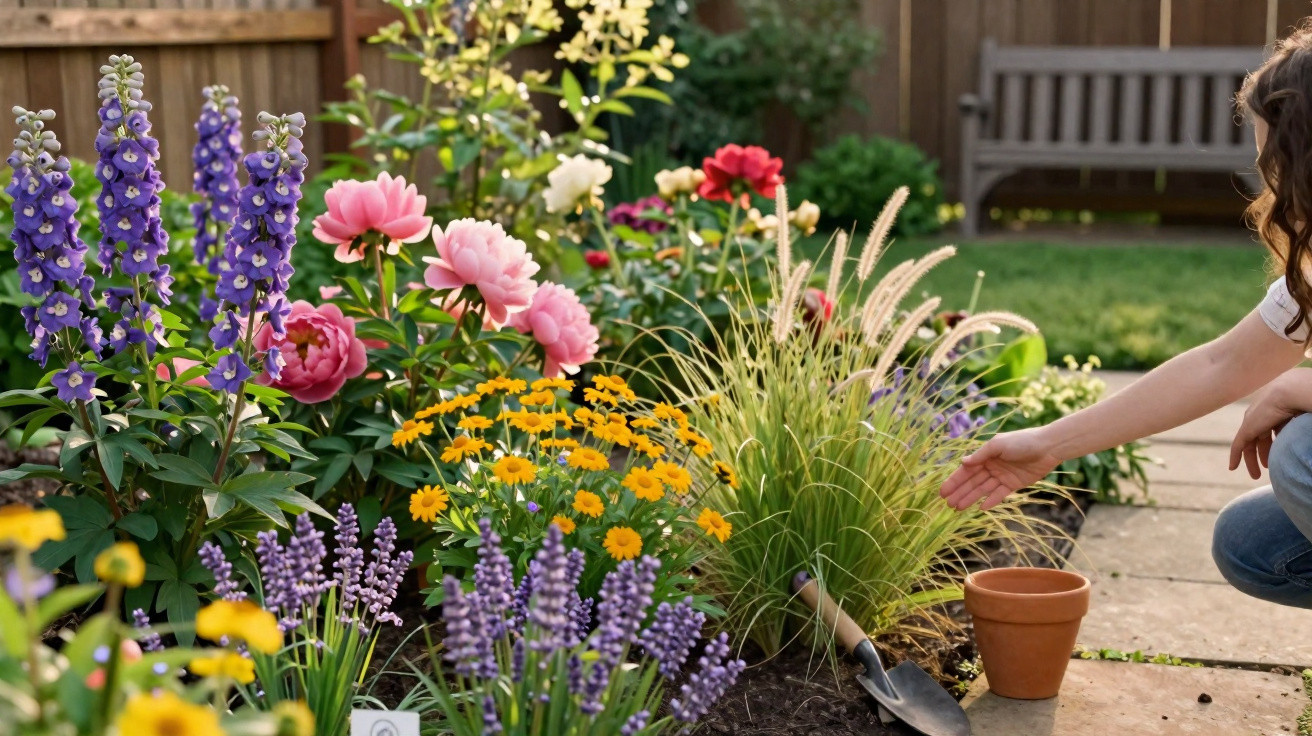
Many amateur gardeners see spring as the time to start again: new shrubs, a new border, a new plan. That approach takes time, money and effort. Long-flowering perennials are a far smarter option. They return year after year, growing larger and more impressive, while needing remarkably little attention once they are planted in the right place.
Why perennials are the ideal shortcut for low-maintenance gardeners
Perennials are ornamental plants that live for several years and gradually form stronger, fuller clumps. Most die back over winter, then emerge again from the same rootstock in spring. Planting thoughtfully means you do not have to begin from scratch every spring.
Once planted, perennials provide colour, structure and fullness in a border for years – without needing to be bought again annually.
Spring offers ideal conditions for getting plants established. The soil is damp but no longer frozen solid. With temperatures still fairly moderate, roots can develop easily before summer arrives in earnest. This produces plants that are more robust and better able to cope with dry conditions.
The best time to plant in spring
The right moment is when the ground is no longer waterlogged but still retains plenty of moisture. Across much of the UK, this is generally between March and May, depending on the area:
- Northern areas / higher ground: often April to May
- Milder areas / lower ground: planting is frequently possible from March
Useful rules of thumb:
- There should be no frost remaining in the soil.
- The soil should be crumbly rather than sticky.
- The forecast should show a few mild days that are not excessively sunny.
Gardeners who make use of this window give many perennials the best chance to put on strong growth in their first year, with some even flowering.
Preparing the border: where success is decided
Before filling the car boot at the garden centre, take a close look at your own garden. Not every area will suit the same plants.
Assessing the site correctly
- Full sun: at least six hours of direct sun, and often dry
- Partial shade: sun for only part of the day, such as on an east- or west-facing side
- Shade: north-facing areas, beneath dense trees, with hardly any direct sunlight
Selecting perennials to match the conditions will prevent plenty of disappointment and plant losses later on.
Prepare the soil in three straightforward steps
- Weed thoroughly: Remove perennial weeds such as ground elder or couch grass as completely as possible.
- Loosen the soil: Cultivate it to at least the depth of a spade or garden fork, breaking up compacted ground.
- Work in organic matter: Compost or well-rotted farmyard manure improves both soil structure and nutrient supply.
Water generously after planting, then apply a mulch layer. Use bark mulch, shredded prunings or fine gravel according to the intended style. It retains moisture in the soil and suppresses weeds.
15 perennials that visibly transform your garden
The following selection covers a range of growing conditions, from a bright sunny border to a shady space beneath trees. These plants can make a border look noticeably better in a short time.
| Perennial | Position | Effect in the garden |
|---|---|---|
| Christmas rose (Helleborus) | Partial shade to shade | Flowers exceptionally early, often from late winter |
| Peony | Sun | Large, fragrant blooms and a classic focal point |
| Lupin | Sun to partial shade | Tall flower spikes that add height and structure |
| Penstemon | Sun | Summer flower sprays with a long flowering period |
| Lavender | Full sun, relatively dry | Fragrance, silvery foliage and a magnet for bees |
| Coral bells (Heuchera) | Partial shade | Colourful foliage, ideal along border edges |
| Cranesbill (Geranium) | Sun to partial shade | Long-lasting flowers that fill gaps |
| Hosta | Shade, moist | Large, decorative leaves with an elegant appearance |
| Yarrow (Achillea) | Sun, relatively dry | Flat, colourful flower heads that are tough in heat |
| Aster | Sun | Late flowers that bring colour into autumn |
| Bergenia | Partial shade | Large, glossy leaves and spring flowers |
| Crocosmia | Sun | Bright red to orange flowers that are highly striking |
| Delphinium | Sun, nutrient-rich soil | Very tall flower stems, ideal at the back of a border |
| Astilbe | Partial shade, moist | Feathery flowers that give a border a light feel |
| Bleeding heart | Partial shade | Heart-shaped flowers and a romantic focal feature |
How to combine the 15 perennials effectively
To turn a sunny front garden into a sea of flowers, use a clear layout. Put tall plants at the back, medium-sized varieties in the middle and lower growers at the front to create depth.
Example of a sunny perennial border
- Back: Delphiniums and lupins as upright accents
- Middle: Peonies, yarrow and asters for colour over several months
- Front: Cranesbills and lavender to form a flowing finish
For shady spots beneath shrubs or trees, hostas, Christmas roses, bergenias, astilbes and bleeding hearts work particularly well. Coral bells can be planted among them to add colourful patches through their foliage, even when nothing is in bloom.
Using only five to seven different varieties in each border already creates a lively display that changes throughout the year.
Low-maintenance, not maintenance-free
Perennials have a reputation for being undemanding, but they are not entirely without needs. During the first few weeks after planting, water them regularly, especially in dry spells. A layer of mulch helps extend the time between watering.
In late autumn or early spring, cut back most perennials close to ground level. Many gardeners leave faded stems standing over winter: they look attractive when frosted and provide shelter and food for insects and birds. For many species, a little compost spread around the plants once a year is all the feeding they require.
What beginners should keep in mind
People who are new to gardening often underestimate two things: plant spacing and patience. Perennials can look a little sparse in their first year, but tend to grow strongly in their second and third years. It is therefore better not to plant too densely, or the border will quickly become an impenetrable jungle.
One simple tip is to check the label or plant description, which will usually state the expected final spread. Take that measurement seriously and allow for it when planting. Gaps can be filled with annual summer flowers during the first year.
Extra tips: diversity in the border pays off
Mixing flowering periods, flower shapes and foliage colours creates more than an interesting display: it also supports insects, birds and other garden visitors. Early-flowering plants such as Christmas roses and bergenias are valuable for the first wild bees of the year; lavender, penstemon and yarrow take over later.
A border becomes especially engaging when the changing elements are not limited to flower colours, but include leaf shapes as well: large hosta leaves beside the delicate flower sprays of astilbe, or rounded peony blooms next to tall delphinium spikes. With relatively little effort, this creates a garden that offers something from late winter to autumn, becoming a little more luxuriant every year.

Comments
No comments yet. Be the first to comment!
Leave a Comment