
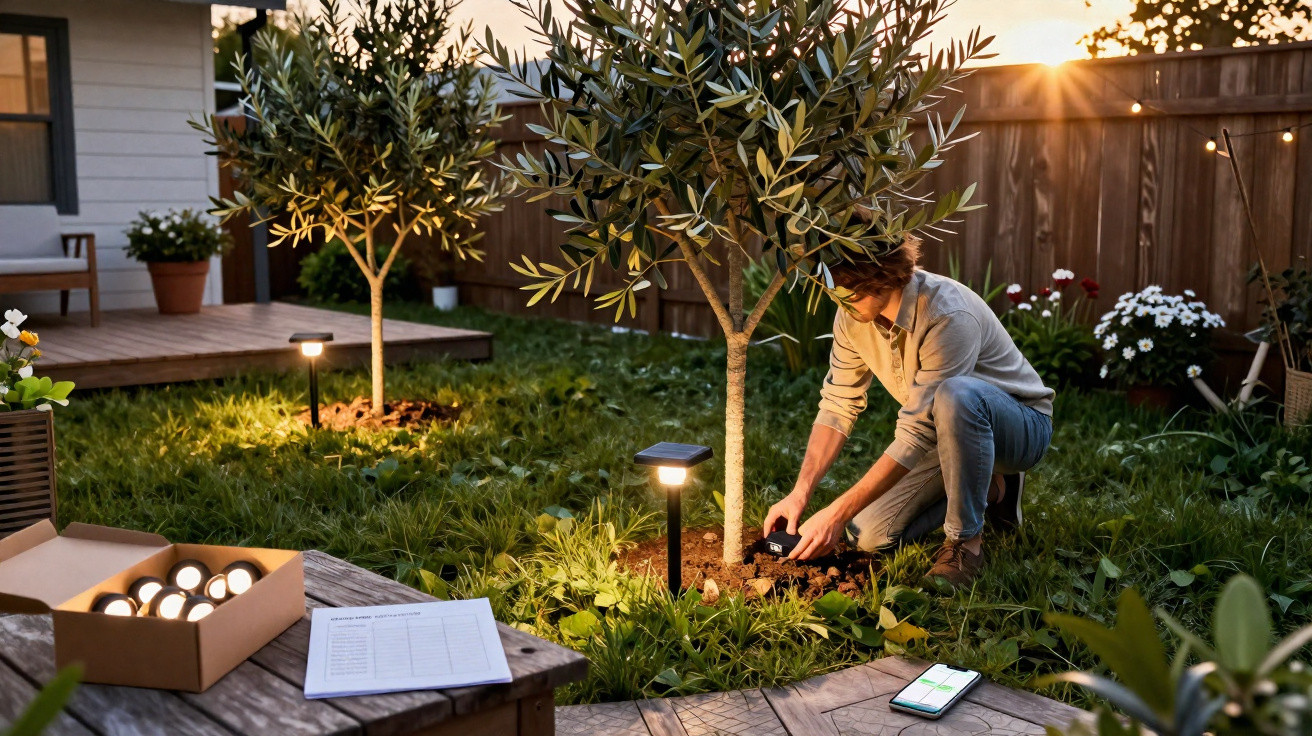
A new affordable option is now taking the stress out of planning.
Anyone wanting to see their patio, bed edging or paths safely and attractively in the evening often turns to solar lighting. A new version combines a simple look, low prices and no electricity bills. That mix appeals to many households planning to spend more time outdoors without adding to their energy costs.
What is behind the affordable uplighter?
The Garden Bright Solar Uplighter directs its light upwards, highlighting paths, flowerbed borders and planters. It is designed as straightforward, low-cost garden lighting. It goes on sale as an Aldi Specialbuy from Thursday 12 March. Each unit costs £9.99.
Value for money is the priority: £9.99 each, available from Aldi as a Specialbuy from 12 March.
The light is cordless, collects energy during the day and switches on automatically once darkness falls. This provides both ambience and guidance without a mains socket, extension lead or timer.
How the light source works
A solar panel on top charges an integrated battery in daylight. A dusk sensor detects nightfall and activates the LEDs. There is no need for users to switch it on or make adjustments. Positioning is crucial: keeping the panel clear of shade will provide longer illumination.
Charges in sunshine and lights up at night – automatically, wirelessly and with no ongoing electricity costs.
Its uplighter design is intended to create accents. Rather than casting light far into the distance, it illuminates surfaces, outlines and plants from below. This can make paths feel safer while giving details a more three-dimensional appearance.
Garden locations for the Garden Bright Solar Uplighter
- Paths and steps: make edges easier to see and reduce trip hazards.
- Flowerbeds and borders: reveal structure without harsh floodlighting.
- Patios and seating areas: provide gentle background light for late conversations.
- Planters, ornamental grasses and small sculptures: create focused highlights.
- Driveways or house numbers: improve orientation without running cables.
Families benefit in two ways: children can find their way safely in the evening, while adults gain calm pools of light for winding down after work. When visitors are expected, lighting can deliberately guide the eye, from the barbecue area to the herb bed.
Design and guarantee
The uplighter is available in black or silver. Both finishes suit a contemporary timber deck, gravelled area or traditional paving. Its slim profile remains unobtrusive and sits discreetly among the plants during daylight hours. It also includes a 2-year guarantee, lowering the barrier to trying solar lighting.
Why solar makes sense here
Solar lights offer benefits in both installation and day-to-day use. There is no electrician to hire, no trench to dig for buried cables and no additional cost for every hour of operation. Anyone who regularly rearranges their outdoor space can simply move them.
| Criterion | Solar uplighter | Mains-powered LED |
|---|---|---|
| Purchase | Low, individual unit price | Light fitting plus transformer/cabling |
| Installation | Cable-free and ready to use immediately | Planning, sockets or groundworks required |
| Running costs | No electricity costs | Electricity use depends on operating time |
| Flexibility | Easy to move or add to | Fixed setup, less portable |
| Weather risk | Battery output falls when there is little sunshine | Consistent, but connectors are more vulnerable to moisture |
Quick check before buying
- Sun exposure: Will the location receive several hours of direct light each day?
- Purpose: Is the aim to accent plants or clearly mark a path?
- Spacing: Is one light for every 2–3 metres of path sufficient, or would closer positioning work better?
- Ground surface: Can a ground spike be inserted, or are ground anchors needed?
- Maintenance: Is the solar panel easy to reach for cleaning?
Positioning and care tips
Aim the panel towards the south or the brightest area during the day. Avoid heavy shade from hedges, awnings or roof edges. Clean the panel each month with a soft cloth so that dust and pollen do not reduce charging performance. Place the light so that nobody looks directly into the LED and instead sees only the illuminated area. This is more comfortable and helps preserve the peace at night.
In overcast winter conditions, many models will provide light for less time. Anyone wanting evening illumination in December can position the uplighters closer together or combine them with candle lanterns. Many solar lights use replaceable batteries. Check the instructions and replace them promptly if performance begins to decline.
Price, availability and buying incentive
At £9.99 each, the price is considerably lower than typical mains-powered options, especially where cable work would otherwise be needed. Sales begin on 12 March as part of Aldi's Specialbuy range. These ranges are often quick to sell out. Anyone intending to light several areas should decide on the required quantity beforehand and buy on the launch day.
Small investment, major effect: a few strategically placed uplighters can noticeably transform wayfinding, atmosphere and safety.
A small electricity-cost calculation
Take a wired 10 W LED that runs for 5 hours on 200 evenings. This equals 10 W × 1,000 h = 10 kWh. At €0.36/kWh, that comes to around €3.60 per year for each light point. Solar avoids precisely these ongoing costs and removes the need to install outdoor sockets. Anyone planning five light points saves several euros each year while retaining complete flexibility to reposition them.
Effective combinations for atmospheric evenings
Uplighters provide subtle base accents. Add a dimmable table lamp near seating areas, and mark steps with flat, glare-free lighting. Warm-white light, at roughly 2,700–3,000 K, works well for cosy corners. Cooler light emphasises texture but creates a more restrained effect. Plants with pale foliage reflect more light, so fewer fittings are needed.
One brief explanation of the terms: uplighters shine upwards and highlight objects. Downlights shine downwards and illuminate surfaces. Combining the two creates depth and improves orientation. When mixing them, keep the spacing even and avoid harsh pools of light. This helps the garden remain inviting and easy to walk through late into the evening.




Comments
No comments yet. Be the first to comment!
Leave a Comment