
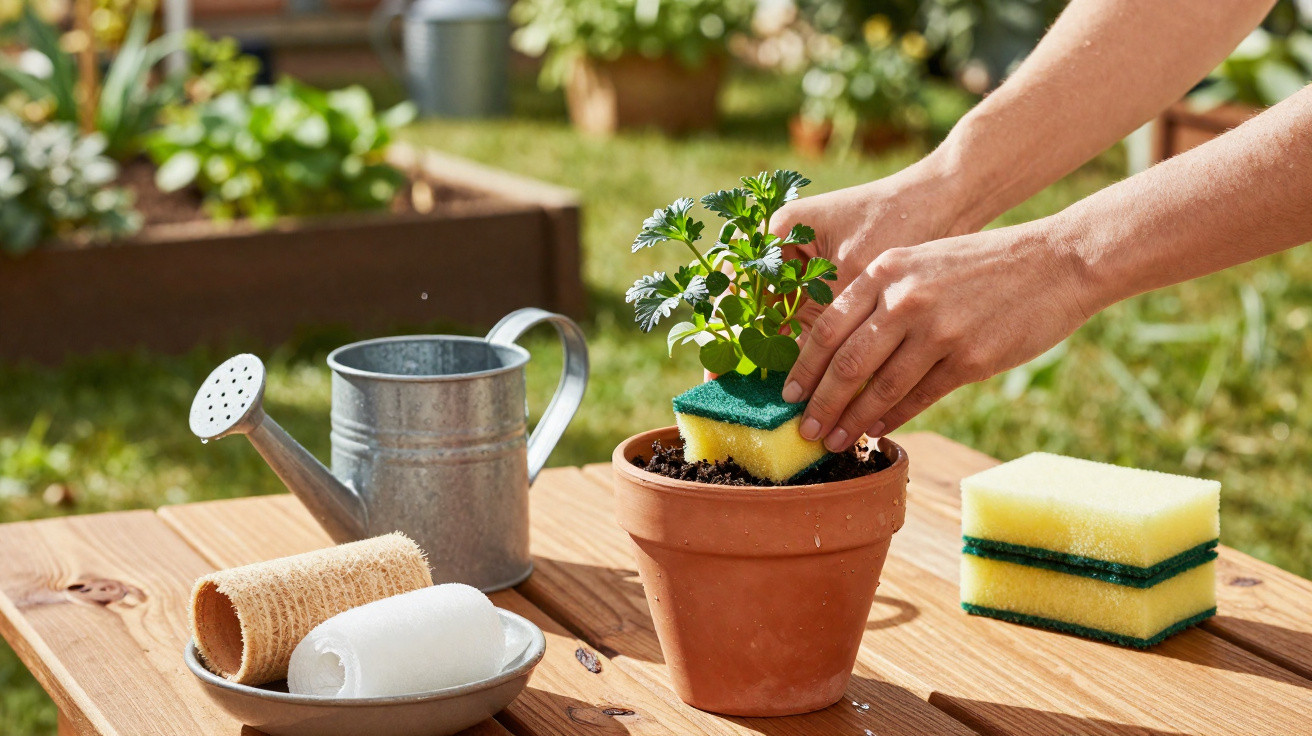
While many kitchens already have a fresh sponge by the sink, the old one is often headed straight for the household bin. That is a pity. Gardening professionals now advise giving certain worn-out sponges a second purpose outdoors instead of throwing them away. They can help conserve watering water, reduce drought stress and cut waste at the same time.
Why a washing-up sponge can make sense in a flower bed
In spring, balconies and gardens begin a new growing season. Young plants develop delicate roots that dry out quickly. The weather is also often unpredictable: a warm day may be followed by a cold wind, while watering schedules can be irregular.
This is where a sponge's greatest advantage comes into play: its porous structure. It absorbs surplus water, then releases it gradually. In a pot, it acts as a small water reservoir that supplies roots for hours.
“A clean, suitable washing-up sponge in a pot can considerably extend the time between watering sessions – ideal during hot weather or a short break away.”
Anyone with numerous window boxes, or who cannot water every day, will soon notice the difference. Soil does not dry out as rapidly, plants are less likely to develop drooping leaves, and sensitive young plants cope better with the critical early stage.
Natural sponge or plastic? Which types are suitable
Before placing a sponge in soil, the key question is what it is made from. Not every type is suitable for the garden or compost.
These sponges are suitable for the garden
- Cellulose sponges: usually made from wood fibres, highly absorbent and biodegradable.
- Loofah sponges: made from dried gourd fibres and entirely plant-based.
- Other natural fibres: for example, blends of cotton and plant fibres (check the manufacturer's information).
After thorough cleaning, these sponges can be added to soil or compost. They gradually break down, improve the structure and retain moisture within the system.
Take care with plastic sponges
Typical yellow kitchen sponges with a green scouring surface are generally made largely from plastic. They can:
- release microplastics into the soil,
- give off chemical residues,
- remain unchanged in compost for years.
For this reason, these models have no place in compost. In individual cases, they can be used as a temporary water reserve in large pots, but they should not stay there indefinitely and certainly should not be placed in a vegetable bed. Those wishing to be completely cautious should use only natural varieties in the garden.
How to disinfect the sponge before use
A used kitchen sponge is a magnet for bacteria. It must be cleaned thoroughly before being placed near roots or added to compost. Several methods are suitable:
- Rinse thoroughly under hot water until no foam or greasy residue remains visible.
- Boil it in vigorously bubbling water for several minutes.
- Treat with vinegar: place it in a mixture of water and clear vinegar, allowing it to become fully saturated.
- Microwave: only when the sponge is damp, for no more than two minutes on a high setting (be aware of the fire risk; never heat it when dry).
Afterwards, use the sponge exclusively for garden or balcony purposes and never return it to the kitchen. This keeps food residues and washing-up liquid permanently out.
Four practical ways a sponge protects your plants
1. Water reservoir in a pot
The simplest approach is to place the sponge in the lower section of a container or window box.
- Add a layer of expanded clay or broken terracotta pieces for drainage.
- Lay one or two sponges flat on top of the drainage layer.
- Fill with soil and plant as usual.
When watering, the sponge absorbs excess water that would otherwise run out at the bottom. In dry conditions, its fibres release the stored moisture back into the soil. Windy balconies benefit particularly, as pots there often dry out especially quickly.
2. Moisture booster in compost
Compost needs three things: air, sufficient moisture and a good balance between nitrogen-rich and carbon-rich materials. Natural sponges help in several ways.
When cut into small pieces, they provide:
- better moisture distribution throughout the compost heap,

Comments
No comments yet. Be the first to comment!
Leave a Comment