
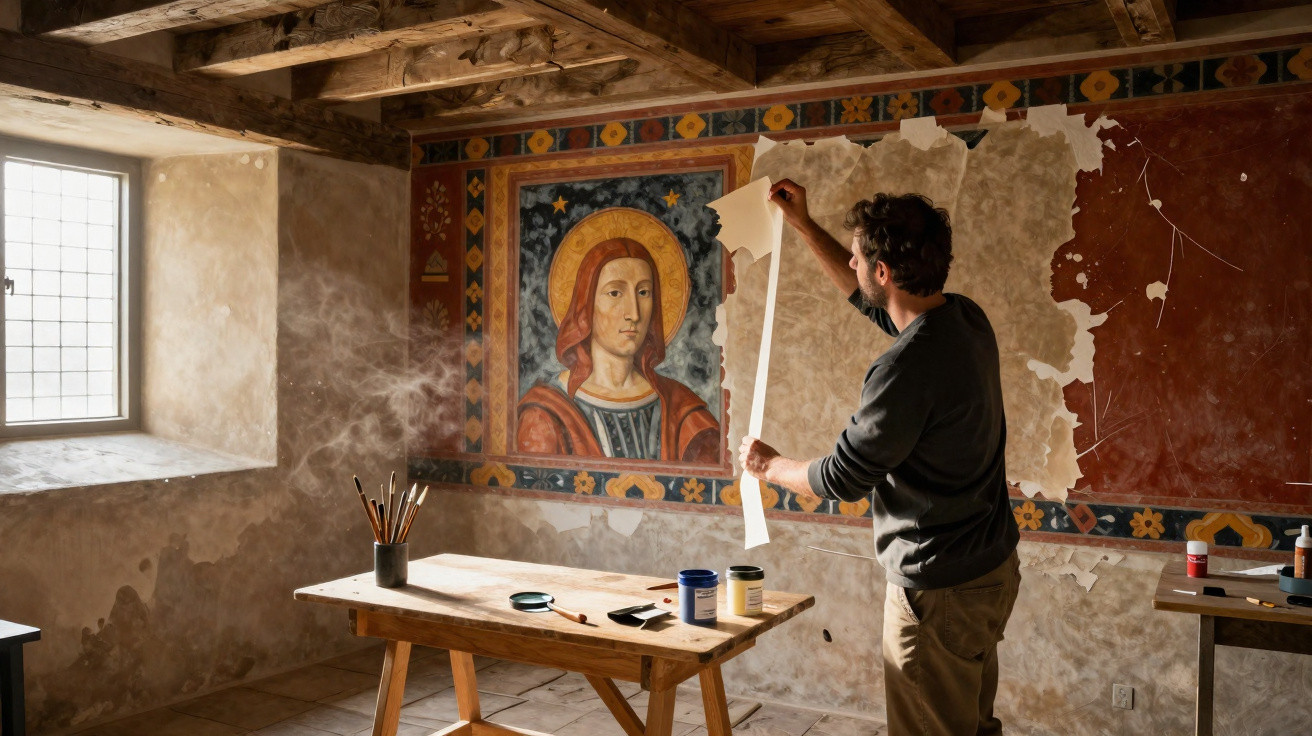
Renovation work in a bedroom in northern England took an unexpected turn when marks beneath the plaster began to resemble eyes, snouts and faces. The owners of The Ashes, a former Cumbria inn, had uncovered Tudor wall paintings concealed beneath successive finish layers for almost five centuries.
When did the faces begin to emerge?
The couple were stripping away damaged plaster in an upstairs room when they spotted details that looked unlike ordinary staining. As further small sections were uncovered, animal heads, foliage, hares and unusually styled human figures started to appear.
Rather than carrying on with the scraping, the owners called in specialists. This was crucial, as historic paintings can detach with the plaster, respond badly to moisture, or lose pigment during seemingly harmless cleaning. The building stands in Endmoor, Cumbria, and was originally constructed as a Tudor hunting lodge before later alterations turned it into an inn and home.
What was painted on the walls?
The scheme combines fantastic creatures with plant motifs in decorative arrangements. Hares, faces, leaves and hybrid forms create an atmosphere far removed from the plain surface that had concealed the artwork.
- Animal heads appear amongst painted branches and foliage.
- Hares feature across sections of the scheme, creating movement and repetition.
- Strange human faces blend with natural and fantastical forms.
- Surviving fragments suggest that the original decoration extended over a considerably larger area.
Experts believe the paintings date from the 16th century. What survives is likely only part of a broader decorative scheme, disrupted by renovations, openings and fresh layers added throughout the building's history. Earth pigments in red, black and ochre create outlines and filled areas whose survival relies on the stability of the lime and plaster base.
Why was such elaborate decoration covered up?
Tastes change, rooms are given new purposes, and old surfaces are repaired without concern for what lies underneath. The paintings may also have been viewed as outdated or connected with previous owners, making plaster and paint an appealing way to cover them.
Ironically, concealment helped preserve them. The layer that hid the figures from view also shielded them from light, smoke, touch and subsequent alterations, although damp and weak plaster adhesion remained risks. Historic England described the discovery as rare, because domestic paintings from this period were often stripped away, painted over or destroyed in later refurbishment.
What do the images reveal about the Tudor house?
Wall paintings offered a way to transform interiors before wallpaper became widespread. Natural subjects, creatures and patterns could convey the residents' taste, wealth and cultural references, turning a bedroom into an immersive composition.
Modern building work can expose the past by removing layers that have remained protected for centuries. Everyday work can open routes to discovery that planned research might never reach.
Why must restoration proceed slowly?
Removing all the covering in one go could damage fragile edges or destabilise pigments. Conservators must first map the materials, moisture and previous interventions before deciding how much to expose and how each fragment should be supported.
The urge to see everything is understandable, but preservation demands patience. The faces waited for nearly 500 years beneath the plaster. Now that they have reappeared, the priority is not to rush the surprise, but to ensure they continue looking out across the room for many generations.






Comments
No comments yet. Be the first to comment!
Leave a Comment