
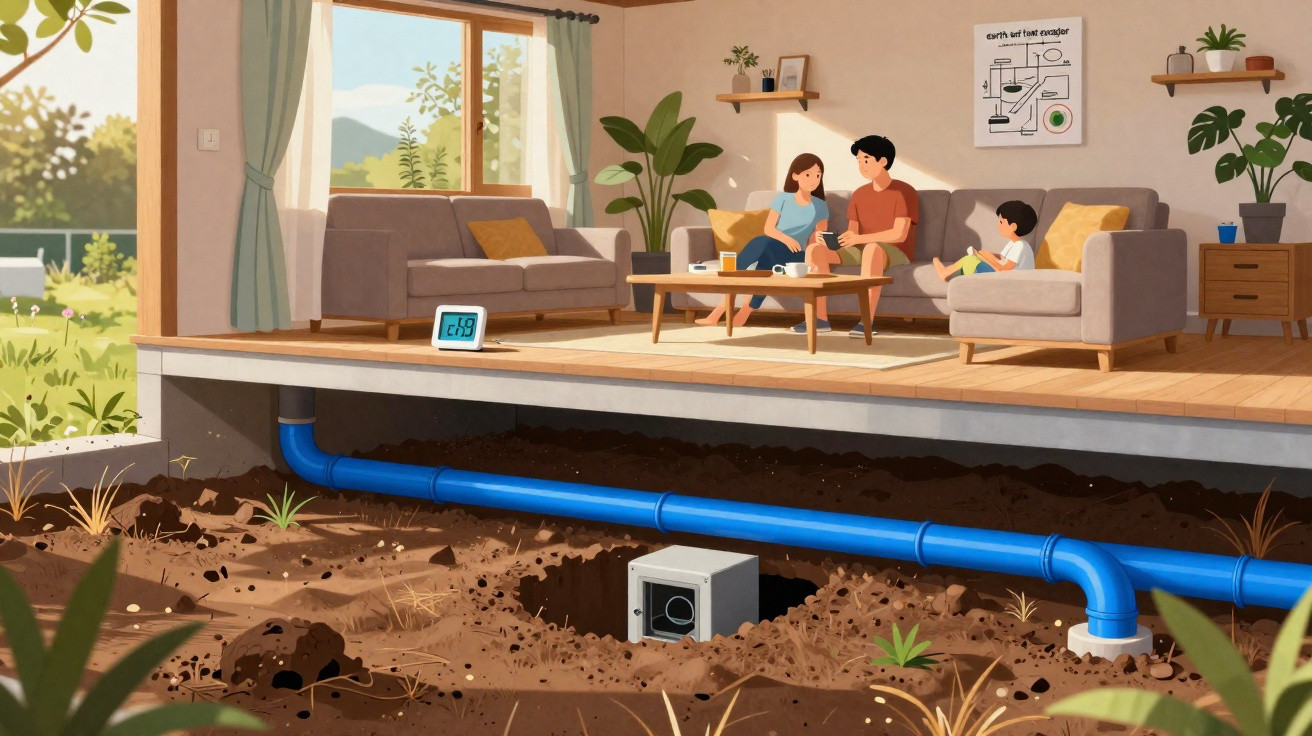
The search for sustainable ways to reduce heat in the home has prompted many families to investigate passive cooling concepts. One innovative design uses pipes buried in the ground to cool rooms without relying on air compressors or intensive electricity use.
How does the Canadian well geothermal system work?
Also called a Provençal well, this centuries-old technique makes use of the stable temperature below ground throughout the year. Outdoor air travels through buried pipework before entering the rooms, releasing heat into the ground and lowering the indoor temperature.
Specialist Martín Santiago Schmull developed an earth-air heat exchanger at his home in 2022. The installation renews the internal airflow while keeping the property comfortable, without using environmentally harmful refrigerant gas.
What makes your home excessively hot in summer?
Heat retained by walls and the roof stops fresh air from circulating, but one small adjustment… Read more
What are the benefits of cooling a home with buried pipes?
The key benefit of this method is the substantial reduction in energy consumption compared with conventional air conditioning. Passive ventilation can channel a continuous cool breeze into rooms, significantly improving indoor air quality in the home.
As well as reducing monthly costs, the geothermal system helps keep relative humidity at healthy levels. This approach prevents the lungs from becoming excessively dry and helps avoid respiratory complications commonly associated with electrical appliances running for extended periods.
Below, watch the video from the Permacultura Holistica YouTube channel, which explores the details of this residential project:
What is needed to install an earth-air heat exchanger?
Installation requires excavation in the garden to place ducts at suitable depths in the soil. It is essential to calculate the pipe diameter and design an effective condensate drainage system to prevent a build-up of water and unwanted moisture within the channels.
Hard-wearing, non-toxic materials should be selected to ensure the durability and hygiene of the underground structure. A small, low-power fan can be fitted to assist with air extraction and speed up recirculation throughout the property.
Essential Geothermal Kit
System components
The main items needed to assemble an underground heat exchanger are:
- Buried polyethylene or washable PVC pipes;
- A system with a condensate drainage point;
- A quiet micro-fan to draw in outdoor air.
How does passive ventilation improve thermal comfort in the home?
The natural movement of cool air currents refreshes the atmosphere in enclosed spaces without producing disruptive noise. This intelligent solution reduces heat stored in the building structure, creating a pleasant and stable feeling during intense summer weather.
By combining sustainable solutions with bioclimatic architecture, the project delivers the right balance for the home. Residents benefit from a cool, pollutant-free setting, supporting health and protecting the household budget from high energy costs.
See the essential measures for optimising thermal airflow in your home:
- Fit inlet filters to stop dirt and dust from entering;
- Use pipes with an appropriate slope to make fluid drainage easier;
- Size the airflow correctly according to the area of the room.
Why is this solution viable for hot regions?
Areas exposed to extreme temperatures face major challenges in managing electricity consumption during the hottest months. Using the soil as a thermal buffer is a valuable strategy, providing consistently cool shelter for urban or rural buildings.
Straightforward maintenance and the long service life of its components make this form of engineering accessible for a range of building types. Investing in passive cooling provides greater energy independence and safeguards family wellbeing while showing the utmost respect for the planet.
Comments
No comments yet. Be the first to comment!
Leave a Comment