
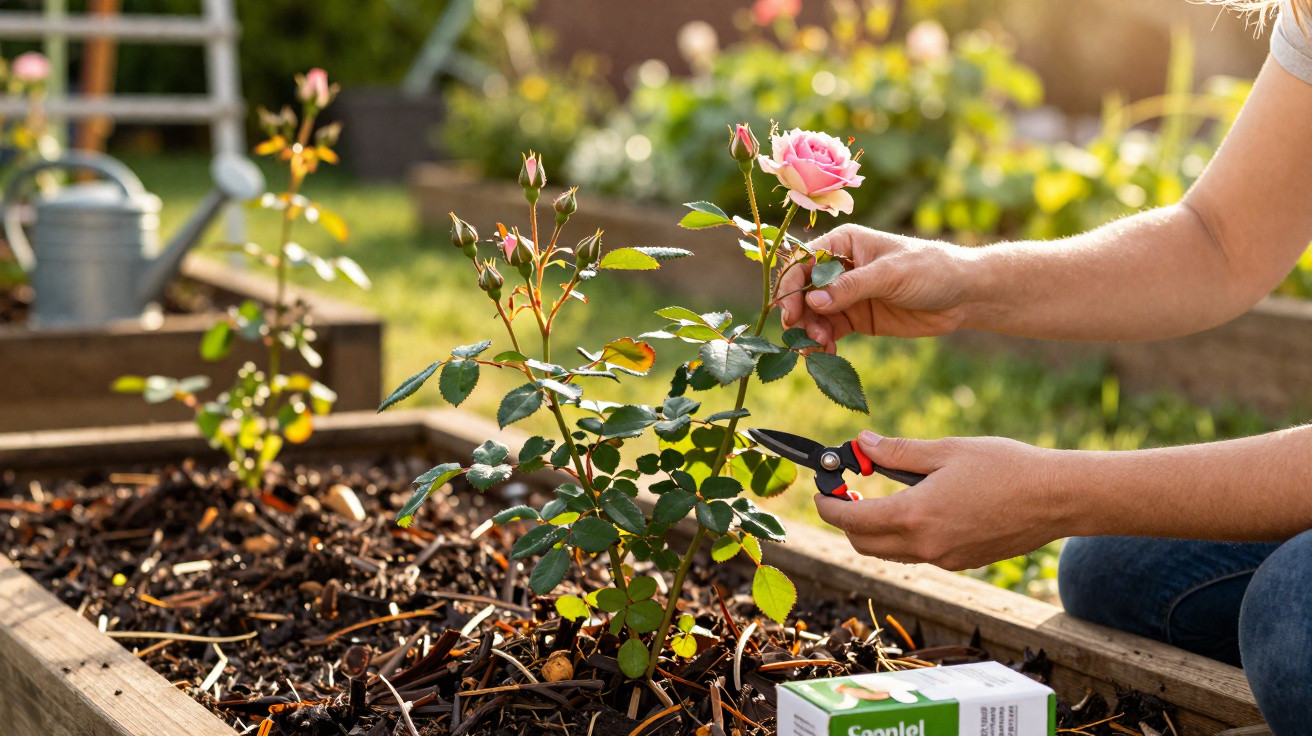
When a rose bush stops flowering, many gardeners assume that it is unwell or will no longer produce buds. In most cases, however, the pause in blooming is part of the plant’s natural cycle or relates to straightforward care factors-such as light, watering, pruning and fertilising-which, once corrected, can bring flowers back throughout the year.
What could be happening when a rose bush stops flowering?
Before taking any drastic action, carefully assess the growing conditions and the plant’s overall health. Green stems, firm leaves and no serious spotting show that the rose bush is alive and responding to its care, even if it is not currently in bloom.
Most often, a lack of flowers is caused by inadequate light, poor nutrition or missing proper pruning. In heavily shaded positions, the plant develops long stems, produces fewer flowers and directs its energy towards new foliage rather than bud formation.
How can you adjust the soil, light and fertiliser to make a rose bush bloom again?
To improve a rose bush with few flowers, first address its light levels. Wherever possible, position it where it receives direct morning or late-afternoon sun, while avoiding excessive heat during the hottest hours in very dry areas.
The soil must also be light, fertile and free-draining, with a balanced supply of nutrients such as nitrogen, phosphorus and potassium. Applying a gentle fertiliser every one or two months during the growing season helps the plant keep producing buds.
Practical care to encourage new buds on a rose bush
A few simple routine measures can help buds appear more regularly. These adjustments work equally well for plants in pots and those planted in beds, preventing both overwatering and insufficient nourishment.
Use the following list as a quick maintenance guide to check what may be missing from your everyday care routine:
- Ensure daily direct sunlight at a time suitable for your area.
- Water consistently without waterlogging the growing medium.
- Feed lightly and regularly, following the product instructions.
- Remove spent blooms to encourage fresh rose bush buds.
- Check for pests and deal with them before they cause more extensive damage.
How do pruning and daily observation keep a rose bush growing actively?
Pruning a rose bush is one of the most effective ways to encourage strong new growth and renew flowering. Light maintenance pruning can be carried out all year, removing dry, diseased, very thin or inward-growing stems; this also improves air circulation.
A heavier annual prune reduces the rose bush’s height and promotes young stems, which generally produce more flowers than older ones. Combined with balanced watering and monitoring for pests such as aphids and scale insects, this creates a simple care cycle that gradually restores flower production and makes growing roses more reliable and enjoyable.





Comments
No comments yet. Be the first to comment!
Leave a Comment