
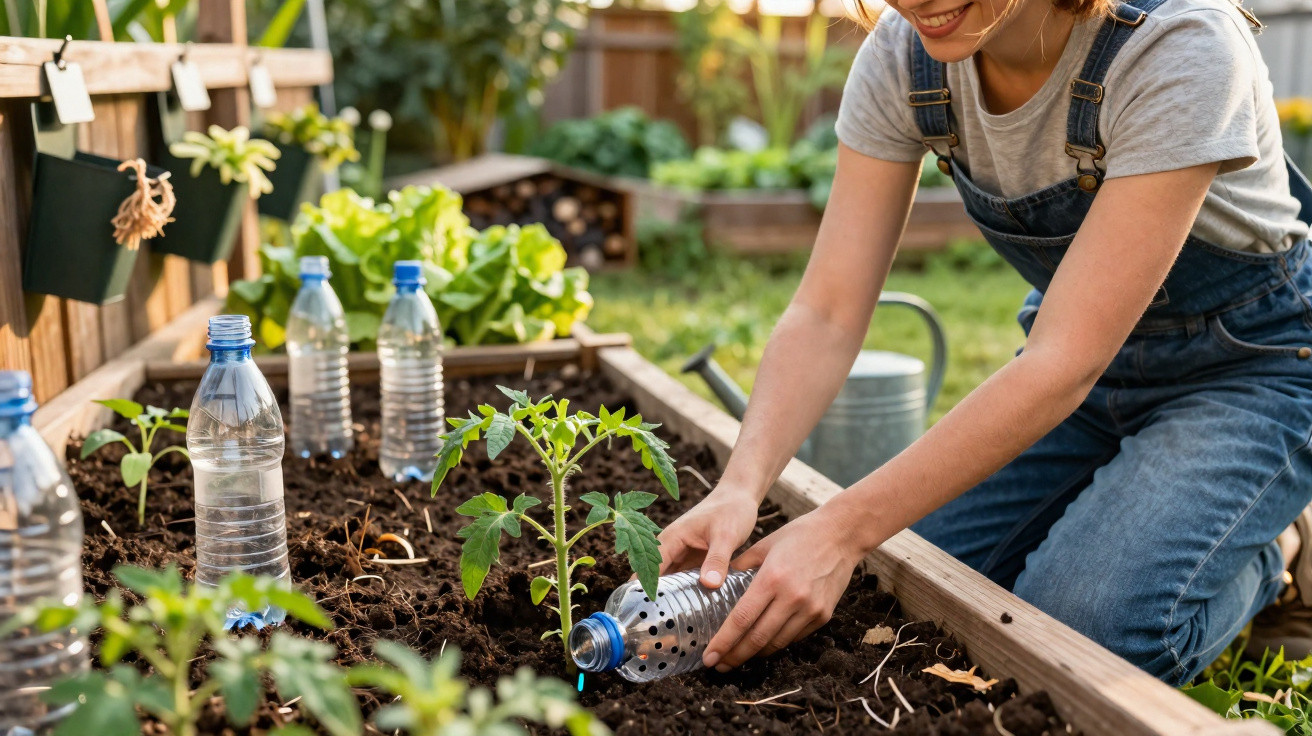
Once the drink has been finished, many people throw away the plastic container without considering other uses. In the garden, however, a PET bottle can become an unobtrusive helper for essential plant-care jobs, making it easier to water, protect and organise beds and pots in a simple, sustainable way.
How can you use a PET bottle for slow irrigation in the garden?
One of the most popular uses for a PET bottle is as a slow-irrigation system. Make small holes in its side or cap, then partially bury the bottle beside the plant so that water is released directly into the root area.
This approach keeps the soil moist for longer and limits water loss through evaporation, making it useful on very hot days or for anyone unable to water regularly. In vegetable gardens, it works particularly well for vegetables, herbs and small shrubs, provided the hole size is adjusted to suit each plant’s needs.
How can PET bottles protect seedlings and young plants?
When newly planted, many seedlings are vulnerable to wind, direct sunlight and even pets. A PET bottle can work as a “mini greenhouse”: cut off the base, place the clear body over the seedling and leave the cap slightly open.
This cover helps retain moisture, softens the effects of heavy rain and forms a physical barrier against larger insects. In garden beds, several bottles can be positioned side by side to shield entire rows until the plants are established and well rooted.
How can PET bottles become garden pots and organisers?
As well as providing irrigation and protection, a PET bottle can be turned into a pot, hanging planter or organiser for gardening supplies. To make a pot, cut off the top section, create drainage holes and fill it with small stones and growing medium; it is ideal for aromatic herbs, succulents and seedlings.
The same material can also be adapted in several practical ways for different everyday garden tasks:
- Attach string or wire to the bottle to make hanging planters for balconies and sunny walls.
- Cut PET into strips and write species names on them with a permanent marker to label garden beds.
- Make small holes in the cap and use the bottle as a lightweight watering can for delicate pots.
- Cut the body in half to store seeds, fertilisers and small gardening accessories.
How can PET bottles fit into a sustainable gardening routine?
To make good use of a PET bottle in the garden, wash it, remove any residue and decide where it will be most useful: for slow irrigation, seedling protection or new pots. Sorting different bottle sizes by purpose and watching how the soil behaves will help you adjust the amount of water released.
A sensible approach is to trial the idea with a few plants, monitor them for several days and then extend it to other pots and beds. In this way, the same bottle can be adapted repeatedly as plants grow, cutting waste, saving resources and making the garden more orderly and efficient.
Comments
No comments yet. Be the first to comment!
Leave a Comment