
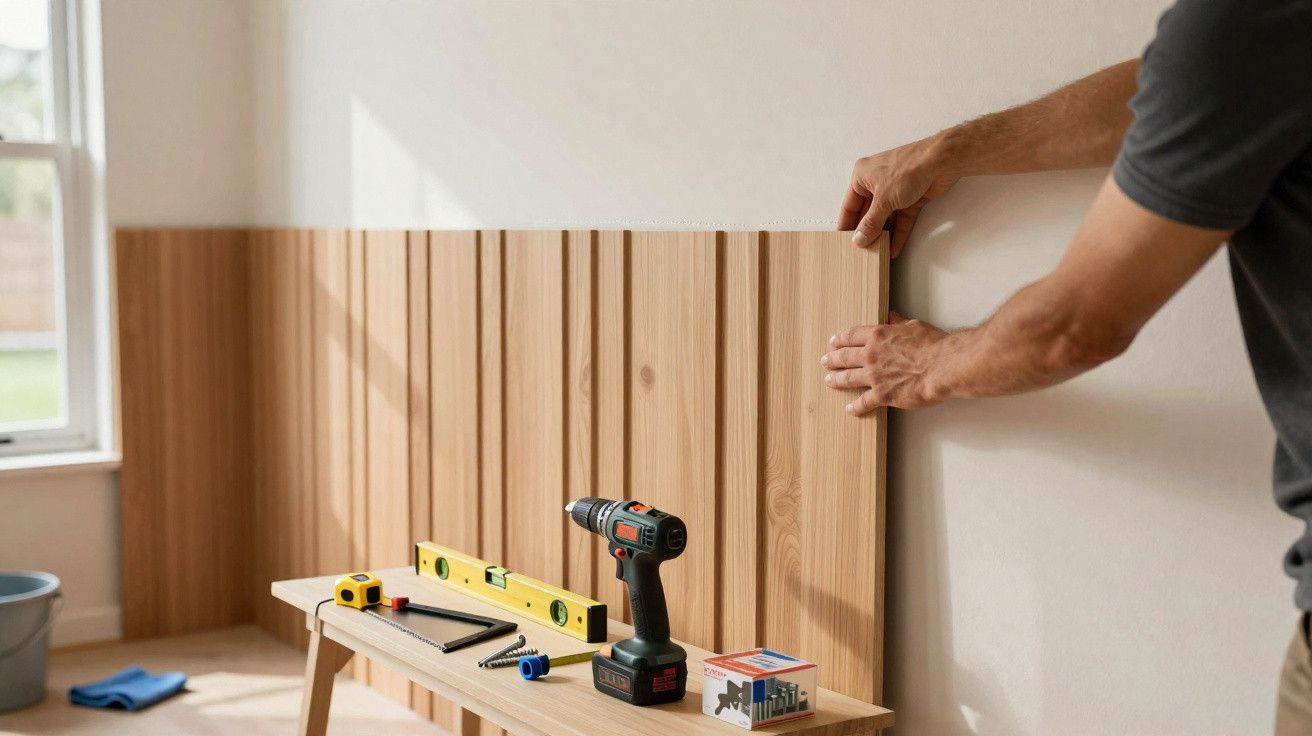
The drive for more sophisticated interiors has reshaped home décor in recent years. Replacing heavy materials with modern alternatives brings greater everyday convenience. A slatted panel made from recycled polystyrene is a beneficial option, combining an elegant wood-effect appearance with immunity to pests and straightforward maintenance.
Why does a polystyrene panel replace traditional timber?
Conventional timber panels are affected by time and require ongoing preventative upkeep. Polystyrene strips, on the other hand, are exceptionally lightweight and need no further painting, enabling the swift refurbishment of living rooms, bedrooms and household corridors.
As well as providing a refined finish that resembles natural material, this synthetic composition prevents stains caused by everyday use. The sustainable material does not encourage termites, preserving its visual integrity even after long periods of continual use.
Can a smooth textured wall replace traditional slatted cladding?
Many projects now use smooth textures to make living rooms easier to clean, but the best choice depends on… Read more
How does water resistance protect wood-effect cladding?
Excess moisture can damage standard timber boards over time. The polystyrene profile provides complete water resistance against splashes, preventing premature rot and allowing it to be safely installed in indoor spaces exposed to steam or sea air.
This water protection also makes routine household cleaning simpler. Simply use a lightly dampened cloth to remove dust collected between the slats, ensuring impeccable preservation without harsh chemical products or expensive waxes.
Below is a video from the Indústria e Comércio de Molduras Santa Luzia LTDA YouTube channel, which explores the points discussed in this subject in greater depth:
What tools are needed to secure slatted cladding to the wall?
The process of fitting the strips stands out for its simplicity and does not require complex building work. Efficient assembly calls for basic hand tools for accurate cutting and measuring, making installation achievable even for those completing home projects themselves.
In addition to measuring equipment, proper adhesion relies on chemical compounds suitable for polystyrene. The combination of adhesive tape and high-performance glue offers immediate support, ensuring firm alignment of the pieces on the prepared surface.
Essential Fixing Kit
Recommended tools
Gather the following items to fit the cladding:
- Double-sided tape and super adhesive specifically intended for immediate fixing;
- A mitre saw, sharp craft knife and measuring tape;
- A marking pencil, ladder and personal protective equipment.
How should polystyrene strips be installed correctly?
The first essential step is preparing the masonry wall, which must be completely clean and free from impurities. Measuring the exact height of the room makes it possible to cut the profiles precisely, ensuring an even fit between every modular piece.
Fixing begins by placing pieces of adhesive tape at the ends, leaving regular gaps between them. Next, apply a continuous line of adhesive along the centre of the strip before positioning it firmly and maintaining manual pressure to secure it to the wall.
Follow these key steps to achieve a perfect installation in your home:
- Apply pieces of double-sided tape at 40-centimetre intervals along the ends of the strips;
- Run a continuous bead of super adhesive down the central length of each profile;
- Press the piece onto the cleaned wall until it is fully secured, then repeat across the remainder of the panel.
What care ensures a slatted panel lasts longer?
Although polystyrene is highly resistant to indoor moisture, direct sunlight should be avoided. Constant excessive heat may affect the material’s properties, so its use should be limited to fully covered and protected residential settings.
Where walls are particularly high, 45-degree angled cuts at the joints help conceal visible joins. The use of dedicated finishing compound together with instant glue delivers a seamless, impeccable aesthetic result throughout the space.




Comments
No comments yet. Be the first to comment!
Leave a Comment