
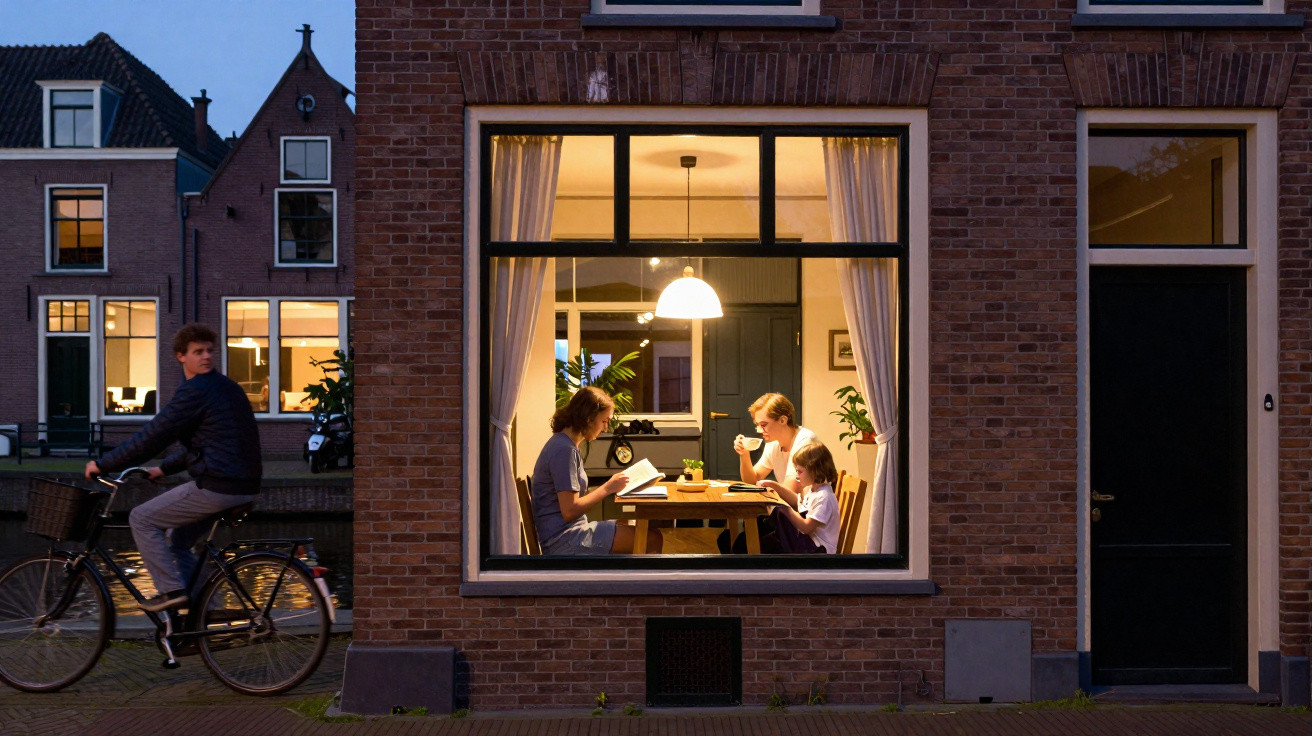
Open curtains catch the eye of anyone walking through residential streets in the Netherlands after dark. With living rooms lit and windows left uncovered, part of domestic life can be seen by passers-by. This custom is associated with religious history, trust between neighbours and social expectations of discretion.
Why do so many Dutch homes leave their windows uncovered?
In the Netherlands, leaving curtains and blinds open is not generally seen as an invitation to look into someone’s home. The window acts as a transparent boundary: residents do not conceal their living rooms, yet they expect pedestrians to carry on walking rather than stop and stare.
This is most common in residential neighbourhoods, particularly on ground floors, where lamps, plants and furniture are visible from the pavement. Not every household follows the practice, but it remains distinctive enough to surprise overseas visitors.
What does the Calvinist tradition have to do with this custom?
One historical explanation links uncovered windows to the influence of Calvinism, which spread across the region from the 16th century. Under this interpretation, a visible home conveyed honesty, discipline and the belief that its occupants had no behaviour to hide:
- Domestic life was expected to show order and restraint;
- Transparency was connected with moral conduct;
- Closed windows could arouse suspicion within the community;
- The home served as a public display of organisation.
Is there a rule against looking into homes?
The custom relies on an important social counterpart: people walking along the street avoid staring into homes. A brief glance at a lit window may happen, but stopping outside it or watching residents for an extended period would be regarded as intrusive.
This self-restraint safeguards privacy without requiring permanent physical barriers. Open curtains can therefore coexist with a clear sense of personal boundaries, based less on concealing the home than on considerate conduct by neighbours and pedestrians.
Does the habit still make sense in modern life?
Today, the reasons for leaving windows uncovered extend beyond religious tradition. Some households appreciate the extra daylight, the sense of space and visual contact with the street, while others close curtains only in bedrooms or at particular times. Current reasons include:
- Making better use of natural light during the day;
- Preventing rooms from feeling enclosed and dark;
- Keeping a visual connection with the neighbourhood;
- Letting in morning light as soon as they wake up;
- Maintaining a custom passed down through generations.
How does natural light affect sleep and waking?
Exposure to morning light helps the body recognise that the waking period has begun. For this reason, keeping curtains open or opening them shortly after waking can support the alignment of the body clock, although the bedroom needs to remain sufficiently dark while sleeping.
The Dutch custom also reflects a wider cultural relationship with transparency, discipline and collective trust, much like other everyday practices in the Netherlands. Illuminated windows remain in view, but privacy is protected through an unspoken agreement: residents do not hide their homes, and people outside do not intrude on their space with their gaze.




Comments
No comments yet. Be the first to comment!
Leave a Comment