
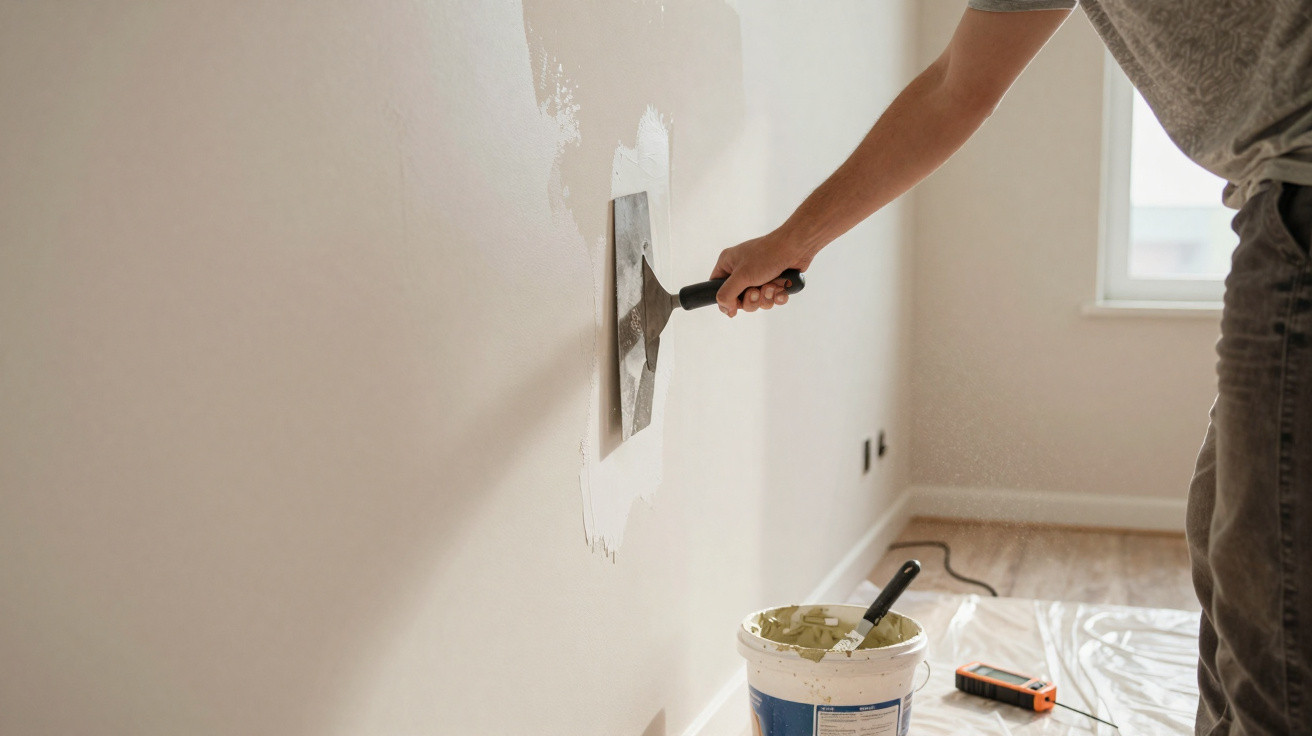
A swollen, peeling wall will usually mean that water is getting through or trapped behind the paintwork. Scraping the affected section and adding a fresh coat may conceal the issue for a few days, but the finish will lift again unless the damp penetration, leak or condensation is dealt with first.
How can you identify where the wall damp is coming from?
The location of the stain provides the first clues. Damage close to the ceiling or windows is often linked to rainwater ingress, whereas affected areas near kitchens, bathrooms and pipework may point to leaks. Stains that start at skirting-board level and spread upwards may be connected to rising damp.
- Stains that develop after rainfall may indicate water penetration from outside;
- Blisters near pipes can reveal internal leaks;
- Damp at skirting-board level may be rising through the floor or foundations;
- Mould in cold corners can be caused by condensation;
- Soft or hollow-sounding plaster may be damaged;
- A persistent musty smell indicates that the area remains damp.
Why must the source of the water be fixed before repairs?
Water collecting behind paint puts pressure on the finish layers and carries salts found in the plaster. As the moisture reaches the surface, it causes blisters, white marks and sections that crumble when touched. Applying filler or anti-mould paint over this substrate will not stop the process.
Proper repair of a wall damaged by damp starts by fixing the pipework, waterproofing, guttering or external seals. Where condensation is the cause, it may be necessary to improve ventilation and control the room's humidity.
How do you remove loose paint and restore the surface?
Once water ingress has been stopped, allow the wall to dry fully. Use a scraper to take off any loose paint, filler and plaster, continuing until you reach a sound surface. The area can be cleaned with a brush and, if there is a small superficial mould stain, with water and mild washing-up liquid, followed by complete drying.
- Cover the floor and move furniture away from the area;
- Wear gloves, safety glasses and a dust mask;
- Remove all blistered paint or paint with poor adhesion;
- Take away plaster that is crumbling or sounds hollow;
- Clear away dust before applying the repair material;
- Fill damaged areas with filler or mortar suitable for the wall;
- Observe the drying time before sanding.
How do you seal and paint a swollen, peeling wall so the issue does not return?
Once the repair is dry and level, apply a stabilising primer or sealer suitable for the type of wall. This product helps even out absorption and improves adhesion for the new paint, but it is not a solution for a surface that is still exposed to water.
Finish with two coats of paint suitable for the room, following the interval stated by the manufacturer. On external walls or in very damp spaces, the coating must be designed for those conditions. Painting over mould, active damp or filler that is still wet will cause the finish to blister and peel again.
When does the repair need to be carried out by a professional?
Seek professional help if the stain expands quickly, the plaster is very soft, there is water near electrical sockets or the source of the water ingress cannot be identified. If electrical installations are present in the affected area, switch off the circuit before touching or scraping the wall, and arrange a safe assessment.
Swollen plasterboard may need replacing, as it does not always regain its strength after becoming wet. Extensive mould growth, recurring water ingress and damp rising from the floor also require a specialist diagnosis. A lasting repair depends on a simple sequence: stop the water, allow complete drying, rebuild the surface and only then apply the new finish.


Comments
No comments yet. Be the first to comment!
Leave a Comment