
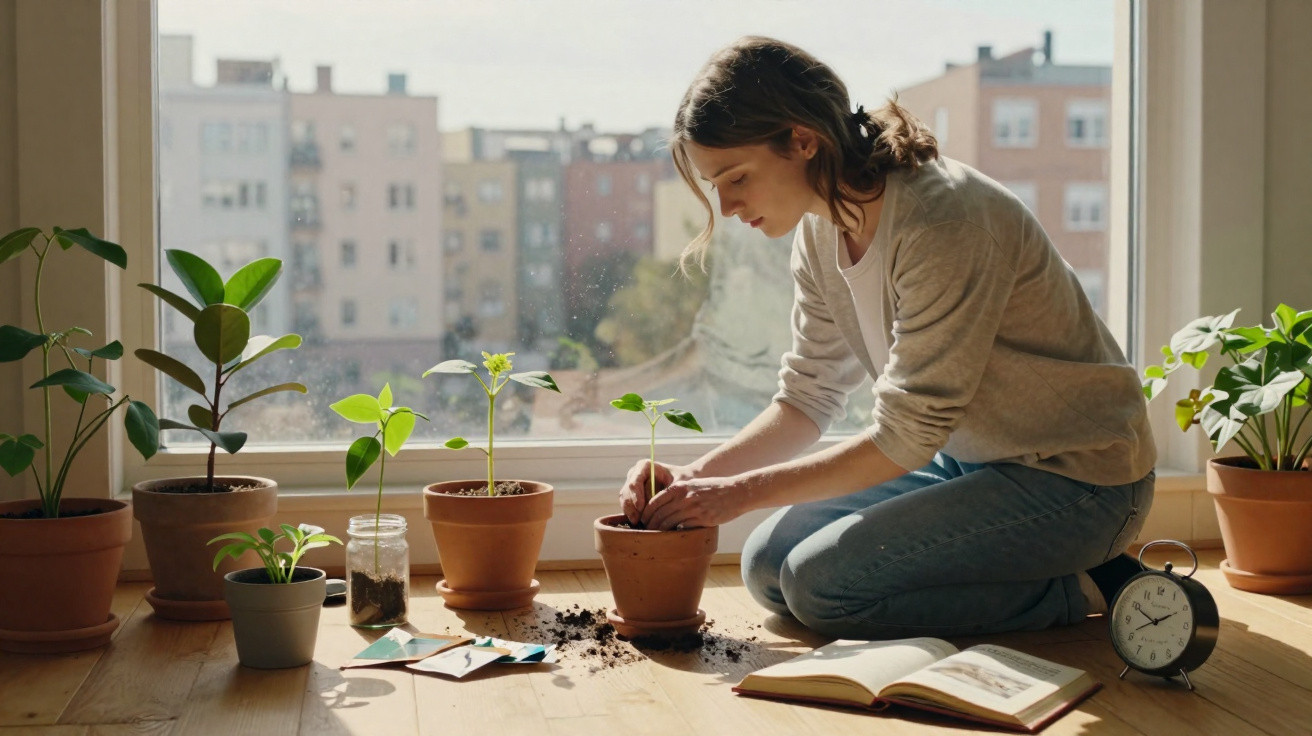
Caring for a plant means learning to recognise its cycles. In a world full of uncertainty, that sense of predictability can be soothing. Reading "The garden against time" by Olivia Laing can offer much the same comfort.
For several days, the flower on a plant I had sown a few weeks earlier had been hinting at its arrival from a small pot. Over the previous two days, it had begun to take on an elongated shape, like a tightly spiralled, closed bell, almost out of proportion with the short plant and its small leaves. One morning, I woke to find the morning glory living up to its name: before I had even opened the blind, it had emerged in shocking pink, both magnificent and delicate.
I knew it would remain that way for only a few hours. I took photographs, both as a record and to share with friends. I am not sure why I feel a particular pride whenever the plants I look after flower, appear healthy and vigorous, or when I manage to keep even a humble parsley plant alive until the end of its life, when it offers up its tiny whitish flowers.
The reassurance of growing plants
Perhaps it is not pride at all. I do not have a garden planned and designed as a proper gardener would create one; perhaps it is simply happiness at being able to give those living beings the conditions they need to thrive. And, I admit, I feel sad whenever I fail and a plant dies.
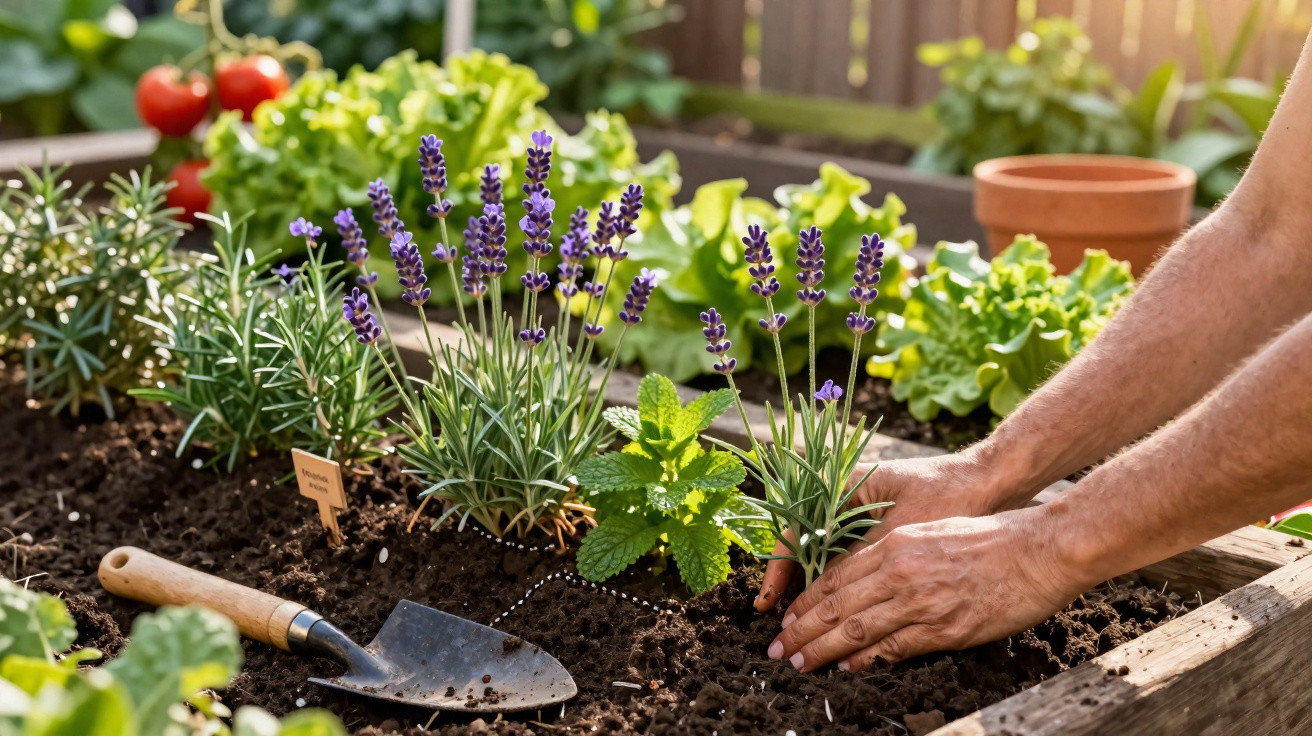
It was mainly during the pandemic lockdowns that I began this path of home gardening - and I do not even have a balcony. My approach was straightforward. Having recently moved into a sunny home, I started experimenting in a more or less naïve way. Every seed I removed from a piece of fruit went into the soil. From that period, I still have a lemon tree beside the living-room window, which began producing flowers last year. I was not doing it solely to occupy myself. In some way, it made me pay attention to each plant's natural cycles, allowing me to hold on to the notion of predictability, something so important in those uncertain days.
Of course, when I speak about nature, I mean a nature that has been "caged", altered to suit human tastes and needs. No garden is natural: although nature has its own balance and functions without human intervention, it appears chaotic and frightening to us.
Olivia Laing and The garden against time
I explored this human urge to control nature more deeply when I was given - by someone who had already guessed I would fall in love with it - the book "The garden against time - In search of a common paradise" by the British writer Olivia Laing, which has unfortunately not yet been published in Portugal. She immediately became my favourite contemporary author.
In this book, published in 2024, Laing begins by describing her relationship with gardens and how, during the pandemic, she finally had a garden of her own that she could restore. Yet the book is not really about her. Instead, it traces the history of this search for a paradise on earth - and what that search signifies. Her examination of British gardens and parks takes on disturbing dimensions, revealing the histories of slavery, the seizure of land from peasants and class exclusion concealed within them. But gardens can also provide shelter for marginalised people, who have made private "paradises" of their own: safe places in which to live freely. Derek Jarman did this at Prospect Cottage on the Kent coast; as well as being a filmmaker and queer activist, he was a highly skilled gardener. So too did the Arts & Crafts movement, led by the designer William Morris in the 19th century, respond to industrialisation. Inspired by utopian socialism, it sought to bring art into everyday life, with forms from nature as its aesthetic motif.
Paradise as an unfinished work
Rejecting the fallacy that there was once a paradise that humanity lost and wishes to recover, I believe paradise will always remain a work in progress, at least for as long as the desire endures for a humanity living in harmony.
Comments
No comments yet. Be the first to comment!
Leave a Comment