
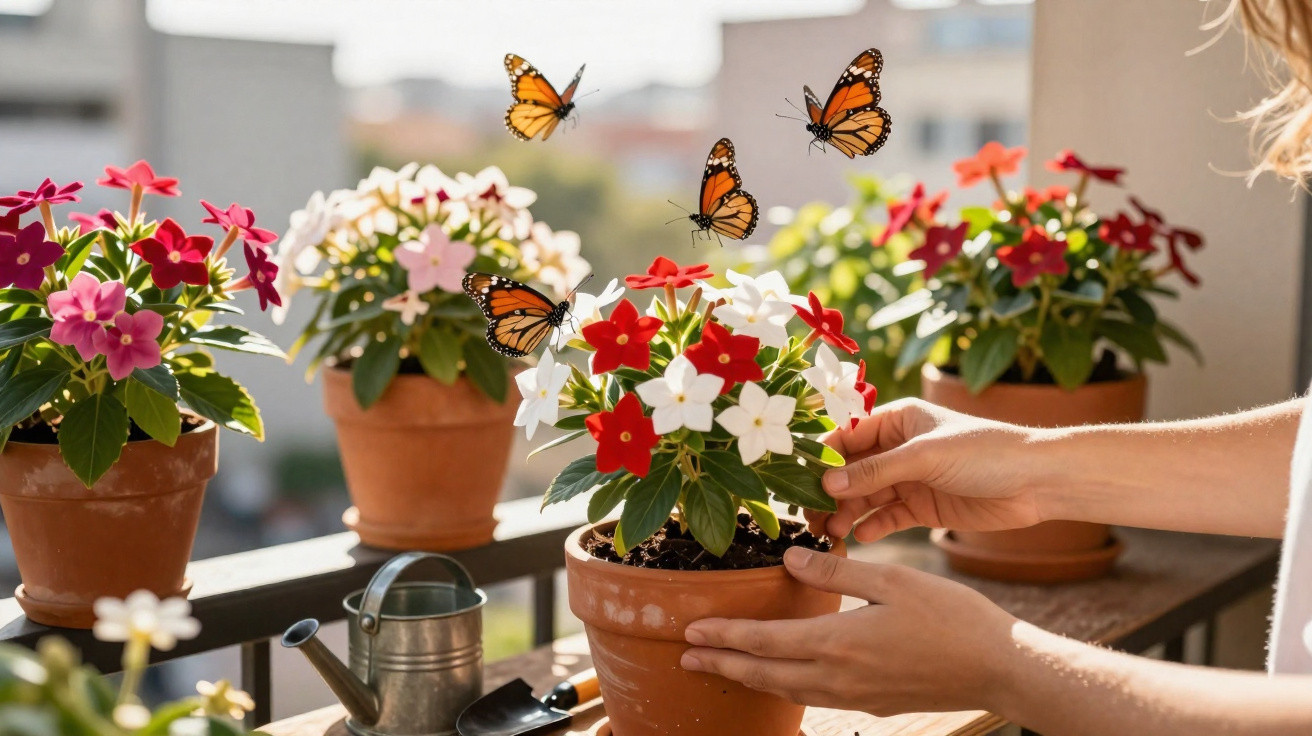
The Egyptian star, also known as pentas, is among the best plants for anyone seeking a colourful, hardy balcony filled with butterflies. Its small, star-shaped flowers grow in clusters and may be pink, red, lilac, white or purple. In warm, bright locations, it can bloom for extended periods, keeping the area lively for virtually the whole year.
Why does the Egyptian star attract so many butterflies?
The Egyptian star draws butterflies because its blooms are nectar-rich and easy for them to feed from. Since the flowers develop in clusters, the plant acts as a small feeding station for pollinators, particularly when placed in a sunny spot.
Its long flowering season is another important advantage. With enough light and basic care, pentas keeps producing fresh flower clusters for a long time. Butterflies therefore return regularly, as they can find food in the same place.
Where is the best place to grow it on a balcony?
Choose a position where the plant receives plenty of direct sunshine. Although the Egyptian star tolerates some filtered light, it flowers far more generously with several hours of daily sun. On balconies, place the pot close to the railing, a window or the brightest area available.
Avoid very enclosed, stuffy corners as well. Good air movement keeps the foliage healthy and helps reduce fungal issues. If your balcony is exposed to strong winds, use a heavy pot so that the plant does not topple over.
How should you water, prune and feed pentas?
Pentas prefers compost that remains slightly moist, rather than waterlogged. Water when the top layer of the growing medium begins to dry out. During very hot weather, small pots may need watering more often; in rainy or cold periods, water less frequently.
Pruning is straightforward: remove faded flowers and overly long shoots to encourage new growth. You can feed it with a balanced fertiliser or well-rotted organic manure, always using small amounts to avoid scorching the roots.
- keep it in a spot with plenty of sunshine;
- water without allowing water to collect in the saucer;
- remove spent blooms regularly;
- prune lightly to retain its shape;
- feed it from time to time during the growing period.
Does the Egyptian star grow better in a pot or in the ground?
The Egyptian star performs well in either setting. In pots, it is ideal for balconies, terraces and small spaces, provided the container has drainage holes and a light growing medium. A medium-sized pot is enough for the plant to develop properly and produce plenty of flowers.
When planted in the ground, it can become fuller and create colourful beds in the garden. Leave room between plants so that air can circulate and the leaves do not stay damp all the time. Whether it is grown in a pot or a border, good drainage is essential.
How can you keep pentas flowering throughout the year?
To maintain flowering, the key is not to let the plant go hungry or thirsty, while also avoiding excessive care. Sunshine, measured watering, well-drained soil and gentle pruning make more difference than too much fertiliser.
The Egyptian star is hardy, but it responds particularly well to regular attention. Once the flowers begin to fade, removing the old clusters helps the plant direct its energy towards new buds. With this simple routine, your balcony gains colour, movement and regular butterfly visits without requiring a complicated gardening schedule.


Comments
No comments yet. Be the first to comment!
Leave a Comment