
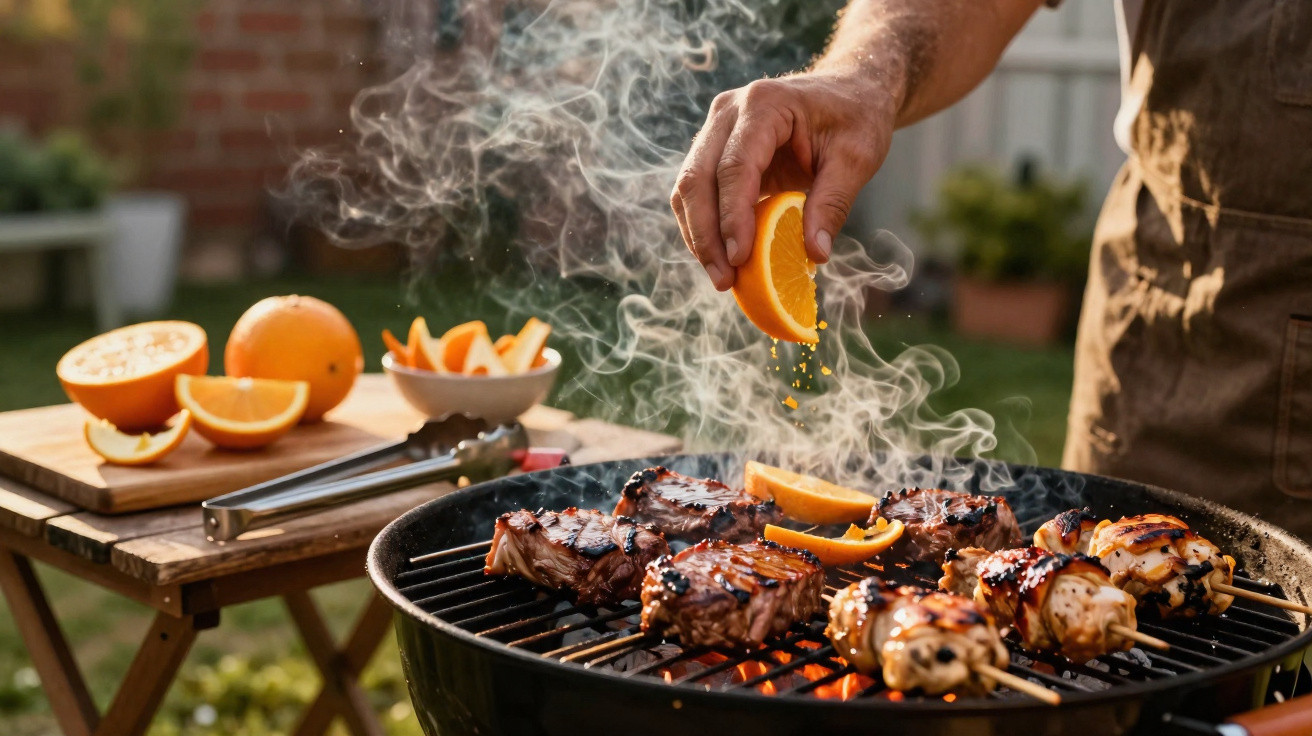
Using orange pulp on hot coals is becoming increasingly popular with barbecue enthusiasts who want to change the smoke profile and aroma of grilled meat without using artificial seasonings. The method relies on the slow burning of still-moist pulp, which releases essential oils and citrus aromatic compounds. These blend with the smoke from wood or charcoal and settle on the meat’s surface, creating a distinctive yet subtle fragrant layer.
How does orange pulp alter the smoke and aroma of meat?
Once orange pulp meets the intense heat of the coals, its flesh dries quickly, while the white pith and peel release vapours containing limonene and other terpenes. As fat renders from the meat, these compounds dissolve into it, changing the perceived aroma and flavour without concealing the meat’s natural taste.
Placed on a well-established bed of glowing coals, the pulp initially dries out before beginning to toast, producing a light, clear and fragrant smoke. Unlike smoke caused by fat burning directly in the fire, it is usually cleaner, less bitter and less charred-smelling. This appeals to those who prefer a lighter barbecue.
Which types of meat work best with orange pulp?
This approach is most effective with meats containing a moderate to high level of fat, as the fat readily captures and retains the citrus aromas. Beef cuts such as picanha, flank steak, sirloin steak and rib-eye, as well as fatty pork cuts including collar and ribs, generally respond particularly well.
With poultry and fish, greater care is needed so the citrus does not overwhelm the original flavour. Marinated chicken-thighs, drumsticks and wings-takes the smoke well, while oilier fish such as salmon handles the citrus note better than very delicate fish.
- Fatty beef cuts: enhance the citrus fragrance while keeping the meat flavour prominent.
- Pork: pairs well with gently sweet, fresh notes, especially ribs and bone-in cuts.
- Seasoned poultry: absorbs the smoke effectively when it has already been marinated or seasoned.
- Oily fish: requires restrained use of orange pulp and a shorter time exposed to smoke on the grill.
When is the best time during a barbecue to use orange pulp on the coals?
The point at which the pulp is added to the coals directly affects both the intensity and character of the aroma that reaches the meat. It is most commonly used once the fire is properly established, with glowing coals and almost no flames, as the heat is then stable and the pulp is less likely to burn too quickly.
To prevent thick, dark smoke, drain the pulp well so it has no excess juice, then distribute it over the coals in small portions. Adding a large amount at once can smother the fire, reduce the cooking temperature and create heavy smoke, removing the delicacy of the citrus effect.
Which other citrus peels can be used without making the meat bitter?
In addition to orange, peels from other citrus fruits can also alter barbecue smoke with interesting results. Tahiti lime, lemon, tangerine and even grapefruit offer different aromatic profiles, ranging from fresher, sharper notes to sweeter, softer fragrances, all due to the oils held in their peels.
To avoid bitterness, use the peels sparingly, keep them directly on the coals and monitor how long the meat is exposed to the smoke. Combining small quantities of several citrus fruits-using orange as the base and adding less lime or tangerine-can produce a balanced, noticeable aroma without overpowering the defining flavour of each cut.


Comments
No comments yet. Be the first to comment!
Leave a Comment