
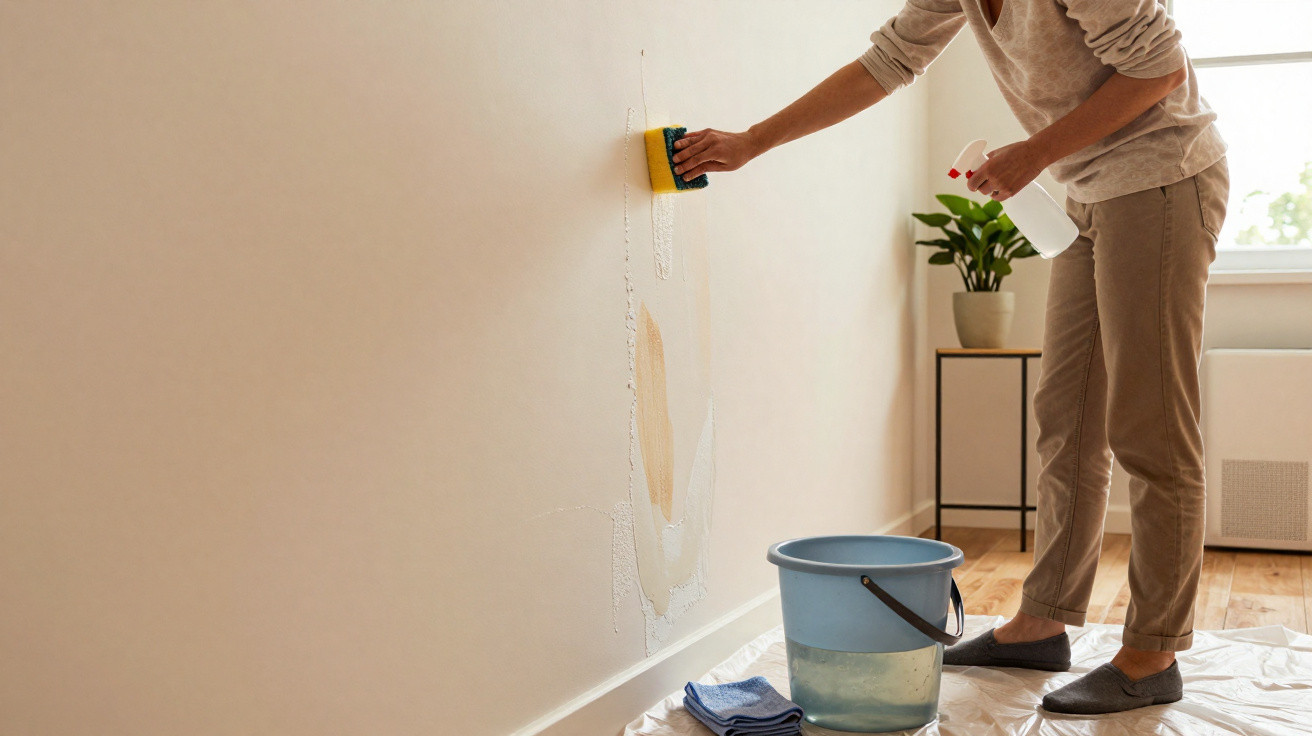
In many homes, whitish marks on interior and exterior walls are a recurring issue. This phenomenon, known as efflorescence on walls, is associated with moisture and the way the building was constructed. Knowing how it develops and how it affects wall finishes is essential for planning lasting repairs and avoiding repeated refurbishment work.
What is efflorescence on walls and why does it appear?
Efflorescence on walls occurs through the combination of moisture and soluble salts found in bricks, mortar and concrete. Water dissolves these particles and carries them through the pores of the material. When it evaporates, the salts remain on the surface, creating the white marks known as efflorescence.
Water can reach the inside of a wall through capillary action, rising from the ground through the base of the building, or through leaks from damaged roofs, blocked gutters and leaking pipes. The more continuously water is present, the greater the likelihood of efflorescence, blistering, flaking and even associated mould.
How can you identify efflorescence on house walls?
Before removing efflorescence, it is important to recognise its typical signs so that it is not mistaken for mould or ordinary dirt. It usually appears as a fine or crystalline whitish powder on plaster, paintwork or ceramic wall tiles, along with visible surface damage.
When inspecting rooms, look out for common features that can confirm efflorescence and point to an active source of moisture behind the wall:
- White or greyish marks that return even after cleaning;
- Loose, swollen or blistered paint, especially close to the floor;
- Plaster that crumbles easily when touched or sounds hollow;
- A colder, damper room with the distinctive smell of persistent damp.
How to remove efflorescence from a wall step by step
Removing efflorescence involves more than simply washing the surface: the area must be cleaned, allowed to dry, and protected from further moisture ingress. With minor cases, proper maintenance can restore the wall’s appearance and improve the lifespan of the paint finish, while structural problems require technical assessment.
Remove excess efflorescence
Use a stiff-bristled brush or scraper to carefully remove all affected material, including visible salts and any loose paint or plaster.Carry out a mild chemical clean
Make a solution using equal parts water and white vinegar, or use a product designed specifically for efflorescence. Apply it with a cloth, sponge or brush, rubbing the surface.Allow the wall to dry fully
Once cleaned, let the wall dry naturally. Encourage air circulation by opening doors and windows or using mechanical ventilation, and do not paint until it is completely dry.Fix the source of the moisture
Check for leaking pipework, failed floor waterproofing, external cracks, or issues with drains, gutters and flat roofs. Repair them to prevent efflorescence from returning.Apply a sealer or waterproofing treatment
Once the surface is dry and sound, apply an acrylic sealer or a waterproofing product suitable for damp walls to prepare the base for repainting.Paint with a suitable product
Finish with anti-mould or damp-resistant paint, following the manufacturer’s guidance on the number of coats and drying times.
When the plaster sounds hollow, comes away in sheets or is severely crumbly, the entire finish will usually need to be renewed, from removal through to new mortar and paint. In these cases, a specialist can help determine the most suitable waterproofing method.
What measures help prevent efflorescence on walls?
Alongside correct removal, prevention relies on good practice during both construction and everyday use of the home. In new buildings, waterproofing foundations, ground beams and ground floors is crucial to stop moisture rising from the ground by capillary action and causing early problems.
In occupied properties, attention should focus on maintaining roofs and façades, ensuring ventilation, and keeping furniture away from cold walls. By combining an assessment of the moisture source with suitable cleaning and ongoing protection, walls are more likely to remain stable for longer, reducing unnecessary repainting and preserving the building’s structure.


Comments
No comments yet. Be the first to comment!
Leave a Comment