
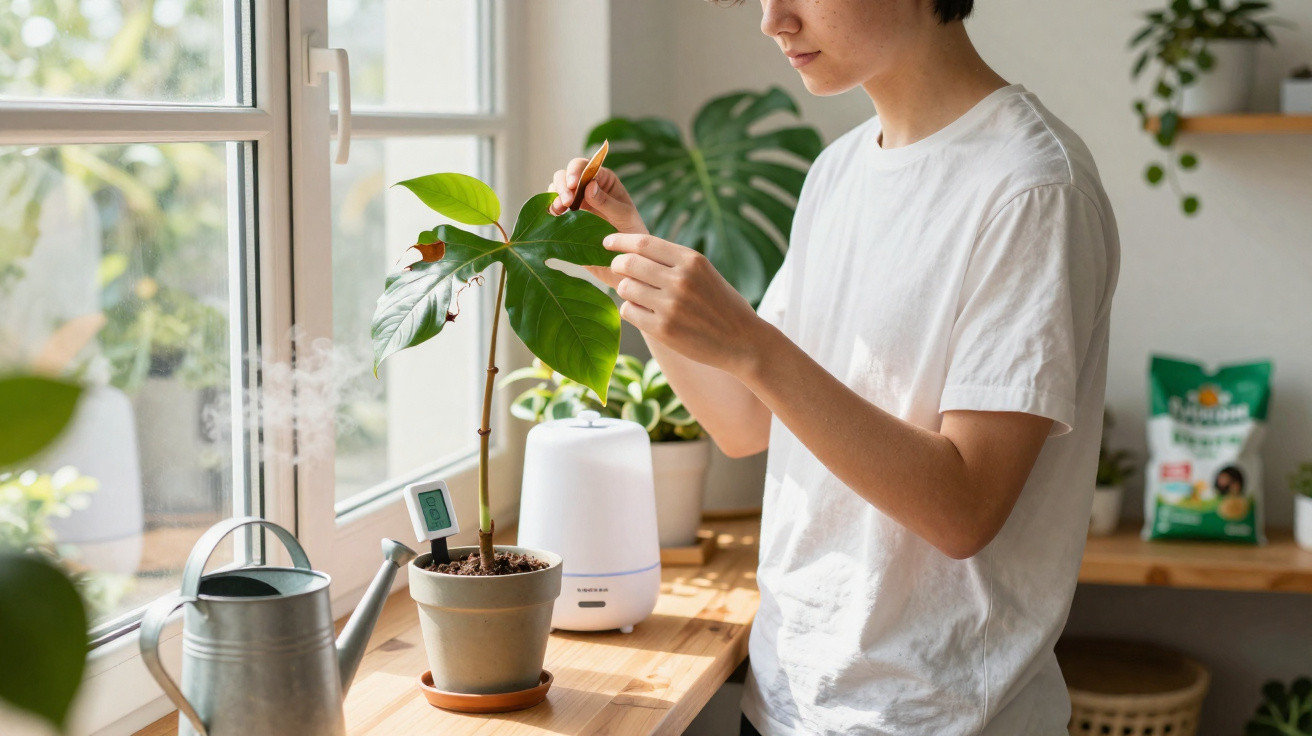
Álvaro Pedrera, a plant specialist, warns that brown, dry leaf tips do not always mean a pot needs more water. In many indoor species, this symptom results from dry air, a build-up of salts in the growing medium, or stress caused by heat, draughts or excessive fertiliser. Before watering again, it is worth checking the humidity, roots, new leaves and surrounding conditions.
Why do brown tips not always mean a lack of water?
Brown tips develop when the end of a leaf loses moisture faster than it can replace it. This can occur even when the growing medium is damp, particularly with tropical plants kept in dry rooms, beside very sunny windows or under air conditioning.
If low air humidity is the cause, watering more may make matters worse. The compost becomes waterlogged, the roots cannot breathe properly and the tips keep drying out, because the issue was not a lack of water in the pot but excessively dry air around the leaves.
How can you tell whether low humidity is the problem?
Low humidity commonly causes dry edges and tips, more brittle leaves and slower growth. Calatheas, prayer plants, ferns, peace lilies and anthuriums are more affected by this type of stress because they have thin leaves and require more humid air.
Several signs can help distinguish the cause:
- The tips turn brown, while the growing medium still takes a long time to dry out.
- Leaves curl slightly during the hottest hours of the day.
- The plant is positioned near a fan, air conditioning or strong sunlight.
- New leaves emerge smaller or with marked edges.
- The pot has no unpleasant smell or obvious signs of rotting roots.
What should you do before watering more?
Before adding water, test the growing medium with a finger or use a wooden stick to check moisture below the surface. If the top layer is dry but the bottom is still damp, the plant does not need watering at that point.
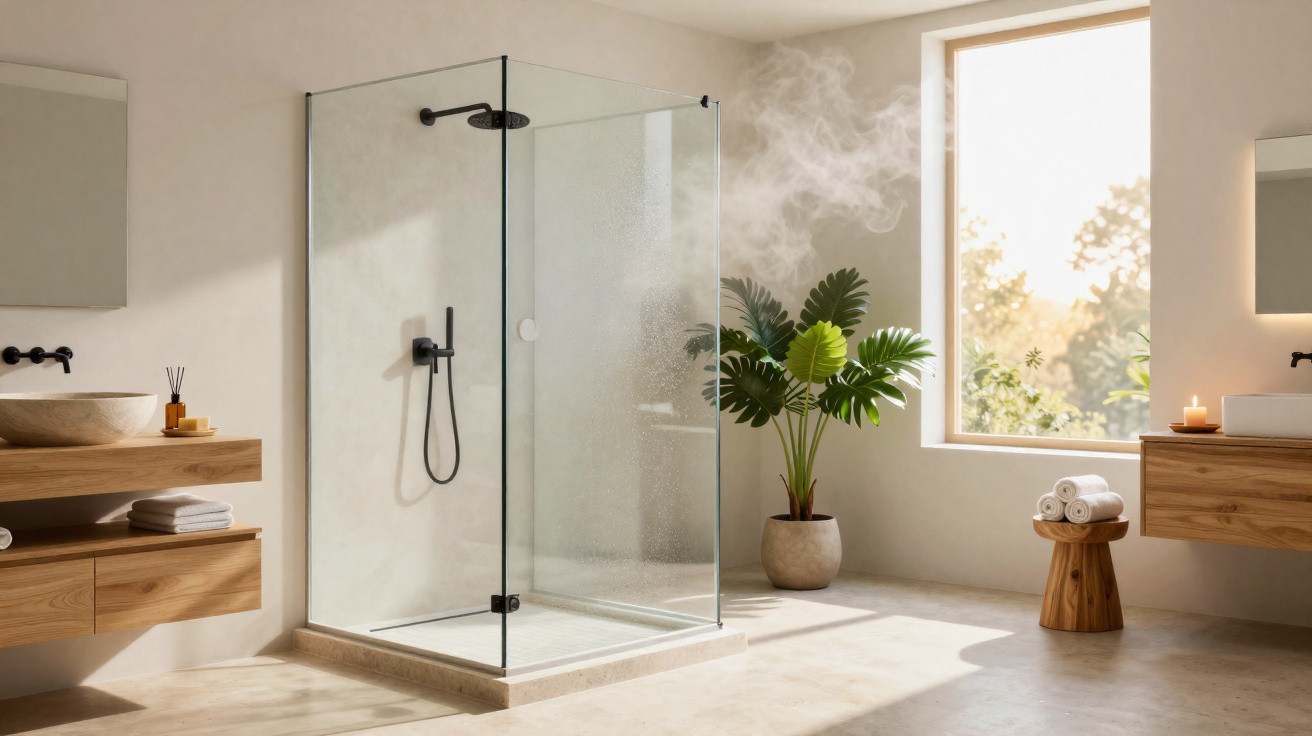
The best approach is to improve the plant’s immediate surroundings. Group pots together, move the plant away from dry draughts, use a tray of pebbles and water without allowing the base of the pot to sit in it, or place tropical species somewhere with filtered light and more stable air.
When could excessive fertiliser or salts be the cause?
Salt build-up can also scorch leaf tips. It may happen after concentrated feeding, frequent fertiliser use, highly mineralised water, or when the growing medium never receives a more thorough watering to flush out residues.
In this situation, the remedy involves cleaning and taking a break:
- Stop fertilising for a few weeks.
- Water until it runs out through the pot’s drainage holes, then discard any excess from the saucer.
- Remove white crusts from the surface of the growing medium if they appear.
- Avoid feeding weak plants, recently repotted plants or those that are dormant.
- Use lower doses than recommended when the plant is in a small pot.
How can you help the plant recover without cutting incorrectly?
Brown tips will not turn green again. They can be trimmed with clean scissors, following the leaf’s shape and leaving a small dry margin so the healthy tissue is not damaged. Cutting too far back creates a fresh area of stress and can make the mark larger.
Recovery is visible in new foliage: intact tips, more even colour and active growth show that the plant has found a better balance. Once humidity, ventilation, watering and fertilising have been adjusted, older leaves may still bear scars, but new growth reveals whether the care routine is now on the right track.
Comments
No comments yet. Be the first to comment!
Leave a Comment