
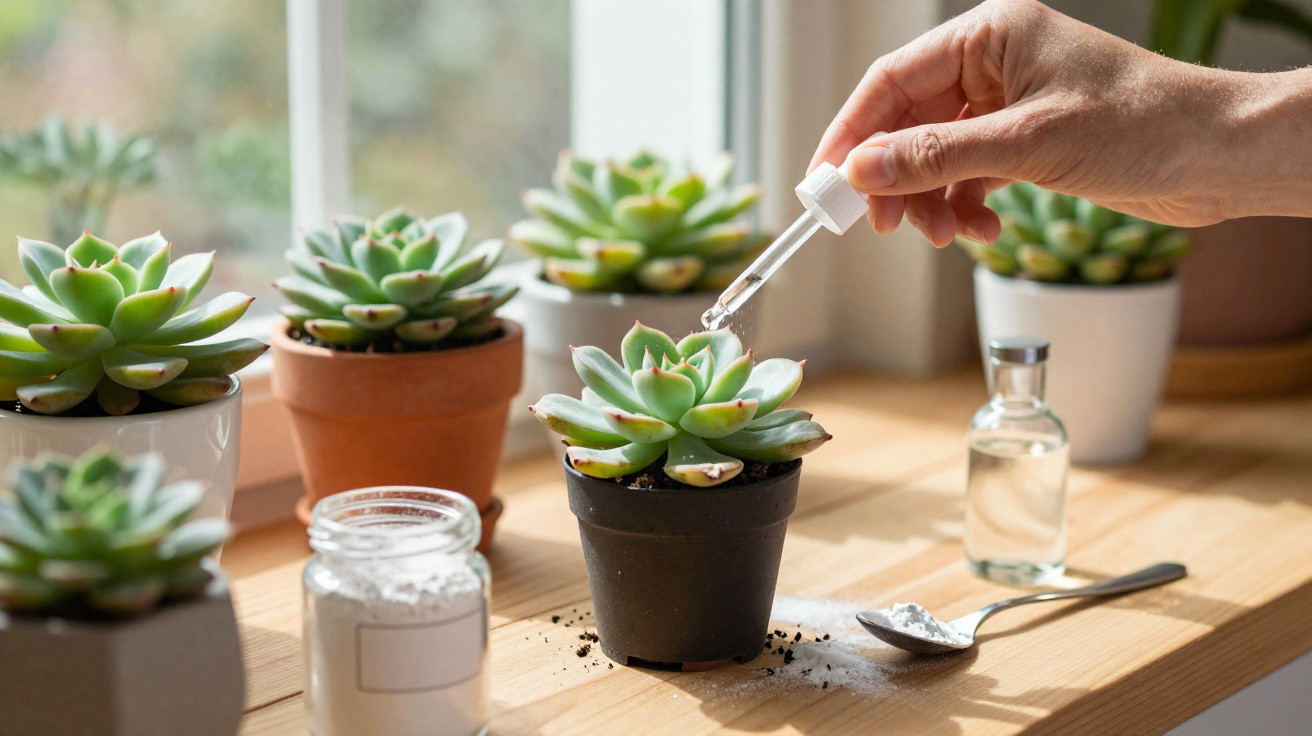
Succulents have become popular in houses and flats thanks to their decorative appearance and reputation for being easy-care plants. Even so, they can develop wilted, soft and even translucent leaves when they receive more water than they can tolerate. In this situation, many owners throw the plant away without realising that simple care adjustments, combined with the moderate use of bicarbonate of soda, may still help it recover.
What does it mean when a succulent has wilted and translucent leaves?
Wilted succulent leaves do not always mean the plant needs water; in many cases, the issue is excess moisture. When the growing medium stays waterlogged for too long, the plant retains more water than it can handle, causing its cells to burst.
As a result, the leaves become translucent, watery and soft to the touch, while the roots begin to rot. Lower leaves may drop off, the stem can darken near the soil, and there may be a slight decomposing smell. These are warning signs that the plant needs prompt action.
Watch a video on the Vila Ni YouTube channel explaining how to save succulents suffering from either too much or too little water with simple kitchen items:
https://www.youtube.com/watch?v=B8mC2x9P_k8
How does bicarbonate of soda help, and how can it be used safely?
When properly diluted, bicarbonate of soda can help control opportunistic fungi on succulents affected by excess moisture. It will not restore roots that have already rotted, but it can help prevent the problem from progressing while you adjust watering, ventilation and light levels.
However, it should only be used occasionally and at a low concentration, so that it does not burn delicate plant tissue or alter the soil pH too much. At this point, the aim is to protect the healthy areas that remain and prepare the plant for repotting in dry, free-draining growing medium. Follow these basic steps:
- Stop watering: cease watering as soon as you notice translucent, soft leaves.
- Remove the plant from the pot: carefully lift it out and remove excess soil from the roots.
- Cut away rotten sections: remove roots that are dark, soft or smell of decomposition.
- Make the solution: mix around 1/4 teaspoon of bicarbonate of soda with 200 ml of water.
- Apply sparingly: use a spray bottle or spoon to apply it at the base of the plant and over the growing medium, without soaking it.
- Allow it to dry and repot: leave it in a ventilated place for around 24 hours, then repot it in dry growing medium.
How should you monitor a succulent's recovery each day?
Following the initial treatment, monitor the plant closely over the next few weeks. Keep it in a bright spot with indirect light and good airflow, and do not water it until the pot feels very light and the growing medium is completely dry.
The most damaged leaves may fall off or dry out, which is expected. Positive signs emerge gradually: a firm stem without damp marks, no mouldy smell from the growing medium, and new compact growth with even colour and a firm texture.
What care prevents further wilted and translucent leaves?
Once the plant has stabilised, the priority becomes preventing further waterlogging. A few small changes to the routine are usually enough to keep succulents hardier and growing healthily over time.
A well-draining growing medium, a pot with drainage holes, moderate watering and good light make a major difference. Together, these measures lower the risk of fungi, improve root aeration and reduce the need to rely regularly on emergency treatments such as bicarbonate of soda.



Comments
No comments yet. Be the first to comment!
Leave a Comment