
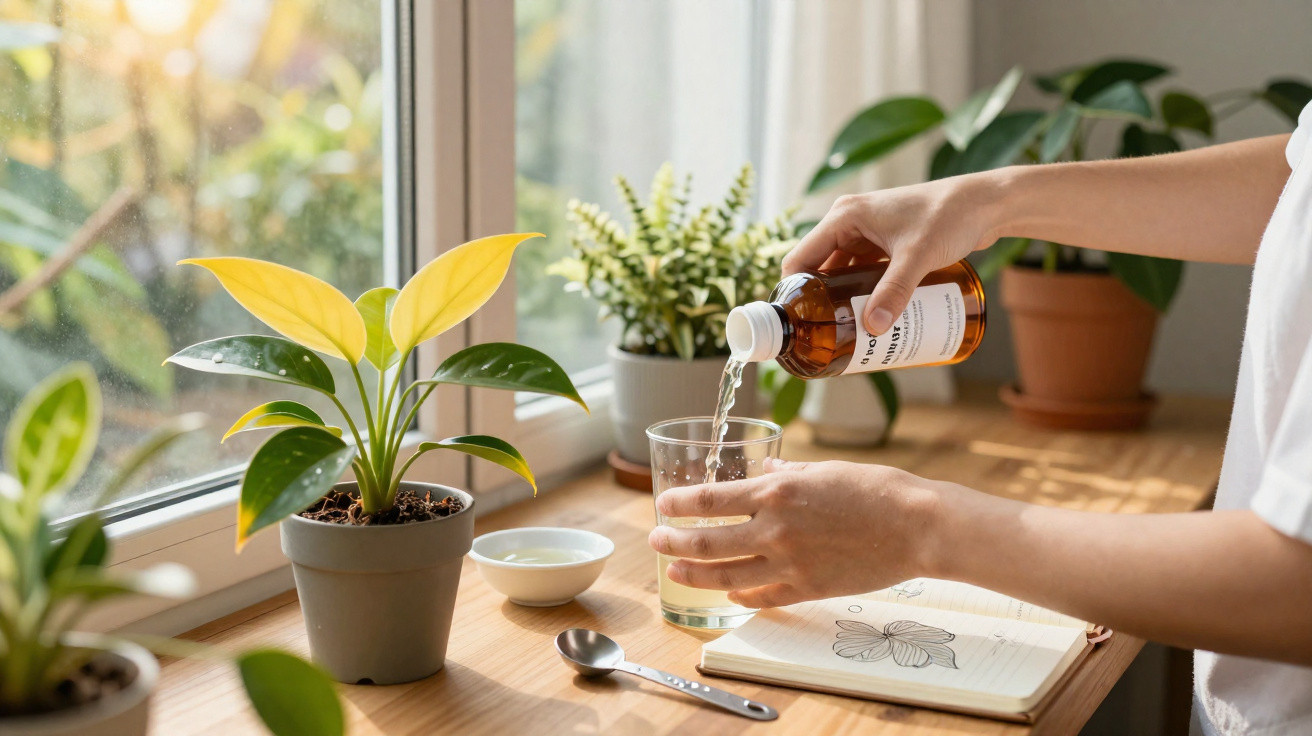
Indoor plants with yellowing, dull leaves often point to an imbalance in their care. The cause is frequently too much or too little water, a nutrient deficiency or unsuitable growing conditions. One widely available aid, often overlooked in the medicine cabinet, may help: hydrogen peroxide. Used properly, it can support the root system and improve soil aeration, although it does not replace essential watering, light and growing-medium care.
How can hydrogen peroxide help plants with yellow leaves?
Hydrogen peroxide breaks down into water and oxygen when it comes into contact with soil. This helps aerate the growing medium and limit fungi and bacteria that multiply in waterlogged conditions. The additional oxygen supports root respiration, particularly where a pot drains poorly or the soil has become heavily compacted.
Applied to the roots at a low concentration, hydrogen peroxide can help plants absorb nutrients more effectively and recover when root rot is beginning. In many instances, greener, firmer new leaves may appear, indicating that the root system is functioning more healthily again.
Watch a video from the YouTube channel Vida no Jardim about using Epsom salt (magnesium sulphate), commonly kept in the bathroom, to restore plants’ green colour and shine:
https://www.youtube.com/watch?v=V9b7K2w_M4o
What concentration of hydrogen peroxide should be used on plants, and how should it be prepared?
For indoor plants, 10-volume (3%) pharmacy hydrogen peroxide is generally used, always diluted with clean water. A mild dilution lowers the chance of root burn while retaining the beneficial soil-aerating effect. For particularly sensitive species, including some tropical plants with fine leaves, further dilution is sensible.
A practical preparation method, widely used by amateur gardeners and urban growers, is as follows:
- Product type: 10-volume (3%) pharmacy hydrogen peroxide;
- Suggested ratio: around 1 part hydrogen peroxide to 4 or 5 parts water (approximately 0.6% to 0.75%);
- Dilution water: filtered or water left to stand, at room temperature;
- Application: apply directly to the growing medium, avoiding excessive contact with the leaves.
How often should hydrogen peroxide be applied to indoor plants?
Use it sparingly, as the product is intended as occasional support rather than routine watering. Overuse may harm the soil’s beneficial microbiota and stress the roots, especially if the growing medium is already very wet or drainage is poor.
As a general guide, apply the solution every 10 to 15 days for 3 or 4 cycles, always alternating it with ordinary watering using water alone. Once the plant has recovered, hydrogen peroxide is best kept for specific circumstances, such as suspected waterlogging, an unpleasant smell from the pot or early signs of rot. Always check that the soil has dried out partially before applying it again.
Which plants benefit most from hydrogen peroxide in cultivation?
Common indoor species, especially those that occasionally suffer from waterlogging, tend to respond well to careful use of hydrogen peroxide. Ferns, pothos, peace lilies, ZZ plants, anthuriums and some philodendrons can benefit from better aeration in the growing medium, particularly in pots kept in poorly ventilated places.
Succulents and cacti, however, require extra caution because they are highly sensitive to excess moisture and need an extremely free-draining growing medium. If the plant does not improve even when hydrogen peroxide has been used correctly, other factors may be involved, including insufficient light, pests, unsuitable fertiliser or the need to repot it into soil better suited to the species being grown.

Comments
No comments yet. Be the first to comment!
Leave a Comment