
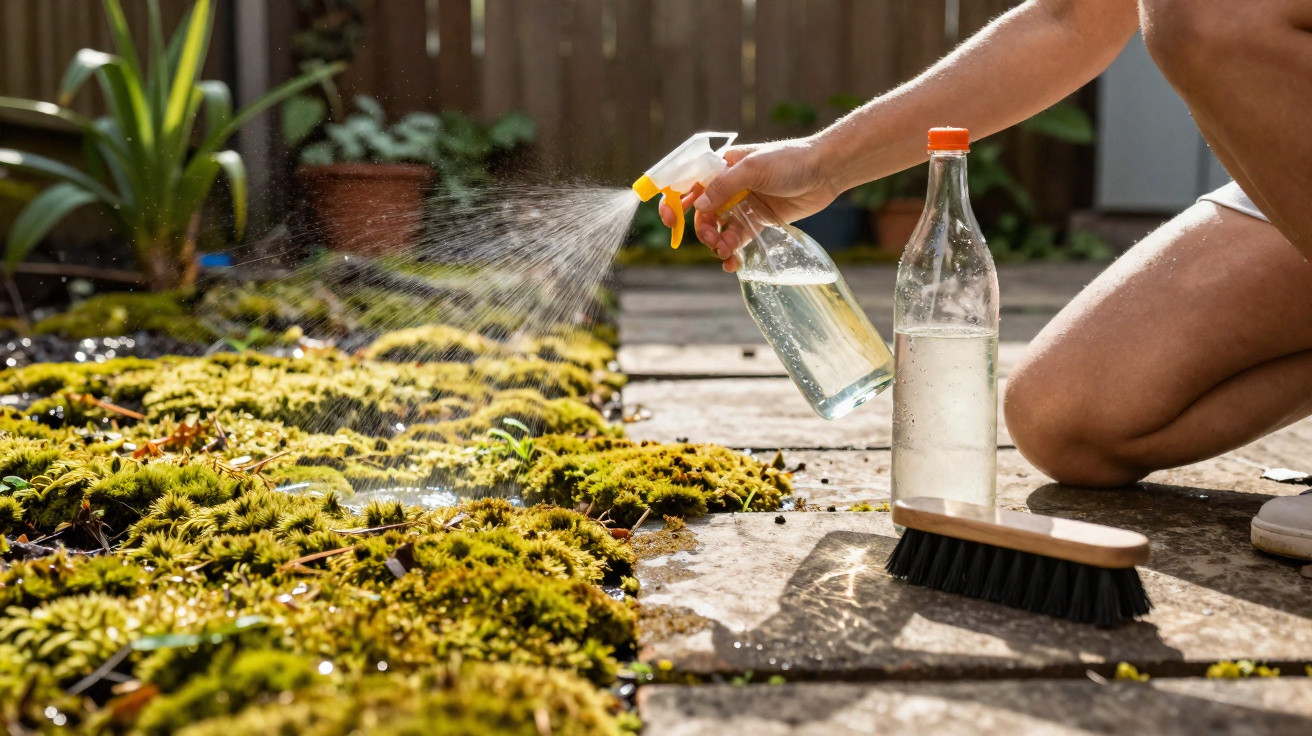
Moss commonly develops on pavements, patios and other outdoor surfaces in damp places that receive little sunlight. As well as giving the surface a greenish appearance, it can make it slippery. One of the best-known home methods is using white vinegar, which may help remove moss in certain circumstances when used carefully.
How does white vinegar work on moss?
White vinegar for removing moss contains acetic acid, which can damage moss cells on contact and cause them to dry out. After treatment, the moss will often darken before it is manually removed with a brush or a stiff-bristled broom.
It is worth remembering that vinegar does not address the source of the problem. If the area remains excessively damp, shaded or poorly drained, moss may return over time and require further cleaning.
How to apply white vinegar to remove moss
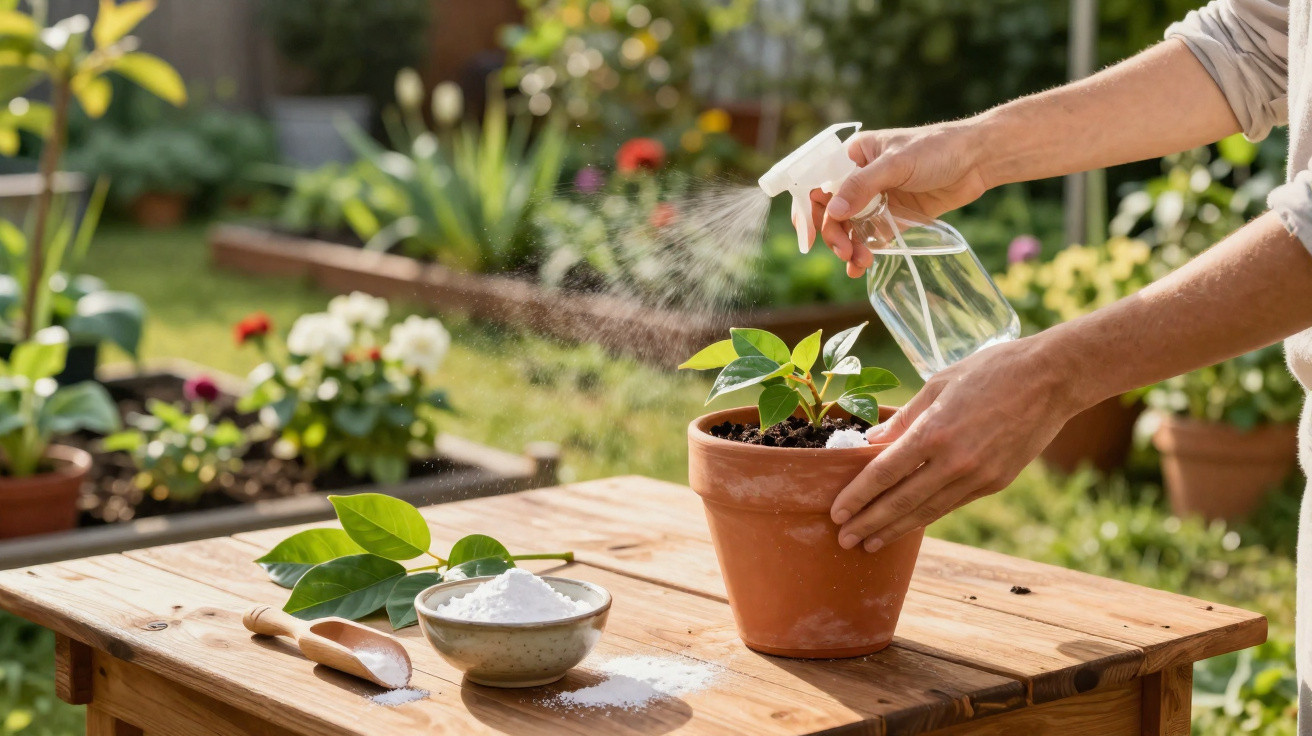
Before using the product, choose a dry day with no rain forecast so that the vinegar can stay in contact with the moss for the required time. Do not spray the solution onto ornamental plants or lawns, as vinegar may damage them too.
Once the moss has dried, scrub the surface to lift away the residue, then rinse the area if needed.
- Clear the area of leaves and loose dirt.
- Apply the vinegar directly to the moss.
- Leave it for at least 24 hours on a dry day.
- Scrub the area with a firm-bristled brush.
- Remove the residue and wash the surface if necessary.
What can you do to stop moss returning?
Following cleaning, certain measures can reduce the conditions that encourage moss growth. Improving airflow, allowing in more sunlight and preventing continual moisture build-up are usually the most effective approaches.
It is also useful to inspect the area regularly and remove small patches before they spread across the entire surface.
- Sweep the area regularly.
- Prevent wet leaves from building up.
- Increase sunlight exposure whenever possible.
- Deal with places where water collects.
- Carry out preventive cleaning when the first signs of moss appear.
Is white vinegar for removing moss worthwhile?
White vinegar for removing moss can be a straightforward, inexpensive option for small outdoor areas, especially where the growth is still superficial. However, it needs to be used with care to avoid harming plants, and it is not a replacement for correcting the conditions that encourage moss to develop.
Keeping floors and pavements clean, dry and well ventilated not only helps maintain the appearance of the space but also lowers the risk of slips. With regular maintenance and a few preventive measures, moss can be controlled more effectively.



Comments
No comments yet. Be the first to comment!
Leave a Comment