
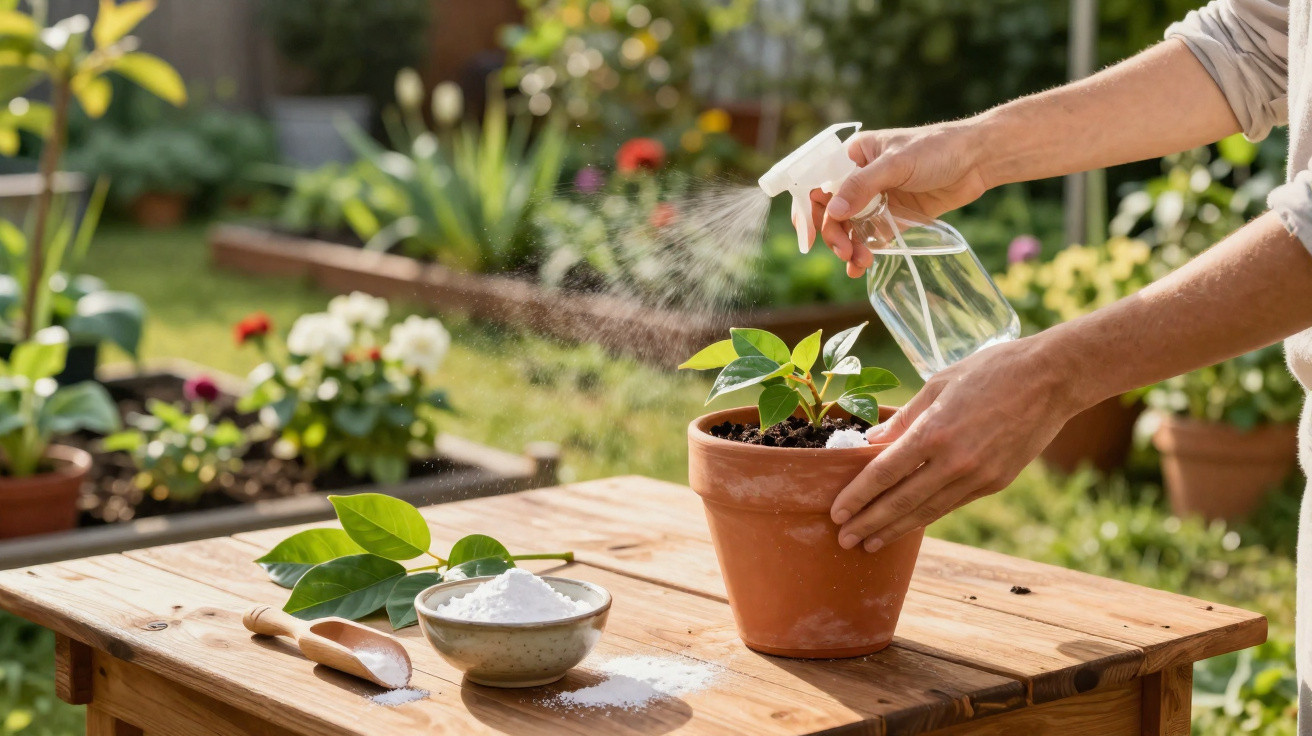
Baking soda is widely recognised as a household cleaning ingredient, yet many gardeners also use it to support the care of pots and flowerbeds. Applied sparingly and for targeted purposes, it may help balance the soil and protect plants from certain common issues. However, it must be used carefully, as too much can change the properties of the growing medium and harm some species.
How can baking soda benefit plants?
Baking soda for plants is known to help reduce acidity in certain soil types. When the pH is too low, roots may struggle to take up essential nutrients, and minor adjustments can support the healthy growth of some plants.
It is also mentioned for its preventative effect against certain surface fungi that commonly develop on leaves and stems in damp conditions. Even so, it is not a replacement for fertiliser or specialist treatments when disease is already present or when plants lack nutrients.
How to use baking soda for plants in the garden without causing harm
Before applying baking soda for plants, it is essential to understand the requirements of the species being grown. Some plants naturally favour acidic soil and may be affected if the pH is altered regularly.
For this reason, it should only be used in small amounts and for a specific purpose, while always monitoring how plants respond after application.
- Use small quantities only when required.
- Avoid repeating applications at short intervals.
- Do not use baking soda instead of fertiliser.
- Check that leaves remain healthy after use.
- Stop applying it if the plant shows signs of stress.
Which care practices matter most for healthy pots and gardens?
Although baking soda can complement some aspects of plant care, plant development depends chiefly on good growing practices. Fertile soil, suitable watering, adequate light and balanced fertilising remain the most important factors for healthy growth.
Regular inspections are also advisable, as they help identify pests, fungi or changes to leaves early, making it possible to address issues before they become worse.
- Fertilise according to the needs of each species.
- Water without keeping the soil permanently waterlogged.
- Ensure pots have good drainage.
- Remove dry leaves and faded flowers regularly.
- Watch for pests and fungi throughout the year.
Is it worth including baking soda in a garden-care routine?
Baking soda for plants can be a useful additional resource in some specific circumstances, particularly when it is used in moderation alongside traditional gardening care. However, it does not replace proper fertilising or solve plant-health problems on its own.
When applied responsibly, baking soda can form part of the routine for people who enjoy growing plants in pots or in the garden. The key is to respect the needs of each species and invest in practices that promote balanced soil and healthy growth all year round.



Comments
No comments yet. Be the first to comment!
Leave a Comment