
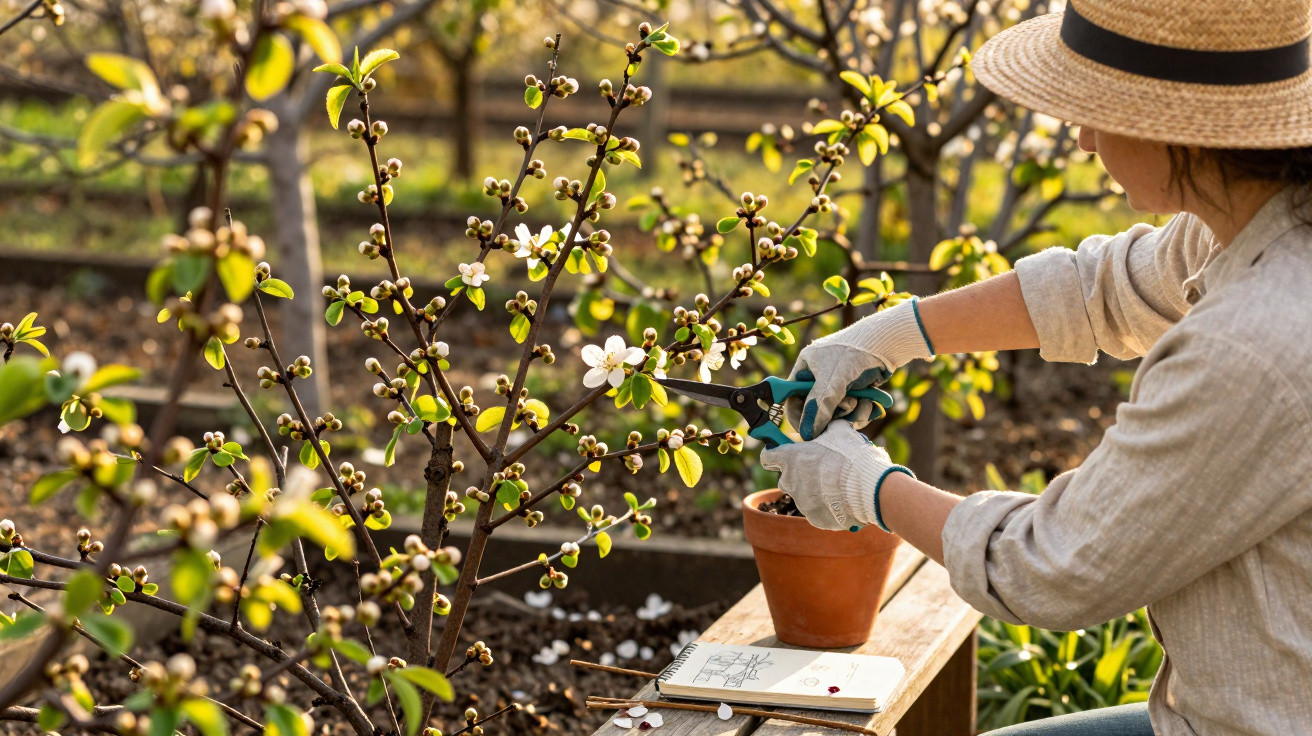
Picking up the pruning shears now lays the foundations for an explosion of flowers.
More is happening in the garden in March than first meets the eye. Sap is rising, buds are swelling and roots are working at full capacity. This is precisely the right time to prune many trees, perennials and shrubs. Anyone who knows the key plants and understands how hard they can be cut back will be rewarded in summer with far more flowers, denser growth and healthier plants.
Why March is a key month for pruning
In late winter and early spring, plants still carry little foliage, making many crowns easy to inspect. At the same time, the harshest frosts have usually passed and plants are slowly entering their growth phase. Pruning wounds heal considerably more effectively now than they do in the depths of winter.
“In March, you determine how your garden will look in summer – pruning now shapes the form, flowering abundance and health of many plants.”
That said, not every plant can be pruned at the same time. Some species tolerate cutting back only at certain points in the year, while others flower on old wood and react badly to overly drastic pruning.
Trained trees: shaping pollarded trees and espaliers
Trained and espalier trees, such as limes, planes or cherry laurel, are often planted beside patios and driveways or used as green screening. The best time to adjust their shape is by the end of March.
Training young espalier trees correctly
With young specimens, the main branches should be tied in rather than simply removed.
- Cut away only surplus shoots, poorly positioned growth or branches that cross one another.
- Carefully secure the remaining shoots to the espalier using suitable ties.
- Over time, this creates a dense, even screen.
If a trained tree has already been shaped over several years, a light formative prune is sufficient: shorten excessively long shoots and remove branches growing inwards.
Block shape or traditional pruning?
Many espalier trees, including planes and evergreen cherry laurel varieties, can be clipped like a hedge. They are shaped into a rectangular or gently rounded block. With species such as the traditional lime, all young side shoots can be cut back to the older wood, giving the plant a clear structure and encouraging fresh growth.
Roses in March: cut hard for stronger flowers
Roses respond noticeably to pruning. Cutting them back too cautiously produces long, bare stems, whereas a firm prune encourages vigorous new flowering shoots.
Floribunda, shrub and standard roses
Woody, brown old stems should now be removed. Cut the stronger young stems back to just above an outward-facing bud. This produces an open framework, allows the plant to dry more readily and makes fungal diseases less likely.
The same approach applies to standard roses. Cut the crown back substantially and remove older stems completely, so new growth emerges from the crown rather than from the graft union on the stem.
Directing climbing roses
Climbing roses need a different approach:
- Select three or four strong main stems and attach them horizontally or in a fan shape to supports.
- Prune the side shoots on these main stems back, leaving only a few buds.
- Remove old, dead or dried-out stems right at the base.
This produces plenty of short lateral branches, which will later carry the flowers.
Lavender and heather: prune in time before they become woody
Without pruning, lavender tends to become woody at the base and split apart. March is the time for a firm cut back.
Do not be too timid with lavender
All lavender types, from classic lavender to varieties with tufted flowers, should be reduced to around 15 centimetres above ground level. The important point is not to cut into old, completely bare wood; always leave a small section carrying green shoots.
Telling heathers apart
Heather stays green throughout the year, but it also needs pruning to remain compact.
| Heather type | Pruning time | Extent of pruning |
|---|---|---|
| Summer heather (Calluna) | March | to 8–12 cm above ground level, just above the bare wood |
| Winter heather (Erica) | Summer | shorten after flowering |
Prune summer heather in March, immediately below the faded tips. With winter heather, wait until flowering has finished.
Hydrangeas: every type has its own rules
Hydrangeas have become indispensable in many gardens. Pruning is slightly more complex because the different groups respond in different ways.
“Anyone who cuts the faded flowers of mophead hydrangeas too low risks a season with few blooms – new buds often sit directly beneath the old flower heads.”
Mophead and lacecap hydrangeas
Mophead hydrangeas and lacecap forms generally flower on the previous year’s wood. They require a careful prune:
- Remove faded flower heads just above the first strong pair of buds.
- Take out only a small proportion of the oldest, thickest stems completely, allowing the plant to rejuvenate.
- Do not cut back radically to ground level, or flowering will often fail.
Panicle, snowball and oakleaf hydrangeas
Panicle hydrangeas flower on new wood. They therefore tolerate hard pruning, often to around 40 centimetres above the ground. Well-known white ball varieties such as “Annabelle” can be cut back even harder, to around 10 centimetres, to encourage sturdy stems.
Oakleaf hydrangeas are not normally treated as drastically. If they are intended to grow as a group, cutting them back to 10 to 20 centimetres is often enough. Where a specimen is the focal point of a border, prune more gently: remove old flower heads, take out individual awkward stems at the base and make only slight adjustments to the overall shape.
Climbing hydrangeas follow a different schedule: they flower on wood grown in the previous year. Pruners or a saw should therefore be used only after flowering. A radical cut in March would sacrifice the entire season’s display.
Butterfly bush: a hard cut brings more flowers
This popular shrub, which attracts countless butterflies, responds particularly clearly to a close crop in March. Left unpruned, it soon becomes old and produces fewer flowers.
- Cut large varieties to around 30 to 50 centimetres above ground level.
- Dwarf forms often need only around 15 centimetres.
- Always cut just above a young bud or a small new shoot.
Long, flower-filled stems will emerge from these short stubs in spring.
Climbing and ground-cover problem plants: ivy and others
Keeping ivy under control
Ivy grows almost continuously, only slowing slightly from autumn to spring. An inspection in early March is worthwhile:
- Cut off any loose shoots that have detached from their surface.
- Remove rogue growth entering gutters, timber cladding or joints.
- Cut back runners spreading along the ground, as they can cover surprisingly long distances in a single season.
This keeps the covering manageable and prevents it from damaging walls or timber.
Keeping St John’s wort compact
St John’s wort, often planted as a low shrub or ground cover, should be cut back to about 20 centimetres in March. It will then produce dense, bushy growth, gaps between plants will close, and weeds will have less opportunity to establish.
Mediterranean visitors: olive tree and oleander
Thinning an olive tree carefully
Olive trees are often grown in large containers or as specimen plants in a border. In March, give them a maintenance and shaping prune:
- Remove dead, frost-damaged or clearly diseased shoots completely.
- Take out branches growing into the crown so that light and air can enter.
- Then lightly trim the outer outline to suit your preferred shape.
Olives also tolerate more severe pruning, although they will regrow a little later. If you are unsure, it is better to achieve the desired shape through several smaller cuts.
Oleander: plenty of pruning, plenty of flowers – but take care, it is poisonous
Oleander enjoys a sunny, warm spot, copes remarkably well with dry spells and can be cut back relatively hard. Simply remove frost damage from shoot tips and leaves in March. Reducing stems by up to half their length is unproblematic; the plant will branch more freely and flower abundantly.
“When handling oleander, it is best to wear gloves – its sap and leaves are considered poisonous, especially to children and pets.”
If the oleander is in a container, place it for a few days after pruning where children and animals cannot reach the leaves or escaping sap.
How to prune cleanly and gently
The way you prune matters just as much as choosing the right time. Blunt, dirty tools leave ragged wounds that heal more slowly and provide an entry point for disease.
- Use sharp secateurs and saws, and resharpen blades regularly.
- Remove resin and dirt before pruning, ideally disinfecting tools briefly.
- Always make cuts at a slight angle, just above a bud or side shoot.
- For thick branches, first make an undercut, then cut from above to prevent tearing.
For sensitive plants, including some hydrangeas and roses, it is worth checking the buds briefly: plump, green buds indicate live wood. Grey, shrivelled buds are more likely to signal dead sections that can be removed completely.
What is better left uncut in March
As tempting as a radical spring tidy-up may be, not every plant should meet the pruners now. Spring-flowering plants such as forsythia and ornamental cherries lose their display if they are cut back before growth begins. They are better given a maintenance prune straight after flowering.
You can also deliberately leave some perennials that provide winter shelter for insects standing for a few more weeks, should the weather turn colder again. Staggering the work – pruning some in March and the rest in April – protects beneficial insects and spreads the workload.
Anyone who follows these basic rules will soon see that March is not a stressful month but a starting signal. A few carefully chosen cuts can already influence how lush, orderly or wild the garden appears in the months ahead. That is exactly what makes this short but decisive stage of the gardening year so appealing.




Comments
No comments yet. Be the first to comment!
Leave a Comment