
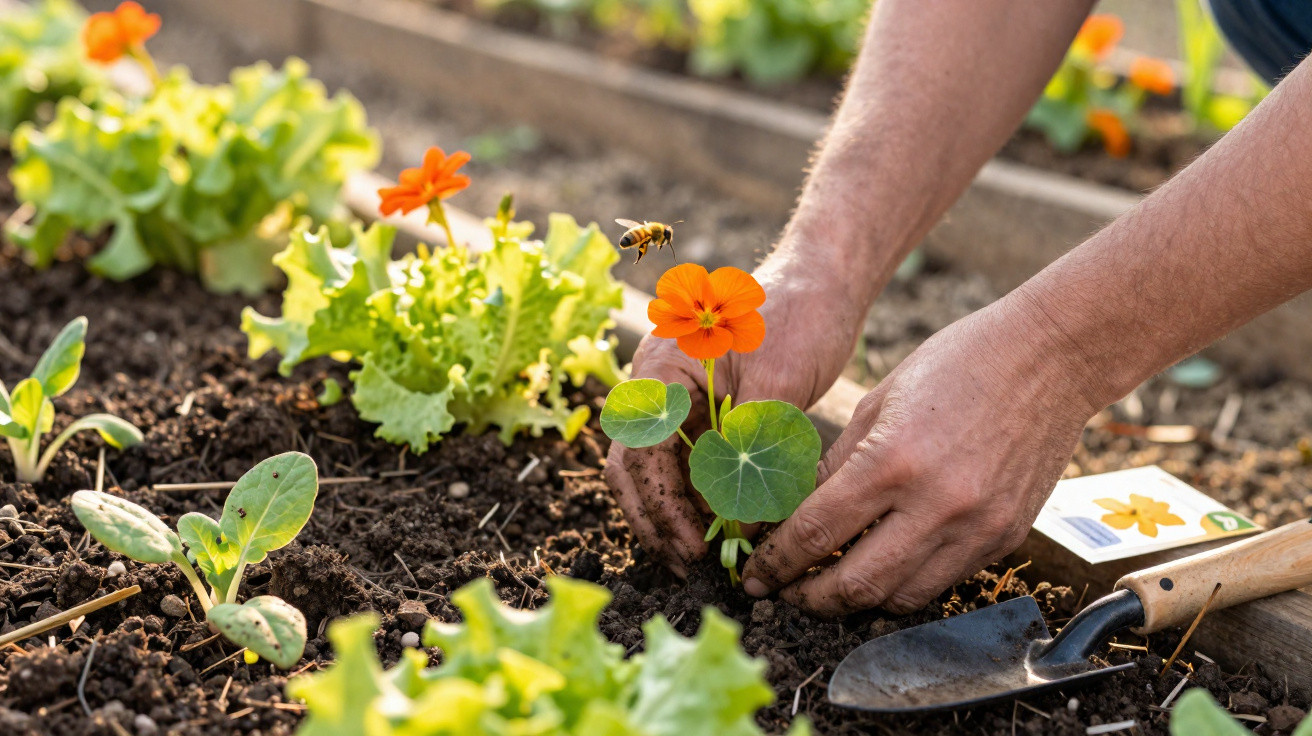
Many amateur gardeners throw themselves straight into tomatoes, courgettes and beans in spring. Seeds are sown, beds are prepared and visions of overflowing harvest baskets take shape. Yet one crucial ingredient is often overlooked: a particular flower that diverts pests, attracts beneficial insects and also brightens the bed. Sowing it at the right time creates the basis for a resilient, chemical-free vegetable garden.
The understated hero: why a simple flower protects your vegetables
The plant in question is the nasturtium. Many people know it only as a salad garnish or an attractive trailing plant for the balcony. In the vegetable garden, however, it has a far more important function. It is regarded as a classic companion plant, helping vegetable crops rather than competing with them.
“Nasturtiums act like a living protective screen: they attract pests, shield young vegetables and nourish bees and bumblebees at the same time.”
Anyone who has sown vegetables alone so far is missing out on considerable potential. Planted among lettuce, beans, tomatoes and squash, nasturtiums help create a healthy balance – entirely without pesticides.
Why a March start sets the course
From March onwards, the soil gradually warms up, daylight hours increase and sunny spells become more frequent. This is precisely the moment to reach for a packet of nasturtium seeds.
An early start with ideal timing
Sow nasturtiums early and they will flower just as your vegetable plants enter their most vulnerable stage: delicate shoots, new leaves and their first buds. This is when aphids are especially likely to strike.
Creating an early flowering belt of nasturtiums gives your young plants a protective buffer from spring onwards. Seeds are available inexpensively from virtually every garden centre and DIY shop, often in a wide choice of colour mixes.
Natural protection: how nasturtiums draw aphids away from your vegetables
The ideal distraction for hungry pests
For many aphids, nasturtiums are so appealing that they effectively make nearby vegetables “invisible”. Black aphids in particular gather in large numbers on their leaves and shoots.
Rather than sucking the sap from young beans, tomatoes or courgettes, the pests concentrate on the soft foliage of the nasturtium. This means you are deliberately using the plant as a sacrificial crop – it absorbs the attack.
Targeted control instead of chemical treatments
As most of the aphids will be concentrated on only a few plants, dealing with them becomes much easier:
- Cut off and dispose of heavily infested shoots.
- Remove entire plants if the infestation is severe.
- Limit the outbreak with a jet of water or by hand.
Your vegetables can then grow undisturbed, without losing energy through sap-drained leaves, and remain noticeably more vigorous. This approach works just as well in a small urban garden as it does in a large country garden.
“Anyone who positions nasturtiums skilfully turns their bed into a kind of safety zone: pests stay outside, while vegetables remain strong within it.”
A magnet for bees: how the flower boosts your harvest figures
Early flowers with a strong signal
Nasturtiums add vivid yellow, orange and red shades to the bed – precisely the colours that attract useful insects. Bees and bumblebees can readily access nectar here early in the year.
The more of these pollinators there are in the garden, the more often they will also visit your fruit and vegetable plants. This directly affects the harvest:
- more fertilised courgette and squash flowers
- better-developed tomato fruits
- higher apple and pear yields in nearby fruit-growing areas
Pollination as a yield booster
Every additional visit by a pollinating insect improves the likelihood of a fully developed, well-shaped fruit setting. Placing nasturtiums near fruit trees, berry bushes or cucurbits can often visibly increase fruit production.
“A few rows of nasturtiums can turn an ‘all right’ year into a genuinely productive harvest year.”
The best position: between rows and along bed edges
A flowering protective wall around the bed
One particularly effective method is to form a floral ring around the vegetable plot. Simply sow an unbroken row of nasturtiums along the edges of the beds.
This strategy offers several benefits:
- Aphids often remain at the edge before moving into the bed.
- The garden immediately looks more colourful and orderly.
- The boundary between lawn and bed is clearly defined.
Nasturtiums in the middle of the vegetable bed
The approach is even more effective when you bring the flower directly into the bed. Scatter small groups of seeds between vegetable varieties that are frequently troubled by aphids, such as:
| Vegetable plant | Good combination with nasturtiums |
|---|---|
| Tomatoes | Greater variety in the planting scheme, less aphid pressure on shoots |
| Beans | Protection from black aphids on young shoots |
| Courgettes / squash | More pollinators thanks to additional flowers in the area |
| Lettuce | Light shade and less rapid drying of the soil |
The large, rounded leaves provide a little shade for the soil. As a result, the earth dries out less quickly and stays loose for longer.
How to sow nasturtiums correctly
Straightforward steps for a strong bed
Nasturtiums are among the easiest garden plants to care for. Basic preparation is entirely sufficient:
- Loosen the soil lightly and remove large stones and remaining roots.
- Push the seeds two to three centimetres into the soil.
- Leave around 20 to 30 centimetres between plants.
- Water them in and keep the soil slightly moist for the first few days.
Germination is usually quick, often taking one to two weeks depending on the temperature. The plants then grow rapidly, fill gaps in the bed and soon begin flowering.
“Little effort, a short wait, a noticeable result: nasturtiums are ideal for gardeners with limited time but high expectations for their beds.”
Benefits that go far beyond protection
In addition to their role as protective plants, nasturtiums offer further advantages that are often underestimated. Their leaves and flowers are edible, with a mildly peppery flavour similar to cress. They enhance salads, herb butter and sandwiches, while adding colour to the plate.
Later in the year, the abundant foliage can be used as mulch or as a basis for compost. As it breaks down, it improves soil structure, adds organic matter and supports soil life.
Know the risks and limitations
Despite all these benefits, it is worth keeping a few points in mind:
- In cases of extremely heavy aphid infestation, affected plants must be removed in good time to prevent the population from multiplying explosively.
- In very nutrient-rich soil, nasturtiums can grow vigorously and overwhelm weaker plants, so prune them regularly.
- In cool, wet locations, the plants establish themselves more slowly; a sheltered spot or raising them first in pots can help.
Taking these points into account will give you a robust, lively bed that remains stable through its own natural balance. Nasturtiums demonstrate how powerful carefully selected plant combinations can be – a simple, affordable measure with a clear effect on yield, appearance and environmental impact.


Comments
No comments yet. Be the first to comment!
Leave a Comment